A child can be absorbed in a game and barely move, or use their whole body to keep the action going. Both experiences involve a screen. The useful question is what the player actually does, how long they do it, and what that activity replaces.
Active video games can offer a playful way to move. Research supports that possibility, but the label “motion game” covers very different experiences. A hand-controlled puzzle and a jogging challenge should not be treated as the same exercise.
What is exergaming?
Exergaming, also called active video gaming, uses physical movement as part of play. Some systems ask players to dance, step or move their arms; others use a smaller gesture to make a decision. Body input makes an interaction physical, but does not tell us its exercise intensity.
That distinction matters when choosing for a home, classroom or event. A puzzle can be an excellent shared thinking task even when activity is light. A whole-body game may offer more movement, but needs different space, pace and turn arrangements.
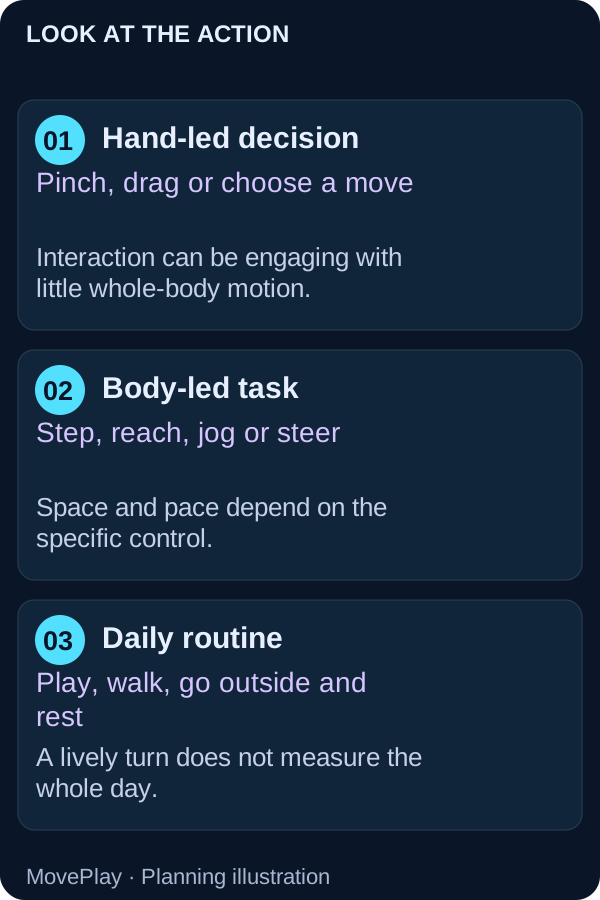
Movement during play is different from an active lifestyle
A systematic review of active games and youth health found that controlled studies could increase light-to-moderate activity during play. Evidence that these games changed habitual activity or sedentary behavior was less clear. A lively session is a useful opportunity; it is not proof that the rest of the week became more active.
The 2024 review of youth energy expenditure examines measurements across active games. Those studies are a reason to look at the actual task, rather than assume every motion-controlled title produces one intensity or validates a website’s calorie counter.
Ask a simple planning question: will this replace a seated entertainment period, or will it displace outdoor play that already works well? The first use may add a movement opportunity. The second may not improve the routine.
Movement skills and thinking: promising, with important comparisons
A 2024 synthesis of 37 randomized trials reported favorable results for several motor and executive-function measures. Working memory did not show a statistically significant pooled improvement, and several movement outcomes varied substantially between studies. The findings concern the studied participants, games and programs.
A different review comparing commercial exergames with conventional exercise did not establish better executive-function outcomes for exergames and rated the evidence very low quality. Together, these reviews suggest a useful addition to activity choices, rather than a reason to claim that games make children smarter or outperform sport.
Choose the task before choosing the benefit
| Your aim | Look for | Observe |
|---|---|---|
| Add movement to a seated afternoon | A body-led task the player wants to try | Actual moving time, including pauses |
| Practice reading a rule and making a decision | A puzzle with a visible result | Can the player explain the next move? |
| Run a shared activity | An understandable loop and clear turn endpoint | Participation, waiting and willingness to return |
In Paddle Boat, arm movements propel and steer a boat: introduce the control and see how the player responds before planning a longer turn. Merge 2048 combines number-board decisions with arm commands; it illustrates how thinking and body input can coexist without turning the game into a validated cognitive assessment.
Make room for different kinds of activity
The WHO activity guidelines give broader recommendations for regular activity. A game session can sit alongside walking, outdoor play, PE and other enjoyable movement. A game score or estimated energy display cannot establish that a daily activity recommendation has been met.
For a first trial, choose one control, allow a practice attempt and ask whether the player enjoyed it. Use the camera setup guide to prepare the frame. Then compare the public controls before choosing a game or plan.
Read the guide for your setting
Use the family participation guide for a reluctant first player, the classroom guide for teacher-led breaks. For shared equipment, plan the waiting area as well as the active turn. For more audience guides, browse the guide center after choosing your first game.
Sources and further reading
- Active video games and health indicators in children and youth: a systematic review (2013) — Systematic review.
- Estimated Energy Expenditure in Youth While Playing Active Video Games: A Systematic Review (2024) — Systematic review.
- Effects of Exergaming on executive function and motor ability in children: A systematic review and meta-analysis (2024) — Meta-analysis of 37 randomized trials.
- Effects of Commercial Exergames and Conventional Exercises on Improving Executive Functions in Children and Adolescents (2023) — Meta-analysis of randomized trials; correction linked in PubMed.
- WHO guidelines on physical activity and sedentary behaviour (2020) — WHO guidelines.
Games to preview
Review the controls, play area and access label before opening a game.
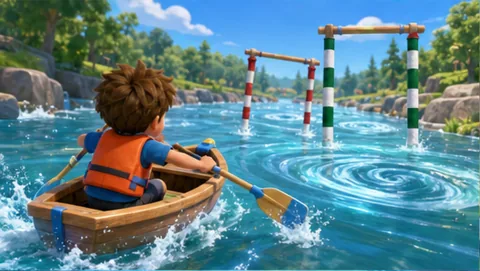
Paddle Boat
Row down the river and use one-sided strokes to steer. Stopping the paddles lets the boat slow.
Controls: Pull both arms back to move; paddle one side to steer.
First-round idea: Build a steady rowing rhythm and make a controlled turn.
Pro · sign-in required
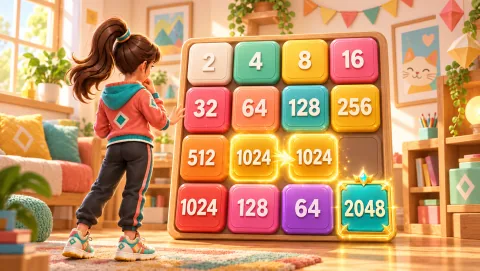
Merge 2048
Combine matching numbers using arm poses instead of arrow keys. Plan where the next merge will happen.
Controls: Side raise for left/right; overhead arms for up; low cross for down.
First-round idea: Make a deliberate merge while keeping a corner available.
Pro · sign-in required