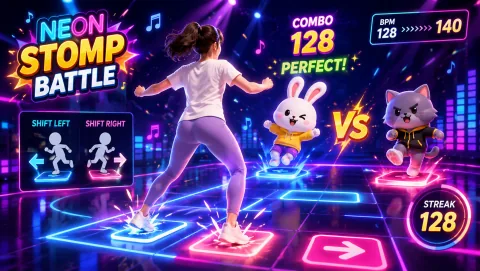
Music synchronisation enhances performance by 10–20%
When movement synchronises with music — called entrainment — athletes can sustain higher effort levels with lower perceived exertion. The music essentially provides an external pacemaker that the motor cortex locks onto, distributing workload more evenly across motor units and delaying the onset of fatigue signals reaching conscious awareness.
Karageorghis & Priest (2012), Int Rev Sport Exerc Psychol — synchronous music improves exercise performance and reduces RPE by 10–20%.
Rhythm training improves motor timing
The cerebellum's internal timing circuitry is trained directly through rhythmic movement practice. Regular rhythm training improves interval timing precision, which underpins everything from athletic movement coordination to speech production. Studies on dance training show improvements in motor timing that transfer to novel timing tasks the participants have never practised.
Grahn & Brett (2007), J Cogn Neurosci — rhythm training strengthens cerebellar timing networks, generalising to untrained tasks.
Dance movement reduces depression symptoms
Dance movement therapy has demonstrated significant effects on depression across multiple randomised controlled trials, with effect sizes comparable to conventional exercise interventions and larger than many pharmacological treatments in mild-to-moderate cases. The rhythm + music + movement combination appears to be additive — each component contributes independently to the effect.
Meekums et al. (2015), Cochrane review — dance movement therapy shows significant improvements in depression outcomes vs. control conditions.