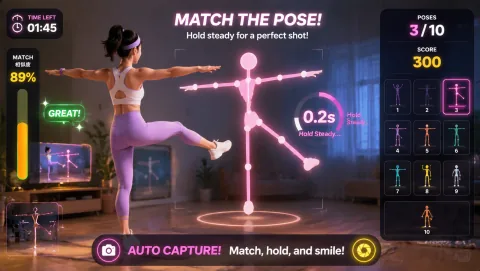
Balance training improves proprioception
Mechanoreceptors in joints and muscles transmit position and movement data to the cerebellum and motor cortex. Regular challenge of these receptors through varied unstable or precision movement — exactly what balance games provide — increases receptor sensitivity and improves the brain's ability to integrate signals, producing sharper proprioceptive acuity.
Röijezon et al. (2015), J Electromyogr Kinesiol — proprioceptive training produces lasting improvements in joint position sense.
Reduces fall risk by up to 35%
Multiple systematic reviews confirm that progressive balance training reduces fall incidence in older adults by 23–35% over training periods of 3–12 months. The mechanism is two-fold: improved reactive balance (catching yourself when you stumble) and improved anticipatory postural adjustment (proactively stabilising before a challenge arrives).
Sherrington et al. (2019), Br J Sports Med — meta-analysis of 108 trials: exercise reduces falls in older adults by 23%.
Improves athletic performance
Proprioceptive and balance training consistently improves injury prevention and performance metrics in athletes. Improved single-leg stability reduces ACL injury risk; better coordination between visual and vestibular systems improves agility and change-of-direction speed — capacities trained directly by the balance games in this category.
Zech et al. (2010), J Strength Cond Res — balance training improves postural control and reduces sports injury rates.