Squat Games

Squat games you play with your webcam

Your legs are the controller. Drop into a squat to dodge, rise to grab the coins — free squat games online that turn one simple move into real gameplay. No download, no equipment.

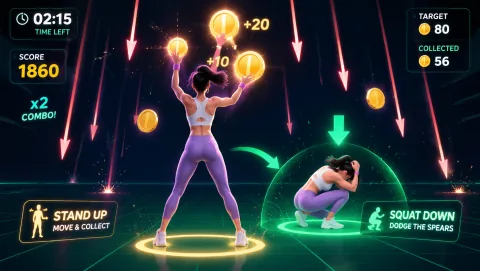
SquatPacman — webcam game where you squat to dodge falling spears
SquatPacman Spears rain from above — squat to dodge, stand to catch gold coins. Two positions, endless tension.
Best for

Kids and adults who want a simple, leg-powered way to make screen time active — with zero learning curve.

01

Big Muscles, Real Effort

Squats recruit the largest muscle groups in your body — quads, glutes, and hamstrings — in every single rep. That means each dodge in a squat game asks more of your body than a wrist flick or an arm wave, so repeated reps add up to noticeable work fast.

02

Learned in Ten Seconds

Everyone already knows how to squat. There's no combo to memorize and no controller mapping to learn — bend down, stand up, done. That makes squat games the easiest entry point into webcam motion gaming, from young kids to grandparents.

03

Depth Scales to You

A squat game doesn't demand a deep squat. A shallow bend is enough for the webcam to register the move, so you choose the intensity: deeper squats for a harder session, gentle bends when your legs need a lighter day. The game adapts to your range, not the other way around.

How It Works

How squatting maps to gameplay

The webcam tracks your head and shoulders through your camera — no sensors, no wearables, nothing to charge.

Down is a command

In SquatPacman, dropping into a squat is a dodge input. When spears fall from the top of the screen, bending your knees pulls your character out of the hit zone — the same timing judgment as pressing a button, except the button is your body.

Up is a command too

Standing back up is how you score. Gold coins appear at standing height, so every point you collect is a completed squat rep. The scoring system is literally a rep counter — chase a high score and you've done a set without counting anything.

Rhythm beats raw speed

Squat games reward steady pacing over frantic bobbing. Partial squats that don't move your head through the tracker's threshold won't register, so clean, deliberate reps both play better and feel better than shallow bouncing.

More leg-powered play

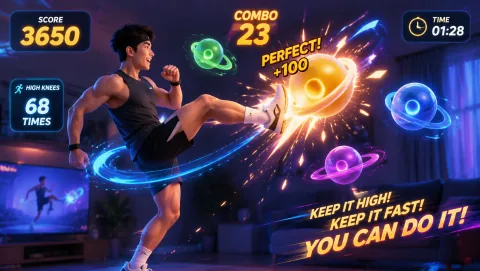
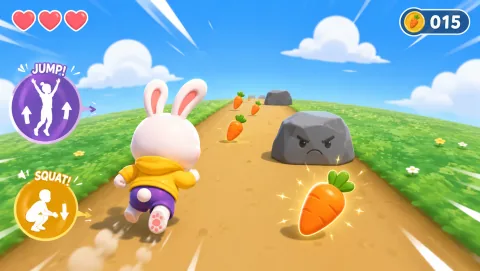
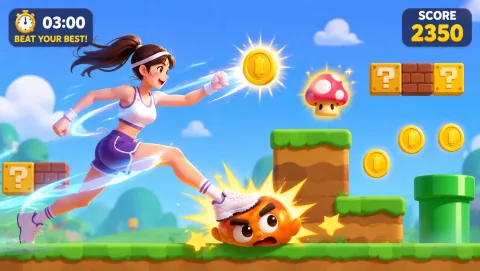
More games with squats and lower-body moves

If squatting is your favorite way to play, these three games keep your legs just as busy.

Squat form tips

Play hard, squat smart

A few simple habits keep squat sessions comfortable — especially when a close game tempts you into one more round.

Ready to squat?

Your first round starts in 10 seconds

No download, no equipment, no sign-up. Open SquatPacman, face your webcam, and let your legs take over the controls.

Play SquatPacman →

FAQ

Squat games — common questions

Are squat games a real workout?

Honest answer: it depends on how you play. Repeated squats do raise your heart rate — they work large muscle groups, and doing them continuously for several minutes is real physical effort. But intensity is up to you: a relaxed session with shallow squats is light activity, while deep squats at a steady pace over 10–15 minutes will leave you breathing harder. A squat game is a fun way to move more, not a replacement for a structured training program.

How many squats will I do in a session?

It varies with your score-chasing style. In a typical 15-minute SquatPacman session, dodging spears and standing for coins usually adds up to dozens of reps across several short rounds. There's no built-in rep quota, so listen to your body: stop when your legs feel cooked, and know that you can always play another round tomorrow.

What if squats hurt my knees?

First, reduce your depth — a shallow bend registers just fine in these games, so there's no need to squat deep. If squatting still isn't comfortable, switch to a hands-only game like BubbleMatch, which you can even play seated. And if you're dealing with ongoing knee pain, talk to a doctor or physical therapist before making squats part of your routine — a game can't diagnose what's going on, but a professional can.