After a demanding day, a game can offer a change of scene: a rhythm to follow, a puzzle to explore or something fun to share. A family may value that experience without needing to call it therapy.
Movement, enjoyment and social connection are worthwhile parts of daily life. Research helps explain their potential, while keeping three different questions separate: how someone feels after a turn, whether a routine changes their activity, and whether an intervention improves a measured mental-health outcome.
What physical activity research says about mood
A 2023 JAMA Pediatrics review of 21 studies involving 2,441 participants found a small reduction in depressive symptoms after physical activity interventions. Limited follow-up results did not show a significant difference. This supports physical activity as a possible contributor to emotional health; it is not evidence that a specific game treats depression.
The WHO guidelines place regular activity within a broader health routine. A game can be one way to invite movement, alongside other activities a young person enjoys. The preferred activity and practical opportunity matter.
What exergaming adds to the discussion
In a 12-week group dance-game pilot with 41 adolescent girls with overweight or obesity, enjoyment remained high and subjective health improved; health-related quality of life did not differ between groups. The social, guided setting was part of the experience. It is a promising example, not a prediction for every teenager.
A rhythm game may appeal to someone who likes musical cues, while a puzzle may suit someone who wants a calmer decision task. Ask what they enjoy rather than prescribing one theme for a particular mood.
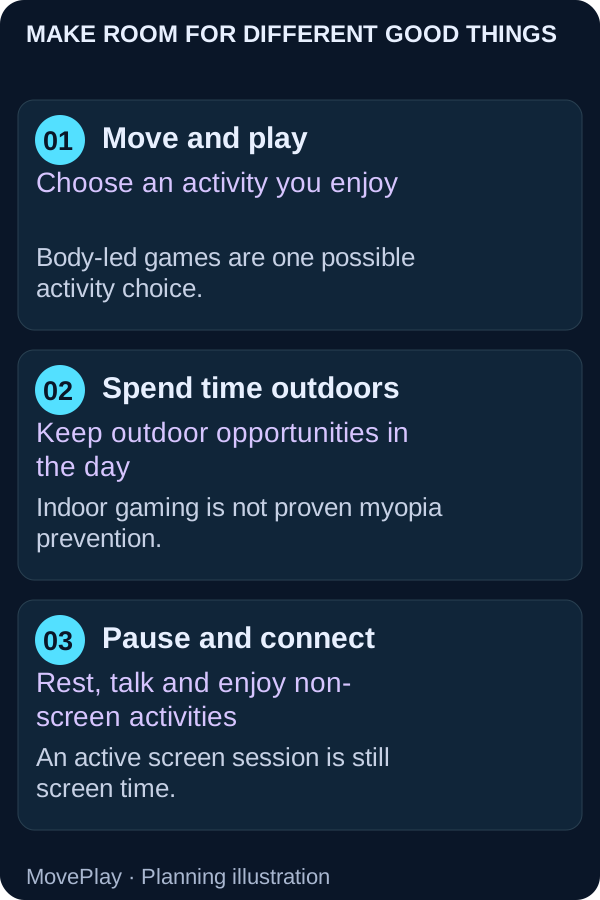
Active screen time is still screen time
Changing from seated play to a body-led game changes the activity, but it does not remove the screen. Think in terms of what is being replaced. A movement game instead of part of an existing seated entertainment period is different from adding play that pushes bedtime later.
A small dance-game study reported less TV/video viewing and improved exercise confidence, but did not find a significant difference in objectively measured activity. That is a reason to observe the whole routine, rather than assume that active gaming automatically reduces screen time.
Outdoor time has its own value for eye health
The International Myopia Institute’s 2025 synthesis highlights outdoor exposure in delaying myopia onset. Indoor movement does not reproduce those outdoor conditions. Moving farther from a screen during a game is not, by itself, evidence of preventing or slowing myopia.
Keep outdoor opportunities in the plan when possible. An indoor game is a rainy-day option or an extra activity choice; it should not consume the outdoor time a family already enjoys. If a child has vision concerns, use an eye-care professional’s advice rather than selecting a game as treatment.
Make room for a comfortable, voluntary turn
Try asking, “Would music and movement feel good, or would you rather solve something?” Neon Stomp Battle uses musical stepping cues; Magic Match uses pinch-and-drag matching. Preview their tutorials and sound together. The second can be engaging without offering much whole-body activity.
Let the player choose whether to share a score or keep the experience private. After the turn, ask what they liked, whether they want a pause and what they want to do next. Do not make feeling better a performance goal, or treat a game score as a mood measurement.
Build a routine that has several good options
Keep a mix of movement, outdoor time, rest and activities without screens. If persistent distress is affecting a young person’s daily life, a recreational game is not a substitute for appropriate support. For everyday play, however, enjoyment is a good enough reason to try a suitable activity.
Use the parent participation guide to arrange a first turn, the puzzle collection to compare calmer decisions, or the rhythm guide to learn the stepping controls. The research overview explains why different games should not be assigned the same benefits.
Sources and further reading
- Physical Activity Interventions to Alleviate Depressive Symptoms in Children and Adolescents: A Systematic Review and Meta-analysis (2023) — 21 studies, 2,441 participants.
- A 12-week randomized controlled pilot study of dance exergaming in a group: Influence on psychosocial factors in adolescent girls (2018) — Pilot randomized trial, 41 adolescents.
- Twelve weeks of dance exergaming in overweight and obese adolescent girls: Transfer effects on physical activity, screen time, and self-efficacy (2017) — Small randomized trial.
- IMI 2025 Digest (2025) — International Myopia Institute research synthesis.
- WHO guidelines on physical activity and sedentary behaviour (2020) — WHO guidelines.
Games to preview
Review the controls, play area and access label before opening a game.

Neon Stomp Battle
Follow musical cues with lateral steps and weight shifts. Timing matters more than frantic movement.
Controls: Step sideways and shift weight to the beat.
First-round idea: Keep a clean sequence of beats before chasing a longer combo.
Pro · sign-in required
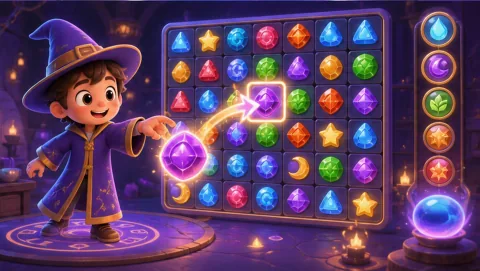
Magic Match
Pinch a rune, swap it with a neighbor and build match-three cascades toward the displayed collection goal.
Controls: Pinch to grab, drag to an adjacent cell and release.
First-round idea: Make a match of three and collect a target rune.
Pro · sign-in required