“Can we do something that isn’t for little kids?” is a useful clue. Older students may enjoy a challenge while disliking sing-along instructions or a public performance. Offer a short, clearly named task, explain its finish, and make watching or a quieter alternative acceptable.
Use challenge language, without turning the break into a test
Call the activity a pattern swap, a reaction round or a puzzle decision. The point is a change of pace, not a ranking of classmates. Avoid promises that a two-minute activity will improve grades or reset every student’s attention. A teacher can observe how the transition works without treating the game score as evidence of a learning effect.
| Format | First round | Next variation |
|---|---|---|
| Silent pattern swap | Pairs copy three slow hand shapes and swap leaders. | Let each pair invent a sequence. |
| Choose the exception | Show four words or pictures; students indicate the one they would remove. | Ask for different explanations, rather than one fastest answer. |
| Mirror a shape | Copy a comfortable standing or hand shape. | Choose a smaller version while keeping the rule. |
| Camera puzzle turn | One player makes a move while a partner predicts the result. | Swap the player and observer roles. |
A game turn with something to discuss
Bus Queue asks the player to inspect passenger direction and available paths, then use hand controls to move a passenger. An observer can suggest the next opening. The class is not controlling the board together: keep one player in the camera frame and use the discussion as an informal activity around that turn.
For students who prefer a timed target task, Reaction uses ordered targets. Preview its current instructions before choosing the movement. Do not call it a scientific reaction-time assessment; the browser, tracking and game rules all affect the result. The cards below let you compare the two tasks rather than assuming “brain break” means one style of play.
Keep preparation small and the return to class clear
Write the task and stop cue on the board before beginning. Try a brief window that fits your lesson, and shorten it if the activity makes the return harder. You do not need to add prizes or a tournament. Familiar rules can be useful precisely because students spend less time learning what to do.
For a camera station, test it before students arrive. A school device may need an administrator’s permission; a projector only mirrors the running device’s screen. If a trial fails, use the silent pattern swap. Offer the same choice to students who prefer not to appear on camera.
Match the break to today’s class
A restless class and an exhausted class may want different changes of pace. Ask for a quick choice between a quiet decision and a movement task. Do not require students to explain personal limitations in front of peers, and avoid activities built around embarrassing mistakes or elimination.
Use the teacher plan and evidence for a supervised station, quiet movement ideas for shared buildings, and school-device troubleshooting before relying on a browser game. The broader brain-break collection offers other formats. A successful choice is one the class wants to repeat and can finish calmly.
Games to preview
Review the controls, play area and access label before opening a game.
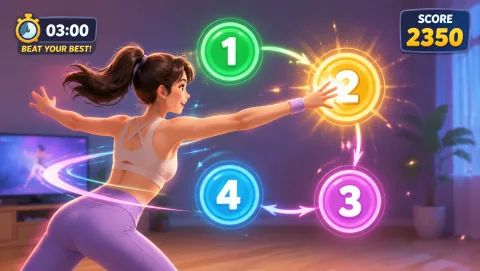
Reaction
Read scattered numbers and reach them in order as the time window shrinks.
Controls: Reach numbered targets with hands and feet.
First-round idea: Finish a number sequence in the correct order.
Pro · sign-in required
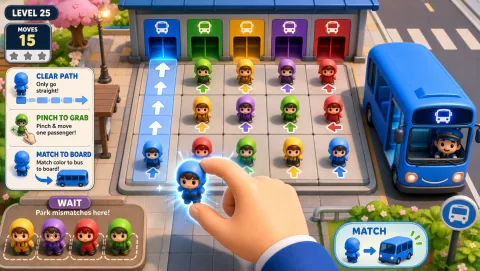
Bus Queue
Clear a passenger path and use limited waiting space to get riders onto matching buses.
Controls: Pinch a glowing passenger, drag to the matching bus or waiting zone, release.
First-round idea: Board a matching rider without filling the waiting zone.
Pro · sign-in required