Subtraction movement games

Subtraction movement games

Webcam movement games wrapped around K-2 subtraction practice: count-down warm-ups that make counting backward physical, and game scores that turn "how many more?" into the best part of the session.

Bunny Hop gameplay preview
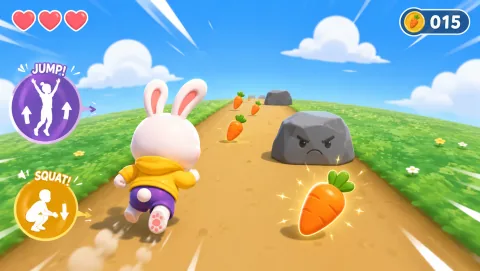
Bunny Hop Dodge sideways, duck under barriers, and leap gaps on an endless course — a natural fit for count-down sets: start at ten jumps, subtract two each round.
Best for

Best for parents and K-2 teachers who want a movement break that sits inside subtraction practice — counting down with the body before the worksheet, and subtracting game scores after it.

01

Count-Down Movement Warm-Ups

Counting backward is the engine of early subtraction, and it sticks better when the body does it. Start at ten jumps and subtract two each round — ten, eight, six, four, two — with the child calling out each new starting number before moving. The decreasing set is a take-away problem you can feel in your legs, and it takes under two minutes.

02

Score-Difference Math

Every game round ends with a number, and two numbers make a subtraction sentence. After each round ask one question: how many more did you score this time — or how many fewer? The child now has a reason to subtract that no worksheet can match, because the numbers are theirs. Keep a scrap-paper tally and the math runs itself.

03

How-Many-Left Challenges

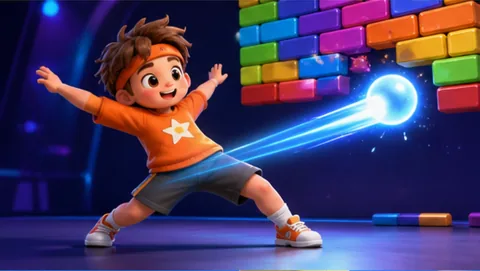
Take-away framing hides inside almost every round: moles that escaped, targets that got past, bricks still standing when the ball dropped. Narrate it out loud — "twelve showed up, you got nine, how many got away?" — and the child solves a subtraction word problem about something they just did with their whole body.

Session structure

The 15-minute subtraction block

Short cycles beat long sessions at this age. Loop these four steps once or twice and stop while the child still wants more.

Who does the subtracting

Solo, siblings, and small groups

The format flexes depending on how many kids are in the room — the key is that someone always has a math job, on camera or off.

Honest expectations

What the game does — and what it doesn't

A webcam game is a movement break with numbers attached, not a math curriculum. Keeping that straight is what makes the combination work.

It resets attention

Ninety seconds of full-body movement between practice sets gives a wriggly six-year-old somewhere to put the energy that was about to derail the worksheet. Kids typically return to the table faster after moving than after being told to sit still one more time.

It supplies real numbers

Scores, streaks, and remaining targets are authentic quantities the child cares about — ideal raw material for "how many more" and "how many left" talk. The adult still has to ask the question; the game only provides the numbers.

It doesn't teach the facts

Subtraction fluency comes from the practice sets around the game, not from playing it. If the worksheet and the score talk drop out and only the game remains, you have a fun break — which is fine, just not math practice.

Difference-makers

Two more for score talk

Want the full set? Browse all free games in the MovePlay game hub, or start with the webcam games overview if this is your first camera game.

Keeping the math in it

3 rules for subtraction game breaks

  1. The child says the numbers: the count-down, the two scores, and the difference all come out of the kid's mouth or pencil — never yours. The adult's job is asking "how many more?" and waiting out the silence while the mental math happens.
  2. One round, then back: a game round is a break between practice sets, not the main event. Fixed 60-to-90-second rounds keep it that way; if the child begs for another round, that's the signal the ratio is right — promise it after the next set.
  3. Scale the numbers to the grade: kindergartners count down from 10 and compare within 20; first graders step by twos from 20; second graders get two-digit score differences. Numbers that are too easy turn the math into noise; too hard turns it into adult math.

Room setup

Space and camera notes

K-2 kids are shorter than the camera expects — lower the laptop or tilt it down so the whole child fits in frame, and mark the play spot with tape about two arm-spans from the screen. Clear the jumping zone of table corners and sibling feet before count-down sets, and keep hard floors in mind for leaps: bare feet or grippy socks beat slippery ones. If a younger sibling wanders into frame mid-round, pause and reset rather than playing through — small kids and swinging arms need their own turns.

Questions parents ask

FAQ

Can a webcam game teach my child subtraction facts?

No — and be skeptical of any game that claims it can. Subtraction fluency comes from deliberate practice: number lines, manipulatives, flash cards, and talking through take-away problems out loud. What a movement game adds is a physical break between practice sets that helps a restless 6- or 7-year-old come back to the worksheet ready to focus, plus real scores you can turn into subtraction talk after each round.

What is count-down movement?

Start a set at a fixed number — ten jumps, for example — then subtract a fixed amount each round: ten jumps, then eight, then six. The child announces each new starting number before moving. Counting backward by a steady step is subtraction in its most physical form, and the game rounds give the counting a reason to happen.

How do I turn game scores into subtraction practice?

After each round, ask one question: how many more did you score this time — or how many fewer? Comparing two scores is a subtraction sentence with numbers the child actually cares about, which is more motivating than the same problem on a worksheet. For kindergartners keep the numbers under 20; second graders can handle two-digit differences and even keep a running chart across rounds.

How long should a session run for a K-2 kid?

Ten to fifteen minutes total, built from short pieces: a 2-minute count-down warm-up, one practice set, one 60-to-90-second game round, and a minute of score-difference talk — then repeat once or twice. K-2 attention spans handle cycles far better than long blocks, and stopping while the child still wants another round keeps the next session easy to start.

Does this work for both kindergarten and second grade?

Yes — scale the numbers, not the format. Kindergartners count down from 10 by ones and compare scores within 20, often using fingers or a number line to check. First graders count down by twos from 20. Second graders can subtract across a ten, compare two-digit game scores, and predict the next number in a count-down sequence before you reveal it.

MovePlay — Free Webcam Motion Games

Ten jumps. Now eight. Now go beat that score.

Play Bunny Hop free