A number on a screen can give a turn a clear question: which pair might merge, or which target comes next? Choose the game rule first, then use a counting or prediction prompt that fits it.
Two number tasks to compare
| Game | Actual task | Optional discussion prompt |
|---|---|---|
| Merge 2048 | Use arm commands to shift and merge matching numbers | Which equal numbers could meet, and where would the others go? |
| Reaction | Reach to numbered targets in the required order | Which target is next, and where is it? |
Plan one move before chasing a score
For merging, point out a possible pair and imagine the whole row or column shifting. For ordered targets, identify the next number before reaching. Try the movement once and inspect the result. These are personal practice ideas; they do not add new game modes or change scoring.
Keep the game and the lesson separate
If you are planning a maths activity, decide what you want to discuss before choosing the game. Counting targets is not the same task as explaining addition, and a higher game score is not a validated maths assessment. No learning outcome is promised here.
Continue with a specific guide
Read Merge 2048 controls and decisions, compare other puzzles, or browse target-based games. The camera guide helps with visible arms and hands; the family guide helps everyone get a turn.
Games to preview
Review the controls, play area and access label before opening a game.
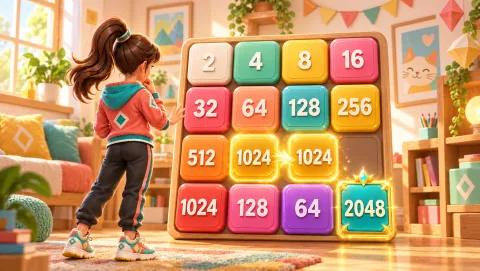
Merge 2048
Combine matching numbers using arm poses instead of arrow keys. Plan where the next merge will happen.
Controls: Side raise for left/right; overhead arms for up; low cross for down.
First-round idea: Make a deliberate merge while keeping a corner available.
Pro · sign-in required
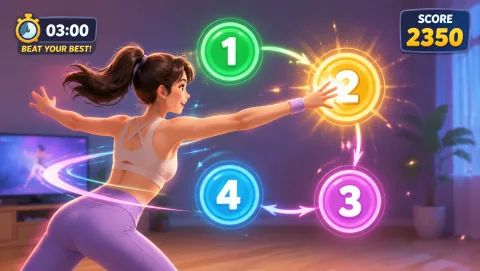
Reaction
Read scattered numbers and reach them in order as the time window shrinks.
Controls: Reach numbered targets with hands and feet.
First-round idea: Finish a number sequence in the correct order.
Pro · sign-in required