Addition movement games

Addition movement games for early math practice

Short webcam movement rounds that slot between addition drills for K-2 kids — a wiggle release that brings focus back to the next set of sums. The games don't teach math; the break makes room for it.

Reaction gameplay preview
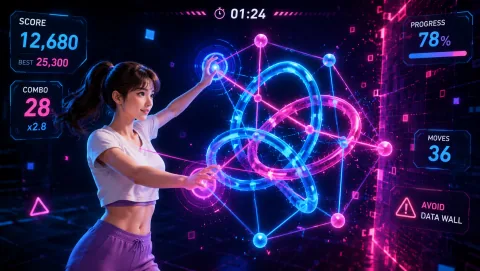
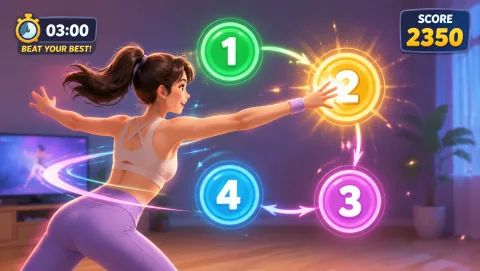
Reaction Four numbers scatter to the screen corners — slap them in order with hands and feet before the timer shrinks. The closest thing on MovePlay to a numeral hunt: a 60-second warm-up before a round of addition facts.
Best for

Best for parents and teachers working on early addition — sums to 10 and 20, counting on, fact families — with kindergarten through 2nd grade kids who lose steam halfway through a practice session.

01

The Drill-and-Move Sandwich

Run addition practice in layers: 5 to 8 minutes of problems, one 60-90 second movement round, then straight back to the same worksheet. The game is the comma between drill sets — kids finish a set, move hard for a minute, and sit back down with the restlessness already spent instead of leaking into the next ten problems.

02

Numeral-Recognition Warm-Ups

Before the first drill set, play one fast round of a number-hunting game like Reaction, where scattered numerals get slapped in order. It wakes up the "which digit is which" pathway early addition leans on, and it signals to the child that math time has started. Think of it as a warm-up lap for the practice session, not a lesson in itself.

03

The Earned Finish Line

Kids grind through the last set of sums more willingly when they know exactly what comes after: one round of a game, with a visible timer, then math time is done. Pick a game with a fixed round length so the reward can't balloon, and keep the promise small and consistent — a predictable finish line beats a big occasional one.

Session structures

Three ways to build the math block

The structure matters more than the game. These three formats keep the movement break in service of the addition practice instead of letting it swallow the session.

Who's playing

Solo, siblings, and math centers

The same break works at a kitchen table, with two kids sharing one laptop, or as a rotation station during classroom math workshop. The setup changes; the short-round rule doesn't.

Honest framing

What the break does — and what it doesn't

MovePlay games are reflex, coordination, and fitness games. They don't teach addition, and we won't pretend otherwise. What a well-placed movement round genuinely offers a K-2 math session is simpler and still useful.

It resets attention

Young kids' focus on drill work fades in waves. A minute of full-body movement gives the restless energy somewhere to go, so the next set of sums starts from a calmer baseline than asking a squirming six-year-old to "just concentrate."

It makes practice repeatable

Addition fluency comes from many short sessions, not heroic long ones. A session structure with a fun middle and a known finish line is one kids will sit down for again tomorrow — and that consistency is where the actual learning happens.

It doesn't replace the drill

The curriculum stays in the flashcards, worksheet, or math app. If the game rounds start stretching or multiplying, the break is eating the practice — pull it back to one round per set. For more on where games fit into learning time, see our motion learning games guide.

Calm-down picks

End the session on these

Want the full set? Browse all free games in the MovePlay game hub, or explore more webcam games by play style.

Keeping the math first

3 rules for game breaks during addition practice

  1. One round per set, always: the break is exactly one round, never "one more." Fixed-length games enforce this for you; the moment a break regularly passes two minutes, it stops serving the practice and starts replacing it.
  2. Same game all week: let the child pick Monday's game and keep it through Friday. Choosing a new game every session burns practice minutes on browsing and novelty — the routine should be boring, the moving should be fun.
  3. Finish on the calm game: the last round of the session is a quiet one — a matching or puzzle game, not the slashing one. Kids walk away from math time settled, which decides how willingly they sit down for it tomorrow.

Room setup

Space and camera notes

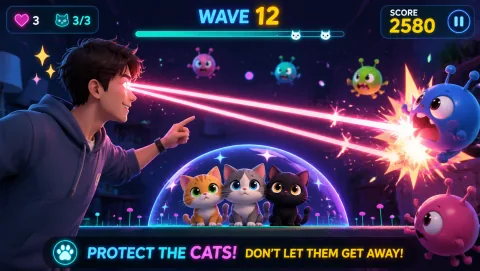
Clear a floor patch about two arm-spans wide next to the workspace and point the laptop camera at it — the closer the play spot is to the worksheet, the faster the return to the drill. Push chairs in, keep siblings an arm's length outside the camera zone, and skip the big-swing games if the room is tight: hand and head games like Bubble Match and Laser Eyes cover small spaces fine, and our Movement Games for Small Apartments and Classrooms guide has more options.

Common questions

FAQ

Do webcam games teach addition?

No. MovePlay games are reflex and movement games, not math curriculum. The right way to use them with early addition is as a short movement break between drill sets — the worksheet, flashcards, or math app does the teaching, and the game resets the wiggles so the next set of problems gets a fresh attention span.

How long should a movement break be during addition practice?

Sixty to ninety seconds is the sweet spot for K-2 kids. Pick a game with a fixed round length so the break can't quietly expand, play exactly one round, and go straight back to the same worksheet. A break that runs past two minutes stops being a reset and starts competing with the math for the child's attention.

Which games fit kindergarteners versus second graders?

Kindergarteners do best with big, simple movements and no reading: Bubble Match (point at matching bubbles) and Whack-a-Mole (tap moles as they pop up) need no instructions beyond watching once. First and second graders can handle Reaction, where numbers scatter to the corners and they slap them in order — a fast numeral-hunt warm-up before a set of sums.

Do kids need accounts, downloads, or their own devices?

No. MovePlay games are browser-based, run in the browser, and need no signup. One laptop with a webcam serves one child at the kitchen table, a pair of siblings taking turns, or a classroom math center — kids just step in front of the camera and move.

Can I use this in a classroom math center?

Yes. Set one laptop at the edge of the room as the movement station, run pairs through on a fixed 2-minute rotation during math workshop, and keep the rest of the center on paper or manipulatives. Choose short-round games so many students cycle through, and end each rotation with a calm hand game so kids return to their seats settled rather than hyped.

MovePlay — Free Webcam Motion Games

Next drill set, earn the break first.

Play Reaction free