Inclusive active play

Movement games designed with autistic children in mind

Physical activity matters deeply for autistic children's health, wellbeing, and development. These browser-based movement games offer calm, predictable, self-paced engagement — active screen time that supports rather than overwhelms.

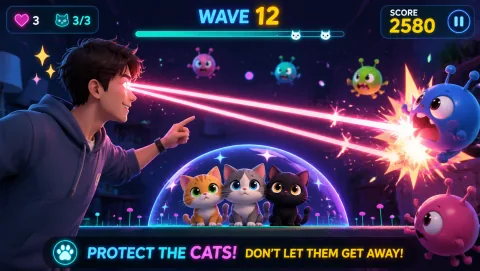
Laser Eyes gameplay preview
Laser Eyes Micro-turn your head to aim — calm, predictable, and fully self-paced with no sudden events.
Best for

Parents and therapists supporting autistic children's physical activity in a sensory-considerate, self-paced, low-pressure format.

01

Predictability Reduces Anxiety

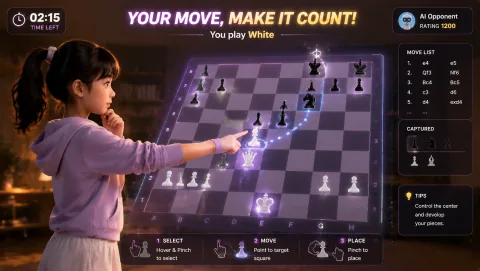
Autistic children often experience heightened anxiety from unpredictable stimuli. Games with clear, consistent rules — where every action produces the same result — allow children to build confidence and competence without the threat of sudden sensory surprises. LaserEyes and GestureChess both follow highly predictable game mechanics that reward careful, consistent movement.

02

Sensory Control Belongs to the Child

Unlike group physical activities, browser-based movement games give the child complete control over their environment. Volume can be reduced or muted. The game pauses when they step away. There is no peer comparison, no coach's instructions, and no pressure to perform in front of others. This autonomy over the sensory experience is a significant advantage over traditional PE settings.

03

Individual Pace, Individual Success

Every child moves differently and at their own pace. MovePlay games don't require a minimum level of physical performance to be enjoyable. A child who moves their head slightly to aim in LaserEyes is succeeding. A child who uses small hand gestures in GestureChess is fully participating. Progress is measured against the child's own baseline, not against others.

Practical playbook

How to introduce movement games thoughtfully

Starting with the calmest games and shortest sessions allows the child to build a positive association with movement gaming before intensity or duration increase. Always follow the child's lead.

Why it works

Research on physical activity and autism

Physical activity improves motor skills and behaviour

A landmark study by Pan (2010) found that structured physical activity programs significantly improved both motor proficiency and social interaction behaviors in children with ASD. Physical movement provides proprioceptive and vestibular input that many autistic children find regulating — it meets a sensory need while simultaneously building physical capability.

Structured movement supports executive function

Memari et al. (2015) found that structured, rule-based movement activities improved executive function measures — including attention, working memory, and inhibitory control — in children with ASD. Games with clear, consistent rules provide the structure that supports these same executive function processes in an engaging, child-directed format.

Predictable mechanics reduce anxiety during play

Sensory regulation research consistently shows that predictable, controllable environments reduce anxiety and facilitate engagement in autistic children. Games where actions produce consistent, expected outcomes allow children to develop mastery — a powerful regulator of anxiety — while also meeting physical activity guidelines that support broader health outcomes.

Simple routine

A gentle 10-minute movement session

  1. 3 minutes: LaserEyes — calm entry, head-only movement, establish comfort with the camera and environment.
  2. 5 minutes: GestureChess — rule-based, turn-paced, no time pressure. Child controls when actions happen.
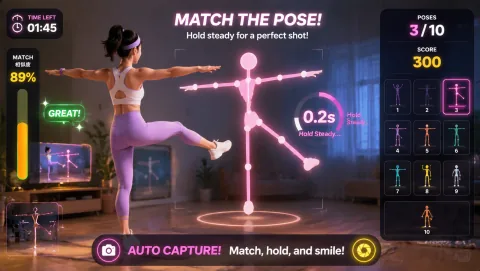
  3. 2 minutes: AwkwardPoseStudio — gentle body pose matching, a playful and visual close to the session.

Keep it safe

Safety notes — please read carefully

Always work with your child's occupational therapist or behavioural specialist before introducing new screen-based activities. Start with the lowest-intensity games and the shortest sessions possible. Watch closely for signs of sensory overload — covering ears or eyes, turning away, increased stimming, or distress — and stop immediately if any appear. Never force continued engagement. Every autistic child is different; what works well for one child may not suit another. MovePlay is not a therapeutic tool and is not a replacement for professional occupational therapy or ABA support.

Common questions

FAQ

Which MovePlay games are best for autistic children?

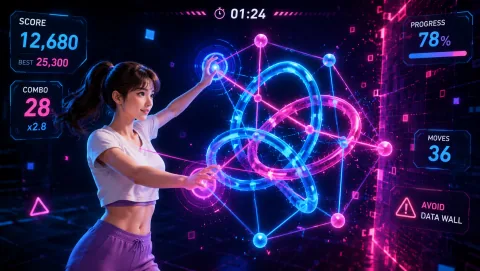
LaserEyes is the most calming option — it uses only slow, precise head movements with no sudden events or loud sounds. GestureChess is excellent for children who prefer rule-based, predictable systems. CyberKnot offers gentle hand movement puzzles with consistent visual feedback.

How do I know if my child is becoming overwhelmed?

Watch for covering ears or eyes, turning away from the screen, repetitive self-soothing behaviours, increased vocal stimming, or agitation. If any of these appear, pause the session immediately and allow the child to regulate in a calm environment. Never force continued play.

Do these games help with social skills?

Pan (2010) found that structured physical activity significantly improved social interaction behaviors in children with ASD. Playing movement games alongside a sibling, parent, or peer creates natural joint-attention moments and turn-taking opportunities that support social development in a low-pressure setting.

Is MovePlay sensory-friendly?

MovePlay's visual design is calmer than most commercial games — dark backgrounds reduce visual noise, and the pace of most games is controllable. However, every child's sensory profile is different. We recommend previewing each game with your child's occupational therapist before independent play, and starting with LaserEyes or GestureChess as the calmest options.
Every child can move

Find the game that works for your child, at their pace.

Open the game hub