The playground is wet, the class has been sitting all morning, and the room still contains desks. Indoor recess needs choices that children can actually enjoy. A movement station can be one option alongside conversation, drawing and puzzles; it need not turn the whole break into another lesson.
Choose a format before choosing a game
Start by deciding what the room can accommodate today. If chairs cannot move, use small gestures and tabletop activities. If a clear zone is available, add a supervised active station. Keep walking routes open and let students choose a quieter option without having to explain themselves.
| Choice | How it works | What to check |
|---|---|---|
| Mirror partners | One person leads slow hand shapes; the other follows. Swap leaders. | Hands stay within each person’s own space. |
| Drawing relay | Take turns adding one feature to a shared invented creature. | Have paper ready and agree how turns pass. |
| Quiet puzzle corner | Choose a familiar puzzle or invent a pattern for a partner. | Students can finish or pause without a public score. |
| Camera-game station | One player uses the camera while others observe or suggest a next move. | Test permissions, framing and access before recess. |
Give the camera station a job everyone understands
A webcam game is also a camera-controlled game: the visible action supplies the input. That does not mean everyone can play simultaneously. For MovePlay, organize one active player in frame and let waiting students choose another station or an optional observer role. A projected screen helps people see the round; it does not create multiplayer controls.
Whack A Mole gives the player a visible target task. Use a practice turn to check the tutorial and framing. A partner can watch the feedback and name a target, but should stay outside the camera zone. If the group would rather plan than chase targets, Cyber Knot offers a different kind of decision: which node should move to reduce crossings?
Make the end of the break predictable
- Before play, explain the station choices and how to request a turn.
- Use a visible timer chosen for your timetable. This is an adult-set activity window, not a claim about each game’s round length.
- Give a warning before the finish, then use one familiar stop cue.
- Close the game, return equipment and begin the next class routine.
Keep competition optional. “Can you explain your next move?” or “Would you like another try?” can be more welcoming than comparing classmates’ scores. Avoid using a playful game result as a measure of attention, learning or physical ability.
Have a fallback that needs no camera
If the browser is blocked, return to mirror partners or drawing; recess should not become an IT troubleshooting session. Check school camera permissions before the next session. For cramped rooms, use the small-space activity plan; for a quieter floor, compare no-jumping choices.
The classroom active-break guide explains the research and a teacher-led format. Recess and a teaching break have different purposes, so keep student choice central here. Preview the games below and read their current free or Pro labels before promising a station to the class.
Games to preview
Review the controls, play area and access label before opening a game.
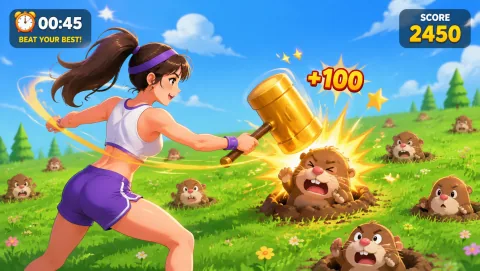
Whack A Mole
Reach moles before they disappear and keep the next target in view.
Controls: Reach or lean toward the mole positions.
First-round idea: Hit the next visible mole without rushing the return to center.
Pro · sign-in required

Cyber Knot
Pull neon loops apart until the tangle becomes readable. Each move changes the puzzle.
Controls: Open your fingers, hover over a node, pinch to grab, drag and open to release.
First-round idea: Separate an outside loop before working into the center.
Pro · sign-in required