What age are color movement games for?
The sweet spot is ages 3 to 5, when kids are learning to name colors reliably but still learn best through their bodies. Three-year-olds do well with one color at a time and big movements like running to a mat. Four and five-year-olds can handle two or three colors per round, plus rules like freezing on a decoy color. Older kids usually want faster versions with timers or points.
Do webcam games teach colors?
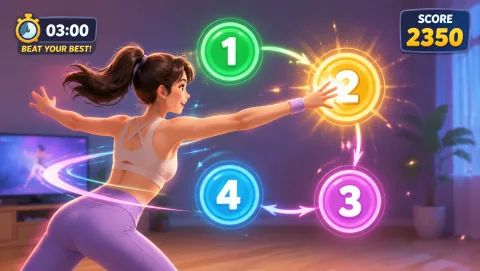
Not by themselves, and they are not a curriculum. A game like Bubble Match asks players to spot and match colors quickly, but the color words come from you — narrate what you see ("you chained two blue ones") while your child plays. Think of it as movement practice wrapped around color exposure: the game supplies the reaching and matching, you supply the language.
How long should a color-and-movement session be for a preschooler?
Plan for 10 to 15 minutes total, split into three short blocks of about 5 minutes each. Preschool attention for any single game rarely lasts longer than that, and ending while your child still wants more is far better than pushing to a meltdown. One call-a-color warm-up, one webcam round, and one calm sorting game is a full session.
Can I use these in a preschool or daycare classroom?
Yes. The no-screen games (color corners, sorting relays, freeze-on-a-color) work with any group size and no equipment beyond colored paper or cones. The webcam games run from one laptop connected to a TV or projector — one child plays on camera while classmates call out the colors they spot, which keeps the whole group involved in the color talk.
What if my child keeps mixing up colors?
Shrink the palette. Play with only two clearly different colors (red and blue, not red and orange) until those are solid, then add one at a time. Mix-ups are normal at this age and not a problem to drill away — keep the tone playful, celebrate the movement as much as the correct answer, and treat wrong guesses as just another run to a mat.