Healthy active habits

Active games that build movement habits for children — healthy and fun

The goal is simple: replace passive screen time with active screen time, and make movement the default rather than the exception. These browser-based games get children genuinely moving — jumping, dodging, kicking, and laughing — without any equipment or installation.

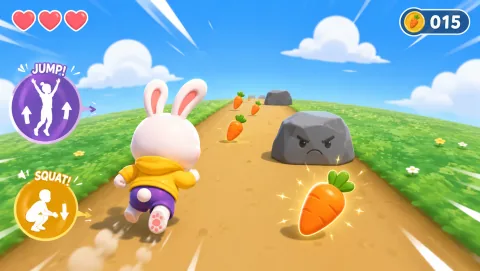
Bunny Hop gameplay preview
Bunny Hop Dodge left and right, duck under obstacles, leap high — one of the most physically active games in the library.
Best for

Parents who want their children to be more physically active during screen time — replacing passive scrolling or passive gaming with genuine movement and energy expenditure.

01

Replace Passive With Active Screen Time

The issue with children's screen time isn't the screen — it's the stillness. A child watching a video burns roughly the same calories as sleeping. A child playing BunnyHop or HighKicks burns 3–4× that rate. The meaningful intervention isn't reducing all screen time but shifting a portion of it from passive to active. Active screen time is a different category of behavior entirely.

02

Make Movement the Default

Children adopt movement as a preference when it becomes their default association with screen time, rather than an exception to it. If the first thing they do with a screen is play a movement game, that association builds quickly. Active games that children genuinely enjoy — not prescribed exercise in disguise — are more effective at building lifelong movement habits than forced workout programs.

03

Scores and Progress Drive Repeated Play

Children return to activities they can track progress in. Game scores create a measurable, personally meaningful target — beat yesterday's score, beat a sibling's score, unlock a personal best. This progression mechanic is the same one that makes video games compelling for children, applied to physical activity. The movement happens because the game is genuinely worth playing.

Practical playbook

How to build active gaming into a child's routine

The most effective approach is substitution, not addition — replacing a passive screen session with an active one, rather than trying to add movement on top of an already full schedule. This is more sustainable and meets less resistance.

Why it works

The evidence for active gaming and children's health

Children need 60 minutes of moderate-to-vigorous activity daily

The World Health Organization recommends that children aged 5–17 accumulate at least 60 minutes of moderate-to-vigorous physical activity per day. Most children in high-screen-time environments fall significantly short of this target. Active gaming sessions of 20–30 minutes contribute directly to this daily goal, making them a meaningful supplement to outdoor play, PE, and sports.

Active gaming burns 2–3× more calories than passive gaming

CDC research comparing passive video gaming with active gaming found that children playing motion-based games burned 2–3× as many calories as children playing passive video games. For children who spend significant time gaming, the shift from passive to active gaming is one of the highest-impact single behavior changes available for increasing daily energy expenditure.

Active habits in childhood predict adult activity levels

Longitudinal research consistently demonstrates that children who develop positive associations with physical activity during childhood are significantly more likely to maintain active habits as adults. The mechanism is habit formation: movement becomes the default behavior rather than an effortful choice. Active gaming, when genuinely enjoyed, creates this association through the pleasure principle rather than through instruction or pressure.

Simple routine

A 30-minute active screen time session

  1. 5 minutes: GenkiRun — energizing warm-up, arm swings, get the body temperature up before high-intensity games.
  2. 15 minutes: BunnyHop or HighKicks — peak activity phase, full body engagement, push for a high score.
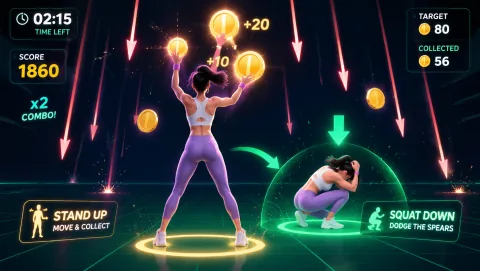
  3. 10 minutes: SquatPacman — lower body focus cool-down, controlled movement, strong finish to the session.

Keep it safe

Safety notes for children's active gaming

Ensure a clear space of at least 1.5m × 1.5m around the play area before starting. Remove rugs that could slip, and ensure no furniture with sharp edges is within arm's reach. Supervise children during high-jump games like BunnyHop. Ensure adequate hydration — have water available during and after active sessions. Rest periods between intense game sessions are important, particularly for younger children. Stop immediately if a child reports dizziness, nausea, or joint pain. Do not use screen brightness or room brightness that strains the eyes during active play.

Common questions

FAQ

How much movement do these games actually involve?

CDC research confirms that active gaming burns 2–3× more calories than passive gaming and approaches the caloric output of light outdoor play. BunnyHop, HighKicks, and GenkiRun consistently produce elevated heart rate in children — these are genuinely active experiences, not just gentle gesturing.

Can motion games replace outdoor play?

Motion games are an excellent complement to outdoor play — not a replacement. The WHO recommends 60 minutes of moderate-to-vigorous activity per day for children. Active gaming can contribute meaningfully to this total, particularly on days when outdoor play isn't possible (weather, schedule, safety). The goal is more total movement, not substitution.

How long should children play movement games?

15–30 minutes of active gaming per session is a good starting point, contributing meaningfully to daily movement goals. Shorter sessions of 10 minutes are effective when followed by other physical activities throughout the day. Watch for signs of fatigue and ensure adequate rest and hydration between sessions.

Which MovePlay game is most active?

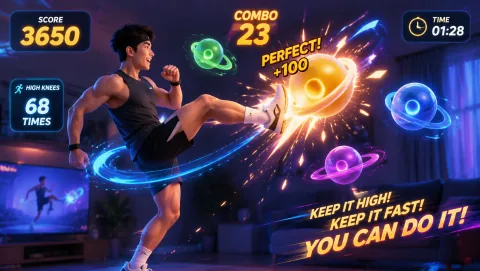
BunnyHop and HighKicks generate the highest sustained movement intensity. GenkiRun and SquatPacman involve significant lower body movement. For children who prefer upper body engagement, FruitSlash keeps arms moving continuously throughout each session.

Active screen time starts here

Make movement the first thing the screen offers.

Open the game hub

Make the activity work in the real timetable

Best fit: use Active games that build movement habits for children — healthy and fun when the teacher can explain one visible rule, keep the first turn brief, and give students a clear way to watch, lead, or pause without being singled out.

Limit: it is a poor fit when setup takes longer than the learning goal, the room cannot be reset safely, or scoring rewards speed over control. A lower-tech version may teach the same idea better.

If you are choosing between formats, begin with the option that needs the fewest materials and the least movement across the room. Test one round before committing the whole class.

The useful classroom test is operational: can the next student take a turn without a long explanation, can the teacher call a stop immediately, and does the activity leave enough time to return to the lesson?