Medical disclaimer: MovePlay is not a medical device and is not intended to diagnose, treat, or cure any condition. Always follow your physical therapist's or occupational therapist's guidance. Use these tools only as a supplement to professional therapy — never as a replacement. Stop immediately if you experience pain during any movement.

Rehabilitation & movement

Movement games that support motor recovery and physical therapy goals

Home exercise compliance is one of the biggest challenges in physical rehabilitation. These browser-based movement games make home exercise genuinely engaging — supporting upper limb reach, fine motor control, balance, and gaze training as a supplement to your therapy program.

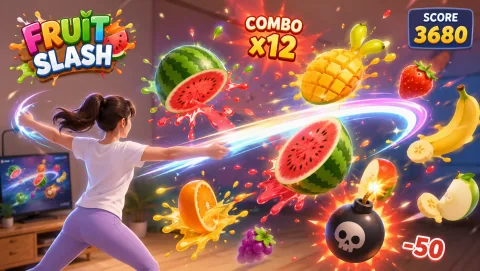
Fruit Slash gameplay preview
Fruit Slash Slash fruits with sweeping arm movements — upper limb reach training in an engaging game format.
Best for

Individuals using home movement games as a supplementary engagement tool alongside professional physical therapy or occupational therapy programs — always with therapist guidance.

01

Upper Limb Reach Training

FruitSlash requires repeated, directionally varied arm reach movements — slashing across the screen engages shoulder flexion, abduction, and elbow extension through a functional pattern. The game provides immediate visual feedback on reach completion (the fruit is slashed) which supports error-based motor learning — the same principle that underlies task-specific upper limb rehabilitation in stroke recovery.

02

Fine Motor Control Through Gesture

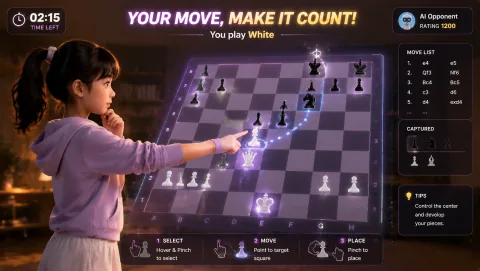
GestureChess and GestureXiangqi use pinch-and-release finger gestures to command chess pieces. This fine motor pattern — precision pinch, position, release — engages intrinsic hand muscles and finger opposition, making these games naturally aligned with hand rehabilitation goals. The strategic game structure provides cognitive engagement that increases session duration and therefore total repetition count.

03

Neck and Gaze Rehabilitation

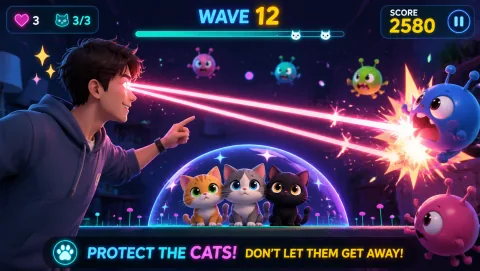
LaserEyes uses subtle head turning and sustained gaze to target and fire at game objects. This controlled, low-velocity head movement engages cervical range of motion and vestibular-ocular coordination — areas commonly addressed in whiplash recovery, cervicogenic headache management, and post-concussion gaze training. The game's precision requirement encourages controlled movement rather than compensatory strategies.

Practical playbook

Matching games to rehabilitation goals

Different MovePlay games target different movement patterns. This mapping is intended as a general reference — always use your physical therapist's or occupational therapist's specific guidance on which movements are appropriate for your recovery stage.

Why it works

The evidence base for gaming in motor rehabilitation

Virtual reality improves arm function in stroke rehab

A 2017 Cochrane systematic review by Laver et al. — covering 72 randomized controlled trials — found that virtual reality and interactive gaming interventions showed significant improvements in upper limb function in stroke rehabilitation. The review concluded that gaming-based therapy is a viable adjunct to conventional rehabilitation, particularly for increasing motivation and repetition counts during home practice.

Exergaming adherence is 60% higher

Rand et al. (2014) found that exergame-based home exercise programs achieved 60% higher adherence rates compared to traditional paper-based home exercise programs in stroke rehabilitation. The critical insight: the most effective exercise is the exercise that gets done. Games significantly outperform instruction sheets as compliance mechanisms, particularly over the extended timeframes of neurological recovery.

Game feedback drives motor learning

Error-based learning theory — the dominant model in motor rehabilitation research — proposes that movement improvement occurs most efficiently when learners receive clear, immediate feedback about the outcome of each movement attempt. Game mechanics inherently provide this feedback: a fruit slashed confirms successful reach, a number tagged confirms accurate upper limb placement. This feedback loop accelerates motor learning beyond what repetition alone achieves.

Simple routine

A supplementary home exercise session (with therapist approval)

  1. 5 minutes: LaserEyes — gentle cervical warm-up, controlled head rotation, establish session baseline.
  2. 10 minutes: FruitSlash — upper limb reach training, directional variety, track score as functional measure.
  3. 5 minutes: GestureChess — fine motor cool-down, precision control, cognitive engagement to close the session.

Keep it safe

Critical safety guidance for rehabilitation use

Never use MovePlay as a substitute for prescribed physical therapy exercises without your physiotherapist's or occupational therapist's explicit approval. Do not attempt movements that your therapist has restricted or that exceed your current range of motion. Stop immediately if you experience pain — not just discomfort — during any game. Pain during movement is a signal to stop, rest, and consult your therapist before continuing. Ensure your play space is cleared and that you have a stable support surface within reach if balance is a concern. Keep session logs and share them with your therapist at each appointment.

Common questions

FAQ

Can I use MovePlay during physical therapy?

MovePlay can be used as a supplementary home exercise tool alongside your physical therapy program — but only with your therapist's explicit guidance. Never substitute MovePlay for prescribed therapy exercises without consulting your physiotherapist or occupational therapist. Use it as an engaging way to accumulate additional repetitions of movements your therapist has already approved.

Which MovePlay games help with upper limb recovery?

FruitSlash is designed for arm reach and wrist extension — the sweeping slash movement engages the shoulder, elbow, and wrist through a functional reaching pattern. Reaction requires bilateral upper limb coordination. Both are well-matched to upper limb neurological rehabilitation goals when prescribed by a physiotherapist.

Is exergaming evidence-based for rehabilitation?

Yes. A 2017 Cochrane systematic review by Laver et al. found that virtual reality and interactive gaming showed significant improvements in upper limb function in stroke rehabilitation. Rand et al. (2014) found that exergaming adherence is 60% higher than traditional home exercise programs — making it not just effective but more likely to be completed.

How do I track my progress with MovePlay?

Track scores across sessions as a proxy measure of movement quality. Improving scores in FruitSlash (more fruits slashed per session) correlates with improved reach speed and range. Improving Reaction scores correlates with improved upper limb response time. Share these score trends with your physiotherapist as supplementary data.

With your therapist's guidance

Make home exercise something you actually want to do.

Open the game hub

Choose it for the family in front of you

Best fit: Movement games that support motor recovery and physical therapy goals works when the ages and confidence levels can share one simple goal, with an adult able to explain the first round and reset the room if attention or energy changes.

Limit: it is a weaker choice when children are tired, ages are far apart, or one person is expected to perform in front of everyone. A shorter round, observer role, or quieter activity may be the better answer.

If you are choosing between options, start with the smallest version that can succeed in the available space. Add speed, scoring, or competition only after everyone understands the basic action.

After the first round, look for replay value rather than novelty: can a child explain the next action, can an adult stop it cleanly, and can someone participate without being put on display?