A Halloween classroom brain break can be a short gesture, mirror or sorting game with a seasonal name; it does not need scares, costumes, flashing lights or a new app. Keep the usual classroom boundaries and stop signal. Offer an autumn or animal theme when Halloween is not an appropriate shared reference for the group.
Choose a theme without changing the room rules
Before starting, remove long costume pieces or props from the movement area, use normal lighting, and explain that there will be no surprise touches or jump scares. Participation can be making a small hand shape, giving a cue or observing. Do not use the activity to pressure a pupil into a costume, camera frame or recording.
Five short activities with one clear action each
- Pumpkin pattern: agree on three small gestures: rounded hands, an open palm and a gentle point. The class copies a sequence, then a volunteer changes its order. Use seated hands if standing space is limited.
- Friendly ghost mirror: partners copy slow hand movements within their own area. Swap leader and follower on the teacher’s signal. No chasing, touching or hiding is involved.
- Creature silhouette: name an animal and invite one comfortable shape, such as small wings or a tall tree. An observer describes the shape. Holding longer is not a competition.
- Spooky or ordinary: the caller names a seasonal or everyday object. Players respond with one agreed hand sign for each category. Let students explain an ambiguous choice rather than penalising it.
- Pass the invisible pumpkin: each person shows one gesture for the next player to copy. The sequence travels by turn, not by throwing an object across desks.
A three-minute transition example
| Stage | What the teacher does | What pupils know |
|---|---|---|
| Opening | Explain one gesture rule and the stop cue | Their own movement area and an observer option. |
| Play | Run one pattern, then one variation | There is no elimination or surprise contact. |
| Closing | Give the agreed signal and name the next task | Hands rest, props stay put and class resumes. |
The timing is an example, not an attention-improvement claim. If explaining the activity takes too long, keep the first rule and omit the variation. For older pupils, let them devise and test a gesture code; avoid making the activity depend on infant-themed characters.
An optional camera station
AwkwardPoseStudio asks a player to match presented shapes. It can be a separate supervised station when the school permits camera use and the participant is comfortable with the movement. Its existing artwork and game rules are not Halloween updates. Use a seasonal introduction around the session without claiming the game has new themed levels or features.
Allow one active player and keep waiting pupils outside the frame and movement boundary. Preview the whole instruction and result flow, check Pro access, and keep the offline pattern game ready. A managed-device permission problem is a reason to change format or ask IT, not bypass policy.
Video, camera game or human-led activity?
A whole-class follow-along is different from a camera-tracked station. Cosmic Kids describes its video series, including seasonal movement formats. A video may fit a shared display; a tracked game fits individual input; the activities above work without either. Check any selected video’s actual content before the lesson.
For a longer rainy-day session, use indoor PE formats. For a noise-sensitive room, use quieter movement choices. The teacher guide and brain-break workflow cover the setup and participation decisions beyond the seasonal theme.
Games to preview
Review the controls, play area and access label before opening a game.
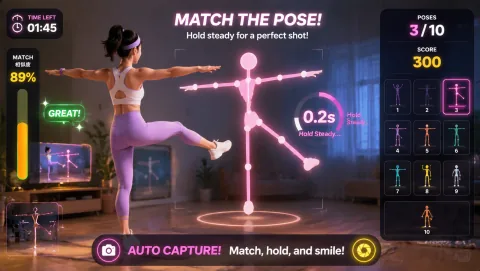
Awkward Pose Studio
Copy a body silhouette before the countdown finishes and hold it for the match.
Controls: Arrange your arms and body to match the displayed pose.
First-round idea: Read the whole silhouette before moving into the shape.
Pro · sign-in required