What age are body pattern games best for?
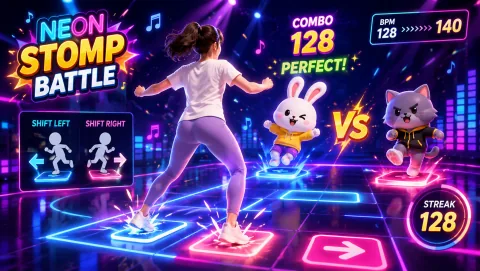
The sweet spot is ages 5 to 8, roughly kindergarten through second grade, when repeating patterns are a core math topic. Younger kids can copy two-move patterns like jump-squat with a partner doing it alongside them. Older kids still enjoy the games but should get harder patterns — three or four moves, growing sequences, and name-the-rule challenges — to stay engaged.
Do webcam pattern games replace pattern worksheets?
No — treat them as the active break around pattern practice, not the practice itself. A five-minute movement round after a worksheet gives kids a reset so the next practice block starts fresh, and a quick body pattern (clap-clap-squat) makes a warm opener. MovePlay games are reflex and fitness games for fun; they don't teach curriculum, and pattern learning still comes from your lessons and materials.
Can I run these on a classroom projector?
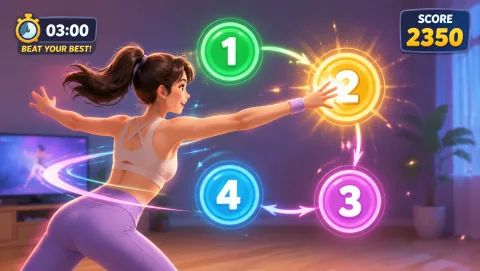
Yes. Everything runs in the browser on one teacher laptop connected to the projector — point the laptop camera at a clear floor patch, and one child plays on camera while the rest copy the moves from their spots. There is nothing to install and no student accounts, so the game is on screen in about a minute once the page is bookmarked.
What if my child or student can't keep up with the sequence?
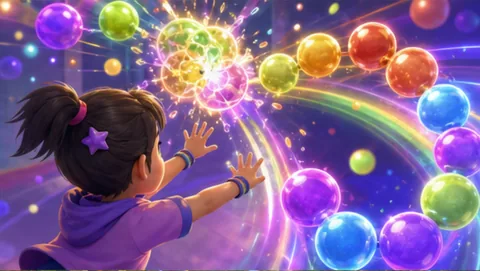
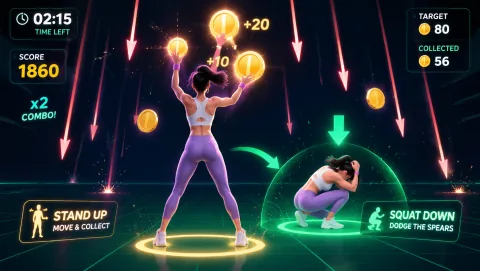
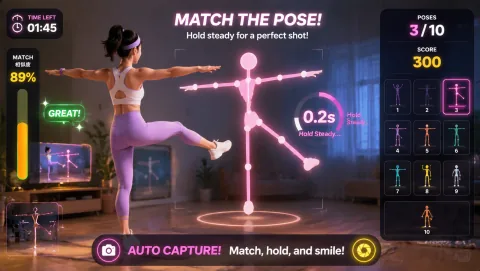
Shorten it. Drop from three moves to two, slow your counting, and let kids watch one full round before joining in. In the webcam games, use the first rounds as rehearsal where score doesn't matter. If a full-body sequence is too much, switch to hand-only games like Bubble Match — pointing at two matching bubbles is a pattern job that almost any kid can succeed at.
How long should a pattern movement session last?
Five to ten minutes is the right range for K-2 attention spans. A simple structure that works: one minute of a spoken body pattern as a warm-up, one or two short webcam game rounds, then a growing-sequence finale where kids add moves. End on a slow hand game so the group settles before the next activity.