Can webcam games teach my child to count?
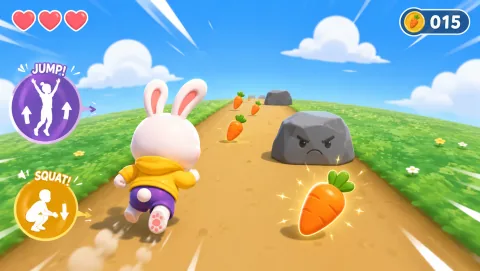
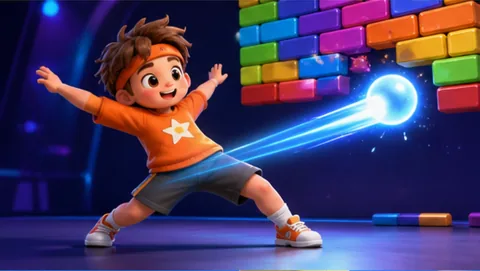
Counting is learned through practice and repetition with an adult, and no game replaces that. What a movement game adds is motivation and repetition: kids happily jump 15 times or kick 12 times when the game asks for it, and each rep is a chance for you to count aloud together. Think of the game as the activity and your voice as the counting lesson wrapped around it.
What age are counting movement games for?
They work best from about age 3 to 6 — preK through kindergarten. Ages 3–4 do well counting to 5 with big, slow movements like stomps. Ages 4–5 can usually handle counting to 10 during jumping or kicking. Kindergarteners can push toward 20 and start reading the two-digit scores that appear after a game round.
How do I practice counting to 20 with a screen game?
Give the game a counting job. During a round of high kicks or jumping, count every rep aloud together — one movement, one number — and stop at 20 even if the game keeps going. After the round ends, read the score on screen together, pointing at each digit. Two or three short rounds like this beat one long session, because attention at this age rarely survives past ten minutes.
What if my child can't finish a whole round?
Treat a partial round as a win. Pause the game, count whatever was completed — five kicks, three jumps — and end there. Short, successful reps build the habit; dragging a tired preschooler to a finish line builds avoidance. You can also switch to calmer hand games like bubble popping, where the pace is slow enough to count every single pop.
Do I need any equipment to play?
Just a laptop or desktop with a webcam. MovePlay games are browser-based, run in the browser, and need no download or signup, so a single device works for parent-and-child play at home or a small group projected on a larger screen. Clear a patch of floor about two arm-spans wide and mark the play spot so kids know where the camera can see them.