MovePlay vs Premium Connected Fitness Equipment · Honest Comparison

Two Very Different Answers to "Get the Family Moving"

Premium connected fitness machines (smart bikes, treadmills, rowing machines with screens) are excellent adult fitness platforms — serious, structured, community-driven, and priced accordingly at $1,500–$2,500+ plus a monthly subscription. MovePlay is free browser-based active gaming designed for families, kids, and classrooms. This is an honest comparison of two products built for different audiences.

This guide is for

Families with children evaluating whether a premium connected fitness machine or browser-based active gaming better fits their household — considering budget, age range, and whether they want a serious adult workout platform or fun whole-family activity.

✓ Choose MovePlay if…

Your family includes kids and budget matters

MovePlay is free, works on many laptops with a compatible webcam and browser with a webcam, and is genuinely designed for different ages — including young children. It uses game mechanics (scoring, competition, reflex challenges) rather than structured workout programming. No subscription. No hardware cost. Ideal for families who want everyone active together.

🚴 Choose connected fitness equipment if…

You want a serious adult fitness platform

Premium connected fitness machines are genuinely excellent for adults who want structured workouts, live instructor classes, detailed fitness metrics, and a community of fellow athletes. If you're a committed adult exerciser and the budget isn't a barrier, connected equipment delivers a premium experience that MovePlay isn't designed to replicate.

⚖️ Bottom line — an honest one

Different products for different households

If you want a premium adult fitness platform with live classes and community, connected equipment is excellent and worth the cost. If you want the whole family — including young kids — to be active together with game mechanics, MovePlay is the better fit. These are genuinely different products solving different problems.

Head-to-Head

Feature Comparison

MovePlay (column 2, highlighted) vs premium connected fitness equipment with subscription-based instructor classes.

Feature the platform Connected Fitness Equipment
Price to start$0$1,000–$2,500+ hardware
Monthly subscriptionNone for core gameplay$30–$50/month for classes
Designed for kids✓ All ages including young children✗ Adult fitness platform
Age range5 to 75+Primarily teens and adults (13+)
Whole family can use it✓ Same device, different ages togetherOne person uses at a time; kids need supervision
Works in browser✓ Any modern browser✗ Proprietary screen/app on equipment
No hardware neededWebcam only (built-in to most laptops)$1,000–$2,500 machine required
Fun / game mechanics✓ Scoring, competition, reflex gamesGamification elements on some classes
Competitive games✓ Leaderboards, high scoresLeaderboard on some equipment classes
Classroom use✓ Built for classrooms✗ Home equipment only
Instructor-led workoutsNot availableLive + on-demand classes
Detailed fitness metricsScore-based onlyHeart rate, calories, cadence, output

Honest Perspective

Where Each Product Genuinely Wins

Connected Equipment Genuinely Wins for Adult Fitness

High-quality connected fitness equipment delivers structured, instructor-led workouts with real-time feedback (cadence, resistance, power output). The community aspect — knowing thousands of others are in the same class — is a genuine adherence driver. For committed adult exercisers, especially those who can't easily get to a gym, this is a premium product that delivers premium results. Don't dismiss it just because of the price — if it's used consistently, it's cheaper than a gym membership over time.

Honest Assessment

If you're a serious adult fitness seeker without kids, and budget allows, premium connected equipment is likely the better choice for your fitness goals.

the platform Genuinely Wins for Families

No connected fitness machine is designed for a 7-year-old. The machines are large, designed for adult ergonomics, and the subscription content targets adults. A child can't meaningfully use a connected bike or treadmill. the platform was designed specifically to work for different ages simultaneously — a parent and child can compete on the same the platform game, take turns, and both get a real workout. That use case doesn't exist in connected fitness equipment.

Family Fitness Note

WHO guidelines recommend children achieve 60 minutes of moderate-to-vigorous physical activity daily. the platform's game mechanics make that goal feel like play rather than exercise.

The Fun Factor — Why Game Mechanics Matter for Adherence

Fun-based exercise shows approximately 52% better long-term adherence than purely metrics-driven fitness approaches, especially for non-athletes. Connected fitness equipment creates adherence through community, accountability, and instructor motivation. the platform creates adherence through game mechanics — scoring, competition, the desire to beat your high score. Both work; they work through different psychological levers. For kids especially, fun is the only lever that reliably drives consistent activity.

Research Finding

Game-based exercise interventions show 52% better adherence at 8 weeks compared to traditional exercise programming, particularly for younger participants.

The Evidence

Why Active Gaming Works for Families

+30%

More Calories Than Passive Gaming

Active camera games ask players to move rather than sit and watch; the actual effort depends on the game, the player, and the available space.

52%

Better Adherence With Fun

Fun-based exercise programming shows 52% better adherence at 8 weeks vs traditional workout formats — especially for younger participants and non-athletes.

60 min

WHO Daily Activity Target for Kids

WHO recommends children achieve 60 minutes of moderate-to-vigorous physical activity per day. the platform's game format naturally encourages repeated play sessions that accumulate toward this goal.

the platform Advantages

What Free Browser Gaming Delivers

👨‍👩‍👧

Built for Every Age

A 6-year-old and a 60-year-old can play the same the platform game on the same laptop, in the same session, competing on the same leaderboard. Connected fitness equipment can't offer this — it's designed for adult ergonomics and adult workout programming.

🎮

Games, Not Workouts

the platform doesn't feel like exercise. It feels like gaming. Scoring points, beating your high score, challenging a sibling — the exercise is a side effect of playing. For children especially, this distinction matters enormously for sustained daily activity.

💸

Zero Ongoing Cost

No hardware purchase. No monthly subscription. No financing. Open any browser on any laptop, navigate to moveplay.gg/hub/, and start playing. A rotating selection of games is free for core gameplay.

📍

Works Anywhere

Connected fitness equipment stays in one room of your house. the platform works in a hotel room, a classroom, a grandparent's house, an office break room. Any laptop with a webcam is a motion gaming station.

Highest Intensity Games

Best the platform Games for Adults Wanting a Real Workout

These four games deliver the highest physical output — heart rate elevation, sustained movement, and genuine caloric burn.

Frequently Asked Questions

Honest Answers to Common Questions

Is the platform a good alternative to connected fitness equipment for families?

For families with children: yes, the platform is the more practical choice. It works for different ages simultaneously, costs nothing, requires no equipment, and uses game mechanics that children actually enjoy. Connected fitness machines are designed as adult fitness platforms — a 7-year-old can't meaningfully use a connected stationary bike. the platform was built from the start for mixed-age family use.

Can adults get a real workout from the platform?

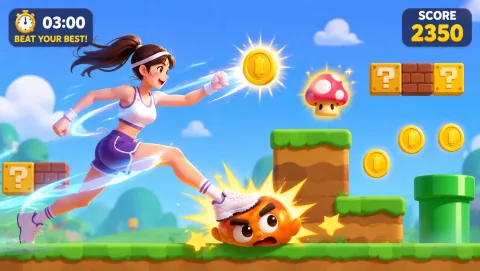
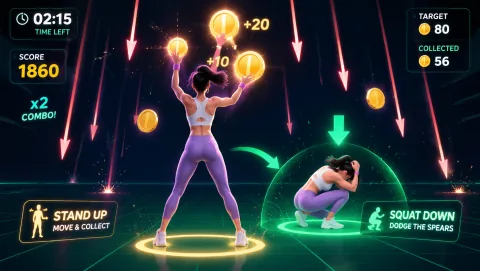
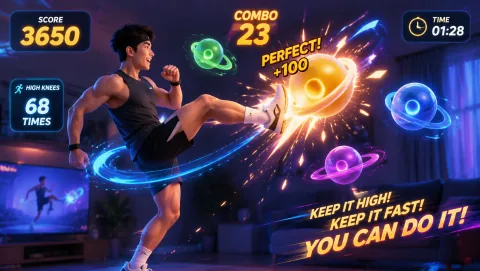
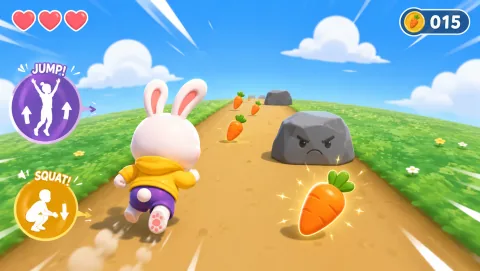
Yes, though with honest caveats. Games like SquatPacman, BunnyHop, HighKicks, and GenkiRun produce genuine cardiovascular demand — heart rates can reach 120–160 BPM in active sessions. What the platform doesn't provide is structured resistance training, detailed power output metrics, or the progressive overload structure of a proper adult fitness program. If you want a cardio supplement or an active break, the platform delivers. If you're training seriously, connected equipment offers more structure and metrics.

What does the platform offer that connected equipment doesn't?

Three things: (1) Works for different ages — especially children. (2) Costs nothing to start — no hardware. (3) Game mechanics instead of workout programming — scoring, competition, and reflex challenges that make movement feel like play. Connected equipment is excellent at what it does; it just doesn't do these three things.

Is connected fitness equipment suitable for kids?

Generally not well-suited. Most connected fitness equipment is designed for adults: the ergonomics assume adult body proportions, the content library focuses on adult fitness programming, and the subscription pricing is aimed at households where one or two adults use the machine regularly. Some equipment has family-specific modes, but these are typically secondary features rather than core design priorities.

What's the best way to get the whole family active at home?

Combine approaches based on your household. For families with children, the platform works as the core daily activity platform — accessible to different ages, free, game-driven. If adult members also want structured cardio or strength training, a secondary solution (connected equipment, gym membership, or outdoor exercise) complements it well. The most effective family fitness routine is one that every family member can participate in — which is why game-based approaches consistently outperform purely fitness-focused ones for household-wide adoption.
The Whole Family, Moving Together, Right Now

No machine to buy. No subscription to start. Any laptop, any webcam, any age. Open the browser and play — it's free.