Remove the performance layer
A low-pressure session starts by making the rules visible: camera use is local, scores are optional, and no one has to explain why they are seated, off camera, slower, or finished.
Low-pressure play
A calmer approach to webcam play: learn one control, choose your own range, and treat joining, watching, or stopping as valid options.
Updated August 30, 2026 · Editorial guide based on the current MovePlay game controls
Best for beginners, introverts, camera-shy players, people returning to activity, and groups that want fun without public pressure.
A low-pressure session starts by making the rules visible: camera use is local, scores are optional, and no one has to explain why they are seated, off camera, slower, or finished.
Use one practice round with no leaderboard. Let the player learn how the camera responds before adding time, score, or a social challenge.
Choice does not mean avoiding all challenge. It means letting a person select the posture, pace, game, and stopping point that make another attempt feel possible.
Choose by constraint
These are practical starting points based on each game’s actual control style. Test the camera and room before extending the session.
| Your situation | Start with | Why it fits |
|---|---|---|
| I want to learn privately | Cyber Knot or Laser Eyes | The action is contained and easy to repeat without performing a large movement for a group. |
| I prefer thinking to speed | Gesture Chess or Snake | Strategy and familiar game loops give the player time to understand the control. |
| I am joining a social session carefully | Bubble Match or Awkward Pose Studio | Use short turns, an observer role, and optional scoring so participation does not become a test. |
Practical playbook
Keep the first session small, specific, and easy to stop. The goal is not to create a perfect workout. The goal is to make active play feel like a normal option.
Begin with a single short low-pressure motion games round to test the real setup: camera position, lighting, and floor space before inviting a group.
Let the first player choose the opening game, then rotate so everyone gets a turn shaping the session.
Track completion, not perfection: one round finished is already a useful data point.
Why it works
The Entertainment Software Association’s international survey reports stress relief and connection among reasons players give for playing. That is useful context, not evidence that a MovePlay session treats a mental-health condition.
A watcher, caller, scorekeeper, or teammate can remain part of the activity. Participation should not depend on public movement or camera disclosure.
A personal best or “try again” cue keeps information useful. Remove public ranking when it changes a playful experiment into a performance.
Sources and limits
These links provide background for the guidance above. They do not turn a MovePlay game into a clinical assessment or guarantee a particular health, learning, or relationship outcome.
Start here
These games are browser-based and use body movement through a webcam. No controller or download required.
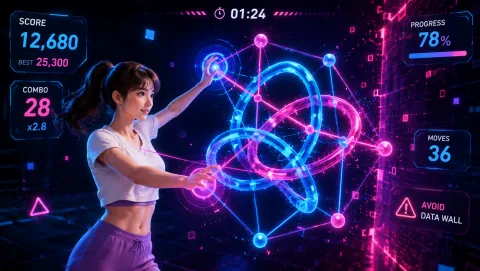
Cyber Knot
Untangle neon data coils — one wrong move and the data stream explodes.
02
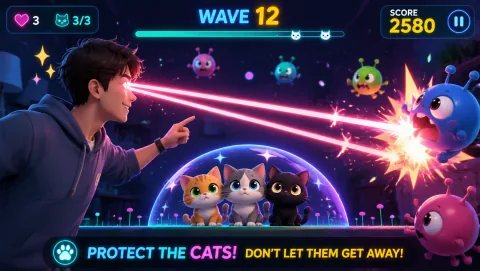 Laser Eyes
Micro-turn your head to aim, hold your gaze to fire lasers — eliminate monsters without hitting the cat.
03
Laser Eyes
Micro-turn your head to aim, hold your gaze to fire lasers — eliminate monsters without hitting the cat.
03
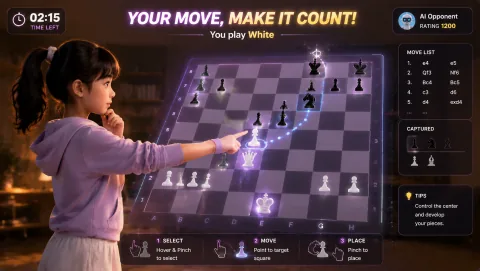 Gesture Chess
Pinch gestures command the pieces — face the AI in a peak showdown and surrender anytime.
04
Gesture Chess
Pinch gestures command the pieces — face the AI in a peak showdown and surrender anytime.
04
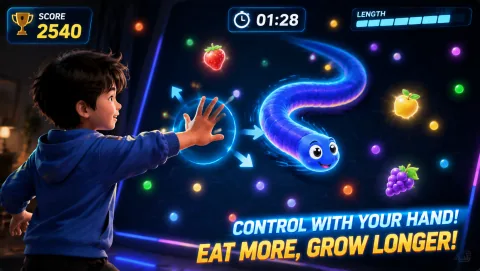 Snake
Guide the snake with your palm position — the longer it grows, the harder it is to turn.
Snake
Guide the snake with your palm position — the longer it grows, the harder it is to turn.
Simple routine
Each round answers one question: can I see the control, can I choose my pace, and do I want another turn?
More options
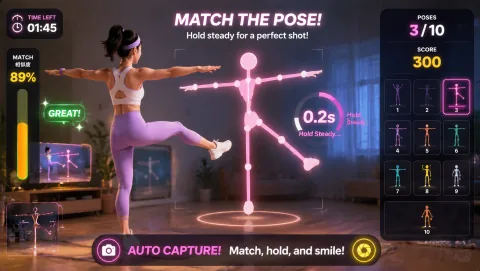 Awkward Pose Studio
Match the tricky body silhouette within 3 seconds and strike a pose for the photo.
06
Awkward Pose Studio
Match the tricky body silhouette within 3 seconds and strike a pose for the photo.
06
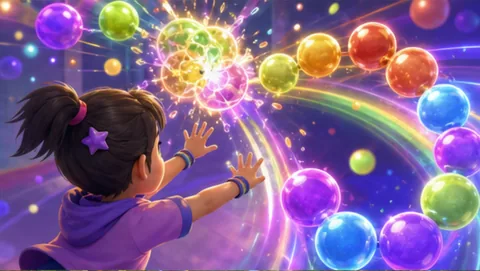 Bubble Match
Point both hands at matching bubbles to chain and pop them — rainbow bubbles are wild, bombs clear the area.
07
Bubble Match
Point both hands at matching bubbles to chain and pop them — rainbow bubbles are wild, bombs clear the area.
07
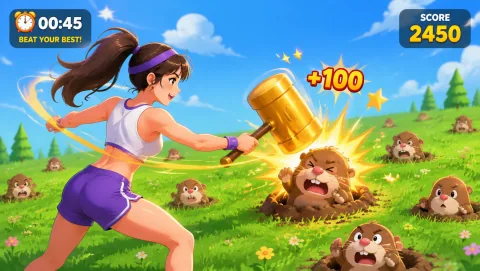 Whack A Mole
Moles pop up — smash them hard. Miss one and the rhythm spirals out of control.
Whack A Mole
Moles pop up — smash them hard. Miss one and the rhythm spirals out of control.
Keep it realistic
Keep cameras local, do not record or share someone’s feed without clear consent, and let players choose seated, standing, observing, or stopping. Reduce range and pace when needed; stop for pain, dizziness, or discomfort.
Common questions
It is a game with a clear control, flexible intensity, optional competition, and an easy way to watch, pause, or stop.
Yes, start with Cyber Knot, Laser Eyes, Snake, or Gesture Chess and use one practice round before adding time or score.
They can play locally without sharing their game feed, take a turn only when ready, or join as a caller, teammate, or observer.
No. It is a design choice for comfortable participation, not therapy, diagnosis, or a promise to relieve a condition.
Move first, scroll later