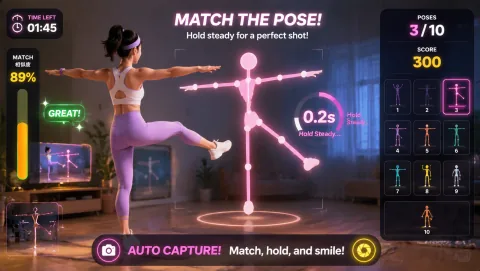
Rainy-day recess

Indoor recess movement games

Recess is free-choice time — louder and looser than a lesson. These movement games burn off wiggles on one classroom screen, with rotation systems that keep 20+ kids busy and fair.

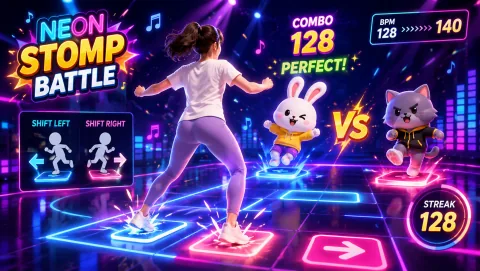
Neon Stomp Battle gameplay preview
Neon Stomp Battle Stomp side to side on the beat as the tempo climbs — a natural crowd-pleaser when the whole class can stomp along off-camera.
Best for

Best for elementary classrooms with one laptop and a projector or smartboard — rainy days, winter months, and any recess that gets moved indoors.

01

Movement Game Station

The centerpiece: one webcam game on the classroom display. One or two kids play on camera in 60–90 second rounds while their team watches the score. Pick high-energy titles first — stomping, kicking, and reaction games match recess energy better than seated puzzles.

02

Building Corner

Blocks, magnetic tiles, or a bin of recycled cardboard tubes and tape. Building absorbs the kids who want to move their hands instead of their whole body, and it runs silently next to a noisy screen station. A simple challenge card — tallest tower, longest bridge — keeps it self-directed.

03

Calm Corner

Some kids use recess to decompress, not to burn energy. A rug with drawing supplies, puzzles, or a seated-friendly game like Bubble Match gives them a legitimate choice. A calm corner also doubles as the cooldown zone after a sweaty round on camera.

Crowd control

Running 20+ kids through one screen

One screen feels like a bottleneck only if kids experience it as waiting. Turn the audience into participants and the queue into a system, and one laptop can carry a whole class through recess.

Quick setlist

A 20-minute indoor recess, start to finish

  1. Minutes 0–2: hand out rotation tickets, start Neon Stomp Battle, and let the first two players go while the class stomps along at their desks.
  2. Minutes 2–12: run Reaction or High Kicks in 60–90 second rounds with team scoring — expect 6–8 kids through in ten minutes.
  3. Minutes 12–17: switch to Fruit Slash or Whack-A-Mole for the next ticket numbers; arm-swipe games are easier for younger kids to land.
  4. Minutes 17–20: one final round for the top ticket, then a slow seated round of Bubble Match to bring the room down before the bell.

More options

For the calm corner and younger grades

Noise and space

Keep the room manageable

Push desks to the walls and tape off one play lane about two arm-spans wide so players stay put. Agree on a stop signal — a raised hand or a chime — that freezes the game instantly. Keep stomping games for the first half of recess when the next classroom can tolerate noise, and switch to arm-movement games like Fruit Slash later. Set a team-scoring rule that quiet cheering counts the same as loud cheering, and stop any round if a player feels pain or dizziness.

Questions teachers ask

FAQ

What are good indoor recess activities?

Good indoor recess activities share three traits: they start in under a minute, they work in the floor space between desks, and they let kids choose how hard to go. A movement game station on the classroom display, a building corner with blocks or recycled cardboard, and a calm corner with drawing or puzzles cover most energy levels in a typical class.

How do you run indoor recess with limited space?

Push desks against the walls to open one clear lane about two arm-spans wide, then pick games where kids move in place or along that lane. Running-in-place, stomping, reaching, and ducking games all work without anyone crossing the room. Mark the play zone with tape so kids know exactly where the action happens.

Can a whole class share one screen?

Yes. One webcam game on the classroom display works for 20 or more kids if you split roles: one or two players on camera per round, teams keeping score, and the rest of the class doing audience moves — mirroring the player's stomps or calling out targets. Short 60–90 second rounds mean most kids get a turn inside a single recess.

How do you handle turns fairly during indoor recess?

Use a visible rotation system instead of hand-raising. Numbered tickets, a popsicle-stick jar, or a class list on the whiteboard all work. Set a fixed round length before recess starts, and let kids trade a screen turn for an audience-participation role so nobody who waits feels left out of the game.
Rain outside, recess inside

Turn one laptop into a recess station.

Open the game hub