Give an elementary classroom a visible active station
Elementary School Movement Games Use Cases
Elementary School Movement Games can use webcam motion games to create one screen, short turns, and a defined reset. Choose the playbook below by who is playing, the room they are in, the time window, and how people join in.
Elementary school teachers need an activity that feels inviting without losing control of an elementary classroom movement break. The difficult part is not finding a screen; it is matching the movement, explanation, privacy boundary, and stopping point to the real moment.
Why motion works here
A visible action can create a more natural invitation
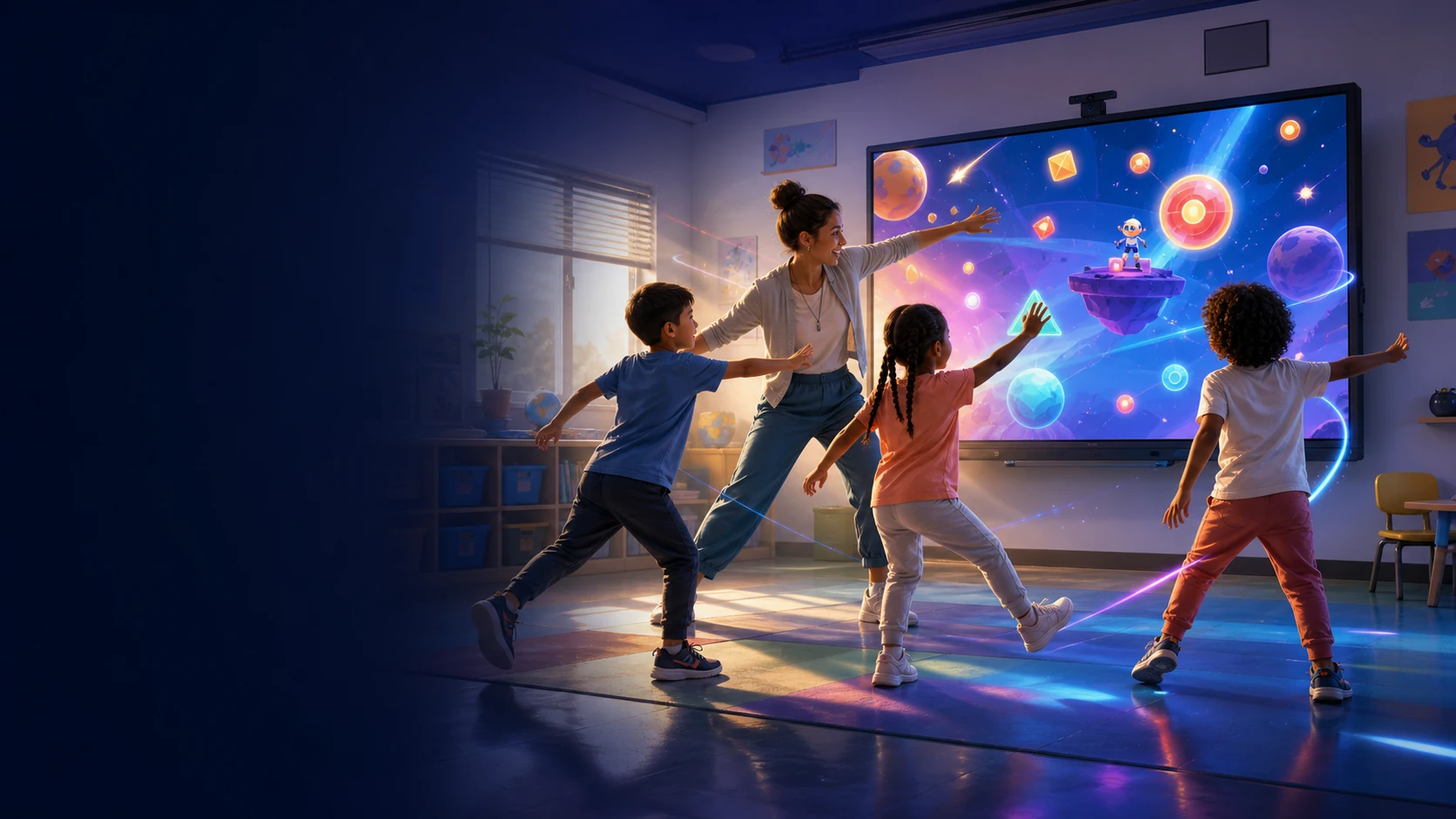
The connection works when a visible action gives people a reason to look, understand, and choose. In an elementary classroom movement break, one screen, short turns, and a defined reset; a short motion round can sit beside the main purpose instead of asking the whole group to become an audience at once.
Operating baseline: Mark a camera zone that does not interfere with the main route through an elementary classroom movement break. Start with BubbleMatch and one complete round, keep audio optional, explain that participation is voluntary, and make the handoff back to the main program visible.
Choose the real moment
Plans shaped around a specific audience and pressure
Elementary school teachers
Quick-Start Elementary School Movement Games
add a short movement round without losing classroom control so drop-in participants get an easy first turnRead the playbook →02Elementary school teachers
After-School Elementary School Movement Games
add a short movement round without losing classroom control so the gap between activities turns into active playRead the playbook →03Elementary school teachers
Weekend Elementary School Movement Games
add a short movement round without losing classroom control so families and friends share a reason to moveRead the playbook →04Elementary school teachers
Small-Space Elementary School Movement Games
add a short movement round without losing classroom control so the movement fits the space that genuinely existsRead the playbook →05Elementary school teachers
Beginner-Friendly Elementary School Movement Games
add a short movement round without losing classroom control so movement feels like an invitation rather than a testRead the playbook →06Elementary school teachers
Seasonal Elementary School Movement Games
add a short movement round without losing classroom control so the theme connects to a memorable movement momentRead the playbook →07Elementary school teachers
Family Elementary School Movement Games
add a short movement round without losing classroom control so different ages share one activity with flexible rolesRead the playbook →08Elementary school teachers
Quiet Elementary School Movement Games
add a short movement round without losing classroom control so interaction stays possible without raising the noise levelRead the playbook →09Elementary school teachers
Repeat-Visit Elementary School Movement Games
add a short movement round without losing classroom control so returning participants stay curious about the next roundRead the playbook →10Elementary school teachers
Open-House Elementary School Movement Games
add a short movement round without losing classroom control so newcomers can understand the organization by taking partRead the playbook →Planning for repeat use
Test the operating moment before choosing a plan
Repeat use in an elementary classroom movement break benefits from a considered rotation, a clear operator routine, and enough game variety to keep the experience useful when elementary school teachers return. Compare current plan details only after the first real-space rehearsal. Compare only the current published plan details, and do not assume commercial-use rights or services that are not explicitly described.
Browse the full game hub Compare current plans