Audience
The practical question is how to offer a drop-in activity across age groups when attendance is fluid and no single start time reaches everyone.
Create a destination inside a shared space
In a community event plaza, the first impression matters. Let the host show one cue, run one bounded turn, and let people decide whether they want to join.
Visible body control lowers explanation time. A marked zone and large score let passersby understand the experience while preserving a clear boundary around the player.
For public plaza programmers, this is a community plaza interactive games decision inside a community event plaza. The pressure is concrete: attendance is fluid and no single start time reaches everyone.
At the community event plaza, the public-space facilitator starts with LaserEyes because attendance is fluid and no single start time reaches everyone. The host demonstrates head-position aiming, runs one bounded turn, and hands the station to the next participant so the program can offer a drop-in activity across age groups. The practical question is how to offer a drop-in activity across age groups when attendance is fluid and no single start time reaches everyone.
The practical question is how to offer a drop-in activity across age groups when attendance is fluid and no single start time reaches everyone.
Start with the smallest workable footprint: Use a staffed footprint clear of entrances, stalls, security, deliveries, and accessible routes.
Make the camera boundary honest before anyone is asked to move. For public plaza programmers, also provide spectator, scorekeeper, and no-camera roles.
If attendance is fluid and no single start time reaches everyone, use this exit: At the community event plaza, if attendance is fluid and no single start time reaches everyone, close or relocate the station when public access needs the footprint; otherwise move from LaserEyes to BubbleMatch without expanding the marked footprint.
The right first game is the one the host can explain before the room loses patience. Start with the smallest workable version for public plaza programmers, then compare the alternatives.
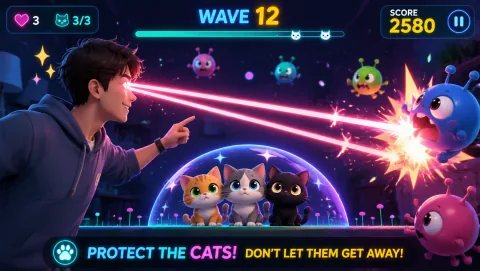
head-position aiming
LaserEyes leads because head-position aiming supports the specific goal to offer a drop-in activity across age groups. Use a staffed footprint clear of entrances, stalls, security, deliveries, and accessible routes.
Practical fit: quiet, contained participation when floor travel is unsuitable. Plan for seated or standing space with low movement.

two-hand pointing and color matching
BubbleMatch changes the route through two-hand pointing and color matching. For Public plaza programmers in the community event plaza, offer LaserEyes first to anyone choosing a lower-movement or seated role: its head-position aiming uses seated or standing space with low movement. Also provide spectator, scorekeeper, and no-camera roles.
Practical fit: short, forgiving turns for mixed-experience groups. Plan for compact standing space with light movement.
Two later options: Reaction brings whole-body movement toward visual targets, while QuickDodge brings full-body directional dodging. Test both against the real pressure that attendance is fluid and no single start time reaches everyone.
Rehearse Laser Eyes before this moment. Use Laser Eyes as a quiet rehearsal: confirm the person stays visible, the movement is easy to copy, and the next participant knows when to step in.
Open Laser EyesKeep a second route ready. If attendance is fluid and no single start time reaches everyone makes the first choice awkward, use the hub to compare a quieter, smaller-footprint, or more social opening for a community event plaza.
Browse the full game hub01
For this exact community event plaza, protect public circulation, vendors, building operations, and drop-in turns; LaserEyes is first because its profile uses seated or standing space with low movement.
02
The host demonstrates head-position aiming, runs one bounded turn, and hands the station to the next participant so the program can offer a drop-in activity across age groups.
03
For the community event plaza, the public-space facilitator checks the camera mark, explains LaserEyes's head-position aiming, invites one voluntary turn, resets the result, and offers BubbleMatch only while the flow remains clear enough to offer a drop-in activity across age groups.
04
At the community event plaza, if attendance is fluid and no single start time reaches everyone, close or relocate the station when public access needs the footprint; otherwise move from LaserEyes to BubbleMatch without expanding the marked footprint.
First-rehearsal standard: The format can offer a drop-in activity across age groups without interfering with the main purpose of a community event plaza.
For Public plaza programmers in the community event plaza, offer LaserEyes first to anyone choosing a lower-movement or seated role: its head-position aiming uses seated or standing space with low movement. Also provide spectator, scorekeeper, and no-camera roles.
Post a clear no-recording default and do not connect play with visitor or tenant records. Before the first LaserEyes turn in the community event plaza, state that choice and keep opt-out participation available for public plaza programmers.
At the community event plaza, if attendance is fluid and no single start time reaches everyone, close or relocate the station when public access needs the footprint; otherwise move from LaserEyes to BubbleMatch without expanding the marked footprint.
Try Laser Eyes and time one complete cycle for public plaza programmers. Check framing, legibility, choice, and how quickly the room can return to its main purpose.
Community Plaza Interactive Games may benefit from a broader game rotation. Compare current plan details for broader catalog access; do not assume commercial-use rights, custom branding, event licensing, or any other plan entitlement that is not explicitly listed.
Compare current MovePlay plansAt the community event plaza, the public-space facilitator starts with LaserEyes because attendance is fluid and no single start time reaches everyone.
Use a staffed footprint clear of entrances, stalls, security, deliveries, and accessible routes. Post a clear no-recording default and do not connect play with visitor or tenant records.
At the community event plaza, if attendance is fluid and no single start time reaches everyone, close or relocate the station when public access needs the footprint; otherwise move from LaserEyes to BubbleMatch without expanding the marked footprint.