Make movement easy to start and easy to stop
Schools and Learning Environments Use Cases
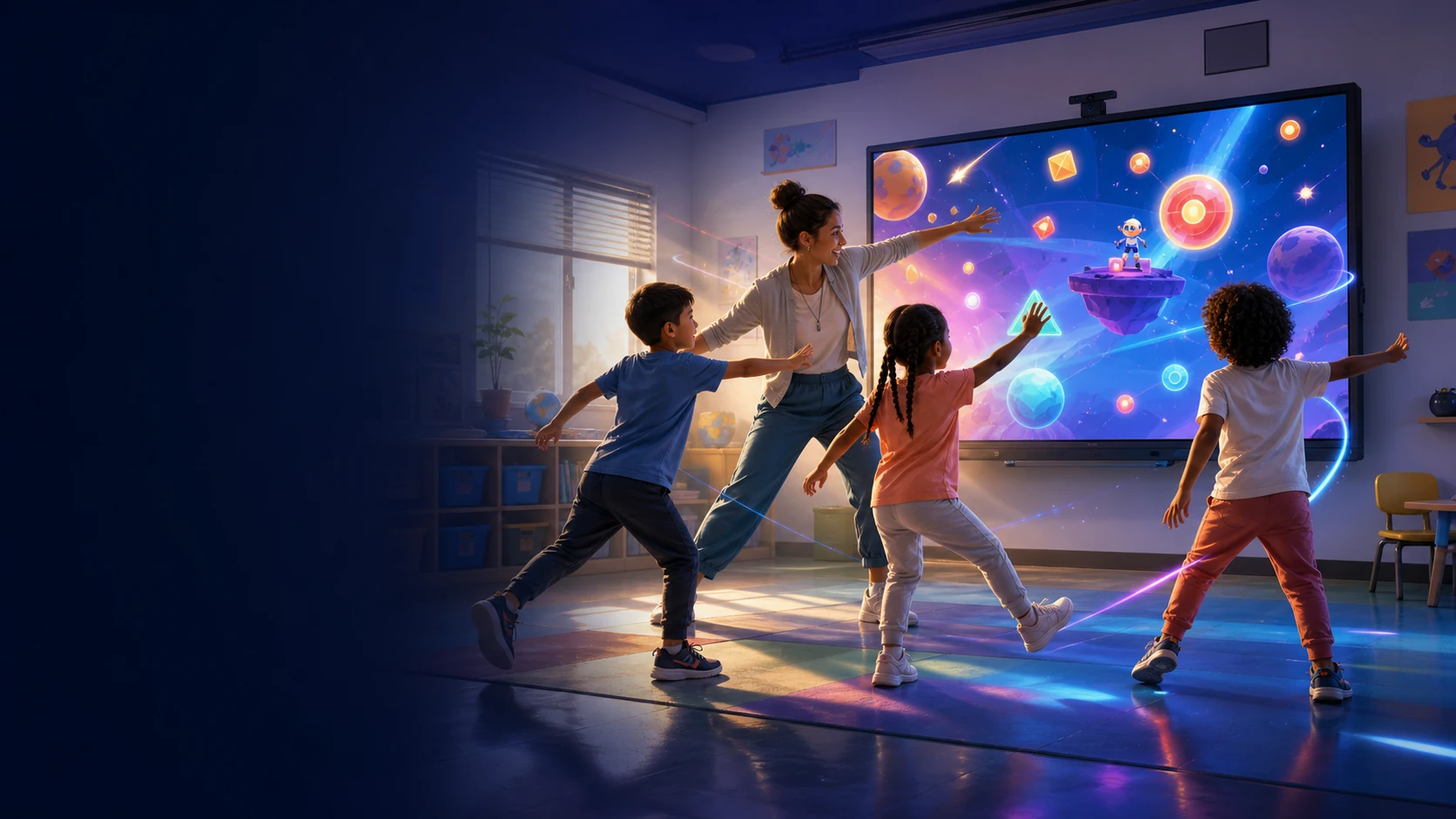
Webcam games can turn one classroom screen into an active station with clear rules, short rounds, and no shared controller. Teachers retain control of timing while students receive immediate visual feedback.
School activities must fit limited time, varied confidence, safeguarding expectations, and the practical need to return to learning without a long reset.
Why motion works here
A visible action can create a more natural invitation
Motion control gives the screen a different role: instead of asking students to watch, it responds to their movement. The teacher can choose a contained format and rotate roles around one device.
Operating baseline: Clear a marked space, keep the teacher in control of the device, use short turns, and choose movements appropriate to the room. Avoid recording names or images as part of participation.
Choose the real moment
Plans shaped around a specific audience and pressure
Elementary classroom teachers
Elementary Classroom Motion Breaks
give students a short, bounded movement resetRead the playbook →02Physical education teachers
No-Equipment PE Game Stations
add a digital station without buying controllersRead the playbook →03School admissions teams
School Open-Day Family Games
help visiting families experience the school atmosphereRead the playbook →04After-school program leaders
After-School Motion Games
offer an activity that starts quickly after classRead the playbook →05Summer camp coordinators
Indoor Summer Camp Games
replace a canceled outdoor block with structured active playRead the playbook →06School fundraiser teams
School Carnival Digital Games
run a repeatable activity booth with visible scoresRead the playbook →07University orientation leaders
University Orientation Games
give new students a shared challenge before conversations beginRead the playbook →08Youth librarians
Library Youth Motion Games
offer contained movement without turning the room chaoticRead the playbook →09Museum education teams
Museum Learning Motion Games
connect observation with a physical responseRead the playbook →10Homeschool cooperative leaders
Homeschool Co-Op Movement Games
add a group movement block that works across householdsRead the playbook →Planning for repeat use
Test the operating moment before choosing a plan
Schools using the format repeatedly benefit from more game choices so age groups, lesson rhythms, and room constraints do not all depend on the same activity. Compare only the current published plan details, and do not assume commercial-use rights or services that are not explicitly described.
Browse the full game hub Compare current plans