01
State the job
For intergenerational memory game night online, name the immediate job: let different ages contribute without one speed standard.
Gap expansion · senior cognition dexterity
For families living across households, the first useful move is to let different ages contribute without one speed standard without asking the room to do more than it can support.
caller-led rounds and flexible roles. This page turns intergenerational memory game night online into a small, testable plan: one cue, one clear boundary, and a straightforward way to pause.
Let the room set the pace. A seated, hand-led, or one-person version is a useful fallback when the full format asks too much.
For families living across households, the useful test is simple: can someone understand the first cue and stop without explaining themselves?
01
For intergenerational memory game night online, name the immediate job: let different ages contribute without one speed standard.
02
Mark the smallest workable camera zone, check the light, and keep an obvious route to stop or step aside.
03
families living across households can choose player, coach, caller, scorekeeper, observer, or no-camera participation. Treat the first game as a rehearsal. If the camera height, floor space, or confidence level is wrong, keep the goal and change the input.
04
latency, camera framing, and turn-taking. Explain the first cue before adding score, and give observers a meaningful role if they do not want to be on camera.
The best option is the one the host can reset cleanly. Keep score secondary until the room understands the cue. These are options to test in the actual room, not a ranking of people or movement styles.
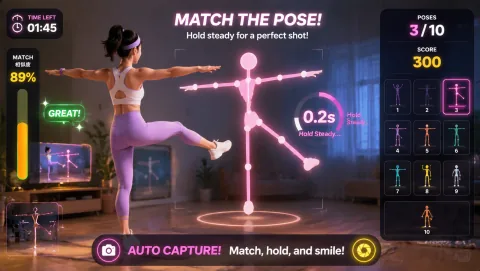
full-body pose matching
Awkward Pose Studio fits this page because it uses full-body pose matching in medium standing space with light-to-moderate movement.
Play fit: social rounds where the attempt is entertaining for players and spectators

camera-guided movement
Cloud Flight fits this page because it uses camera-guided movement in a clear area where the player can stay visible.
Play fit: a readable movement-to-screen loop
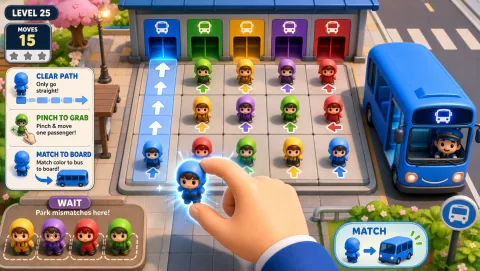
camera-guided movement
Bus Queue fits this page because it uses camera-guided movement in a clear area where the player can stay visible.
Play fit: a readable movement-to-screen loop
Start with a small rehearsal. Test the frame from the player’s position before anyone joins; keep furniture, cables, doors, and passers-by outside the movement line. Choose the game whose first movement is easiest to explain for this audience; switch the control style before raising the intensity.
Open the game hubParticipation is voluntary. Offer player, caller, scorekeeper, observer, and no-camera roles so belonging does not depend on performing for the camera.
Frame only the space needed for play, tell nearby people when the camera is active, and avoid recording by default. Keep play separate from identity, health, purchase, or attendance data.
caller-led rounds and flexible roles Adjust range, pace, posture, audio, or turn length to the person and room. If a participant has a health or mobility concern, follow qualified professional advice.
This is active-play planning, not medical treatment, diagnosis, therapy, or a promised health result. Apply local safeguarding, accessibility, and privacy requirements. For general movement context across ages and abilities, review the WHO Guidelines on physical activity and sedentary behaviour.
What to observe: let different ages contribute without one speed standard in a virtual multigenerational game night while respecting latency, camera framing, and turn-taking.
Begin with one short, voluntary round. caller-led rounds and flexible roles. Check the camera view, explain the movement rule, and let people choose player, caller, scorekeeper, observer, or no-camera roles.
Mark a clear camera footprint, remove immediate trip hazards, test lighting and framing, and keep a lower-movement alternative ready. The aim is a workable activity format, not a promise of a health or performance outcome.
Let people join, watch, coach, or step out. A camera turn should never be a condition of attendance, care, work, or being part of the group. Stop or switch when the room, privacy preference, or energy level changes.