01
Set the footprint
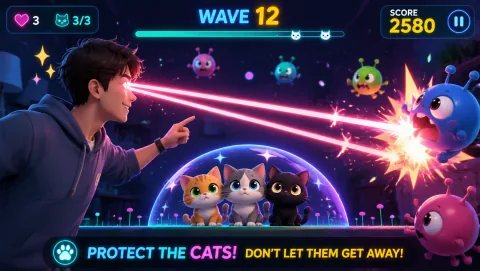
Mark and test the operating footprint. Use a marked fan activity lane clear of seating, concessions, team areas, and concourse flow. For this exact campus game-day fan zone, protect arrival waves, broadcast cues, venue circulation, and spectator turns; LaserEyes is first because its profile uses seated or standing space with low movement.
02
Open the round
Rehearse the exact opening moment. At the campus game-day fan zone, the fan-zone host starts with LaserEyes because arrivals are staggered and activities compete with food, music, and team traditions. The host demonstrates head-position aiming, runs one bounded turn, and hands the station to the next participant so the program can offer a quick challenge for students and families.
03
Guide the rotation
Assign and rehearse the operator sequence. For the campus game-day fan zone, the fan-zone host checks the camera mark, explains LaserEyes's head-position aiming, invites one voluntary turn, resets the result, and offers Reaction only while the flow remains clear enough to offer a quick challenge for students and families.
04
Close or change course
Brief privacy and contingency choices before opening. Do not connect camera play with ticketing, membership, or youth registration records. Before the first LaserEyes turn in the campus game-day fan zone, state that choice and keep opt-out participation available for college athletics event teams. At the campus game-day fan zone, if arrivals are staggered and activities compete with food, music, and team traditions, pause for venue cues and reopen with the lowest-movement option; otherwise move from LaserEyes to Reaction without expanding the marked footprint.