01
Set the footprint
Mark and test the operating footprint. Use a marked guest activity zone clear of check-in, luggage, and service carts. For this exact breakfast seating queue, protect guest arrivals, check-in, housekeeping, and family-program circulation; BubbleMatch is first because its profile uses compact standing space with light movement.
02
Open the round
Rehearse the exact opening moment. At the breakfast seating queue, the guest-program host starts with BubbleMatch because guests begin the day impatiently and staff must keep pathways clear. The host demonstrates two-hand pointing and color matching, runs one bounded turn, and hands the station to the next participant so the program can soften a predictable peak-time bottleneck.
03
Guide the rotation
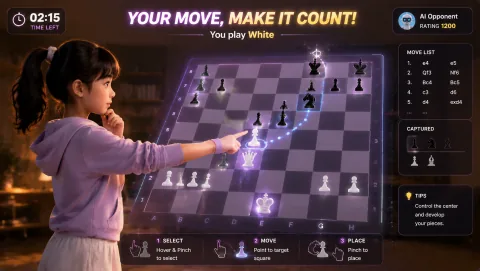
Assign and rehearse the operator sequence. For the breakfast seating queue, the guest-program host checks the camera mark, explains BubbleMatch's two-hand pointing and color matching, invites one voluntary turn, resets the result, and offers GestureChess only while the flow remains clear enough to soften a predictable peak-time bottleneck.
04
Close or change course
Brief privacy and contingency choices before opening. Do not connect camera play with booking, room, or guest-account details. Before the first BubbleMatch turn in the breakfast seating queue, state that choice and keep opt-out participation available for hotel food-and-beverage teams. At the breakfast seating queue, if guests begin the day impatiently and staff must keep pathways clear, pause the station when guest-service flow needs the space; otherwise move from BubbleMatch to GestureChess without expanding the marked footprint.