01
Set the footprint
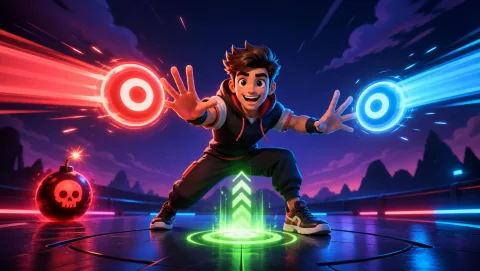
Mark and test the operating footprint. Use a personal camera zone that each participant can check against local furniture and coworkers. For this exact hybrid all-hands meeting, protect agenda cues, remote turn-taking, local room differences, and optional participation; BubbleMatch is first because its profile uses compact standing space with light movement.
02
Open the round
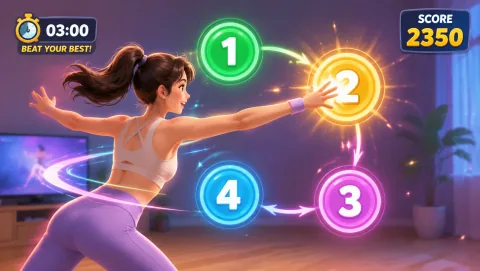
Rehearse the exact opening moment. At the hybrid all-hands meeting, the meeting facilitator starts with BubbleMatch because in-person energy can leave remote participants watching from the edge. The host demonstrates two-hand pointing and color matching, runs one bounded turn, and hands the station to the next participant so the program can give room and remote attendees one shared intermission format.
03
Guide the rotation
Assign and rehearse the operator sequence. For the hybrid all-hands meeting, the meeting facilitator checks the camera mark, explains BubbleMatch's two-hand pointing and color matching, invites one voluntary turn, resets the result, and offers QuickHands only while the flow remains clear enough to give room and remote attendees one shared intermission format.
04
Close or change course
Brief privacy and contingency choices before opening. Do not record, screenshot, or score individual feeds without workplace consent. Before the first BubbleMatch turn in the hybrid all-hands meeting, state that choice and keep opt-out participation available for internal event producers. At the hybrid all-hands meeting, if in-person energy can leave remote participants watching from the edge, use a verbal or chat-based prompt for anyone without a workable camera zone; otherwise move from BubbleMatch to QuickHands without expanding the marked footprint.