Printable session plan · Malls and Public Spaces

Museum Lobby Welcome Games: run of show

A practical, time-bounded plan for museum visitor-experience teams in a museum lobby. Use it to rehearse one clear activity without improvising the room, camera, or participation rules.

Build a session people can leave comfortably

The practical question is how to give arriving groups an immediate shared interaction when ticketing and group assembly create dead time before exhibits begin.

This is a run-of-show companion to the broader Museum Lobby Welcome Games use-case guide. Its purpose is narrower: help the operator or host run one thoughtful session with a defined start, a clear option to pause, and a prepared fallback.

Visible body control lowers explanation time. A marked zone and large score let passersby understand the experience while preserving a clear boundary around the player.

Walk through the room before the first turn

01

Set the footprint

Mark and test the operating footprint. Use a marked visitor zone clear of exhibits, cases, gallery thresholds, and ticket lines. For this exact museum lobby, protect visitor pacing, exhibit sightlines, tours, and gallery circulation; LaserEyes is first because its profile uses seated or standing space with low movement.

02

Open the round

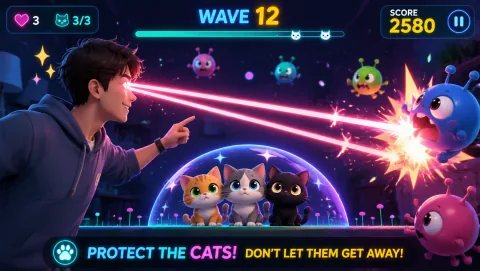
Rehearse the exact opening moment. At the museum lobby, the visitor-experience facilitator starts with LaserEyes because ticketing and group assembly create dead time before exhibits begin. The host demonstrates head-position aiming, runs one bounded turn, and hands the station to the next participant so the program can give arriving groups an immediate shared interaction.

03

Guide the rotation

Assign and rehearse the operator sequence. For the museum lobby, the visitor-experience facilitator checks the camera mark, explains LaserEyes's head-position aiming, invites one voluntary turn, resets the result, and offers BubbleMatch only while the flow remains clear enough to give arriving groups an immediate shared interaction.

04

Close or change course

Brief privacy and contingency choices before opening. Follow venue recording rules and do not associate camera play with ticket or membership records. Before the first LaserEyes turn in the museum lobby, state that choice and keep opt-out participation available for museum visitor-experience teams. At the museum lobby, if ticketing and group assembly create dead time before exhibits begin, pause for tours and use an exhibit-linked observation prompt; otherwise move from LaserEyes to BubbleMatch without expanding the marked footprint.

Decision standard: The format can give arriving groups an immediate shared interaction without interfering with the main purpose of a museum lobby.

Choose a first round that fits this room

The first choice for a museum lobby should leave room for conversation, late arrivals, and a clean handoff. Use these games as a short test against ticketing and group assembly create dead time before exhibits begin

Bubble Match webcam motion game

two-hand pointing and color matching

Bubble Match

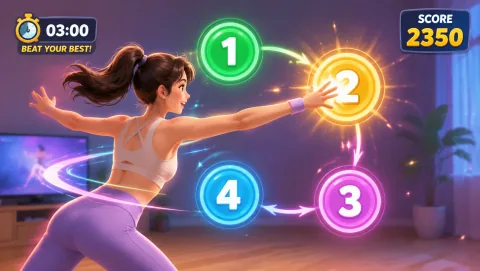
Bubble Match is included for Museum Lobby Welcome Games because it uses two-hand pointing and color matching in compact standing space with light movement.

Play fit: short, forgiving turns for mixed-experience groups For museum lobby welcome games, plan for compact standing space with light movement.

Reaction webcam motion game

whole-body movement toward visual targets

Reaction

Reaction is included for Museum Lobby Welcome Games because it uses whole-body movement toward visual targets in medium clear space with moderate movement.

Play fit: fast-reset score challenges and hosted rotations For museum lobby welcome games, plan for medium clear space with moderate movement.

Later choices: QuickDodge. For Museum visitor-experience teams in the museum lobby, offer LaserEyes first to anyone choosing a lower-movement or seated role: its head-position aiming uses seated or standing space with low movement. Also provide spectator, scorekeeper, and no-camera roles.

Keep the camera view and the exit clear

Space and light

Use a marked visitor zone clear of exhibits, cases, gallery thresholds, and ticket lines. For this exact museum lobby, protect visitor pacing, exhibit sightlines, tours, and gallery circulation; LaserEyes is first because its profile uses seated or standing space with low movement. Test camera framing and backlight from that exact zone before the first LaserEyes turn.

Access and privacy

For Museum visitor-experience teams in the museum lobby, offer LaserEyes first to anyone choosing a lower-movement or seated role: its head-position aiming uses seated or standing space with low movement. Also provide spectator, scorekeeper, and no-camera roles. Follow venue recording rules and do not associate camera play with ticket or membership records. Before the first LaserEyes turn in the museum lobby, state that choice and keep opt-out participation available for museum visitor-experience teams. Everyone has the right to opt out, choose an observer role, or stop the activity without having to explain or justify that choice.

Fallback

At the museum lobby, if ticketing and group assembly create dead time before exhibits begin, pause for tours and use an exhibit-linked observation prompt; otherwise move from LaserEyes to BubbleMatch without expanding the marked footprint.
Use active play responsibly

Use the plan for museum visitor-experience teams to make a museum lobby easier to host, not to make a health claim. If someone has a health or mobility concern, invite qualified professional advice and offer a genuine way to pause or observe.

For this a museum lobby session, keep the evidence claim modest: use the WHO Guidelines for general context and follow the local rules for privacy, accessibility, and safeguarding. WHO Guidelines on physical activity and sedentary behaviour.

What to observe here: The format can give arriving groups an immediate shared interaction without interfering with the main purpose of a museum lobby.

Answers to settle before the session

What is the opening move for Museum Lobby Welcome Games?

At the museum lobby, the visitor-experience facilitator starts with LaserEyes because ticketing and group assembly create dead time before exhibits begin. The host demonstrates head-position aiming, runs one bounded turn, and hands the station to the next participant so the program can give arriving groups an immediate shared interaction.

How should the space and camera be prepared?

Use a marked visitor zone clear of exhibits, cases, gallery thresholds, and ticket lines. For this exact museum lobby, protect visitor pacing, exhibit sightlines, tours, and gallery circulation; LaserEyes is first because its profile uses seated or standing space with low movement. Test camera framing and backlight from that exact zone before the first LaserEyes turn.

What if the planned round no longer fits the room?

At the museum lobby, if ticketing and group assembly create dead time before exhibits begin, pause for tours and use an exhibit-linked observation prompt; otherwise move from LaserEyes to BubbleMatch without expanding the marked footprint.