Printable session plan · Kids and Youth Programs

Youth Radio Workshop Break Games: run of show

A practical, time-bounded plan for community youth radio producers in a weekend recording workshop. Use it to rehearse one clear activity without improvising the room, camera, or participation rules.

Give the session one clear job

The practical question is how to keep off-mic participants engaged between recording slots when only a few young people can use the sound booth while the rest wait in an adjacent room.

This is a run-of-show companion to the broader Youth Radio Workshop Break Games use-case guide. Its purpose is narrower: help the operator or host run one thoughtful session with a defined start, a clear option to pause, and a prepared fallback.

One webcam station creates a group focal point. Children can learn by watching a demonstration, then participate through body, hand, or pose controls while leaders keep the pace moving.

Rehearse the handoff before people arrive

01

Set the footprint

Mark and test the operating footprint. Use a supervised play mark clear of project tables, bags, doors, and waiting groups. For this exact weekend recording workshop, protect youth supervision, staggered turns, activity cues, and collection flow; LaserEyes is first because its profile uses seated or standing space with low movement.

02

Open the round

Rehearse the exact opening moment. At the weekend recording workshop, the youth-program leader starts with LaserEyes because only a few young people can use the sound booth while the rest wait in an adjacent room. The host demonstrates head-position aiming, runs one bounded turn, and hands the station to the next participant so the program can keep off-mic participants engaged between recording slots.

03

Guide the rotation

Assign and rehearse the operator sequence. For the weekend recording workshop, the youth-program leader checks the camera mark, explains LaserEyes's head-position aiming, invites one voluntary turn, resets the result, and offers WhackAMole only while the flow remains clear enough to keep off-mic participants engaged between recording slots.

04

Close or change course

Brief privacy and contingency choices before opening. Use the program’s guardian-consent and safeguarding process; do not retain participant images. Before the first LaserEyes turn in the weekend recording workshop, state that choice and keep opt-out participation available for community youth radio producers. At the weekend recording workshop, if only a few young people can use the sound booth while the rest wait in an adjacent room, offer spectator, scorekeeper, or leader-led no-camera roles; otherwise move from LaserEyes to WhackAMole without expanding the marked footprint.
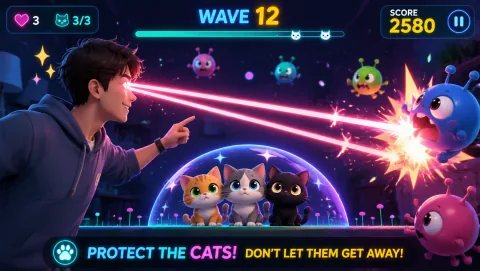

Decision standard: The format can keep off-mic participants engaged between recording slots without interfering with the main purpose of a weekend recording workshop.

Choose a first round that fits this room

Start with the game whose first cue is easiest to explain in a weekend recording workshop. The order below is a rehearsal path; it is not a ranking of people or movement styles.

Whack A Mole webcam motion game

arm reaches and whole-body leaning

Whack A Mole

Whack A Mole is included for Youth Radio Workshop Break Games because it uses arm reaches and whole-body leaning in compact-to-medium standing space with moderate movement.

Play fit: first-time players who benefit from a familiar reach-to-hit rule For youth radio workshop break games, plan for compact-to-medium standing space with moderate movement.

Quick Hands webcam motion game

hand direction matching with occasional squat cues

Quick Hands

Quick Hands is included for Youth Radio Workshop Break Games because it uses hand direction matching with occasional squat cues in compact full-body space with adjustable movement.

Play fit: short reaction rounds where hand cues keep the interaction legible For youth radio workshop break games, plan for compact full-body space with adjustable movement.

Later choices: PondGrow. For Community youth radio producers in the weekend recording workshop, offer LaserEyes first to anyone choosing a lower-movement or seated role: its head-position aiming uses seated or standing space with low movement. Also provide spectator, scorekeeper, and no-camera roles.

Protect the room and the right to opt out

Space and light

Use a supervised play mark clear of project tables, bags, doors, and waiting groups. For this exact weekend recording workshop, protect youth supervision, staggered turns, activity cues, and collection flow; LaserEyes is first because its profile uses seated or standing space with low movement. Test camera framing and backlight from that exact zone before the first LaserEyes turn.

Access and privacy

For Community youth radio producers in the weekend recording workshop, offer LaserEyes first to anyone choosing a lower-movement or seated role: its head-position aiming uses seated or standing space with low movement. Also provide spectator, scorekeeper, and no-camera roles. Use the program’s guardian-consent and safeguarding process; do not retain participant images. Before the first LaserEyes turn in the weekend recording workshop, state that choice and keep opt-out participation available for community youth radio producers. Everyone has the right to opt out, choose an observer role, or stop the activity without having to explain or justify that choice.

Fallback

At the weekend recording workshop, if only a few young people can use the sound booth while the rest wait in an adjacent room, offer spectator, scorekeeper, or leader-led no-camera roles; otherwise move from LaserEyes to WhackAMole without expanding the marked footprint.

Use active play responsibly

This plan is a practical way to structure a weekend recording workshop; it is not medical treatment, a diagnostic test, or a promise of a health result. Keep participation voluntary and follow local safeguarding, accessibility, and privacy requirements.

For community youth radio producers, the WHO Guidelines are useful background, not a scorecard. Apply the safeguarding, accessibility, and privacy requirements that govern a weekend recording workshop. WHO Guidelines on physical activity and sedentary behaviour.

What to observe here: The format can keep off-mic participants engaged between recording slots without interfering with the main purpose of a weekend recording workshop.

Answers to settle before the session

What is the opening move for Youth Radio Workshop Break Games?

At the weekend recording workshop, the youth-program leader starts with LaserEyes because only a few young people can use the sound booth while the rest wait in an adjacent room. The host demonstrates head-position aiming, runs one bounded turn, and hands the station to the next participant so the program can keep off-mic participants engaged between recording slots.

How should the space and camera be prepared?

Use a supervised play mark clear of project tables, bags, doors, and waiting groups. For this exact weekend recording workshop, protect youth supervision, staggered turns, activity cues, and collection flow; LaserEyes is first because its profile uses seated or standing space with low movement. Test camera framing and backlight from that exact zone before the first LaserEyes turn.

What if the planned round no longer fits the room?

At the weekend recording workshop, if only a few young people can use the sound booth while the rest wait in an adjacent room, offer spectator, scorekeeper, or leader-led no-camera roles; otherwise move from LaserEyes to WhackAMole without expanding the marked footprint.