Printable session plan · Event Agencies and Production Teams

Community Campaign Event Games: run of show

A practical, time-bounded plan for public engagement agencies in a community campaign event. Use it to rehearse one clear activity without improvising the room, camera, or participation rules.

Build a session people can leave comfortably

The practical question is how to offer an approachable activity beside information stands when visitors have varied reasons for attending and may avoid formal consultations.

This is a run-of-show companion to the broader Community Campaign Event Games use-case guide. Its purpose is narrower: help the operator or host run one thoughtful session with a defined start, a clear option to pause, and a prepared fallback.

A browser, webcam, display, marked zone, and host form a repeatable technical package. Producers can select from live games to match available space and program energy while keeping campaign graphics outside the game itself.

Rehearse the handoff before people arrive

01

Set the footprint

Mark and test the operating footprint. Use a documented show-floor footprint clear of load-in, cable, queue, and egress paths. For this exact community campaign event, protect the show file, client cues, load-in, staffing handoffs, and guest flow; AwkwardPoseStudio is first because its profile uses medium standing space with light-to-moderate movement.

02

Open the round

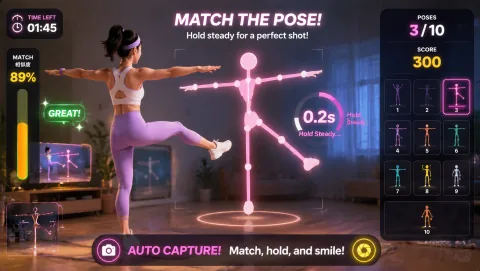
Rehearse the exact opening moment. At the community campaign event, the event operations lead starts with AwkwardPoseStudio because visitors have varied reasons for attending and may avoid formal consultations. The host demonstrates full-body pose matching, runs one bounded turn, and hands the station to the next participant so the program can offer an approachable activity beside information stands.

03

Guide the rotation

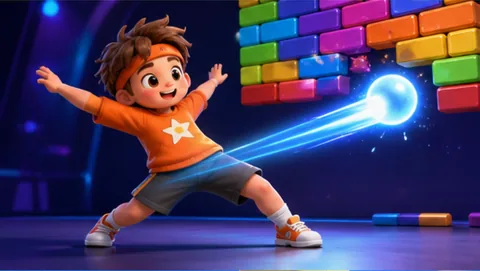
Assign and rehearse the operator sequence. For the community campaign event, the event operations lead checks the camera mark, explains AwkwardPoseStudio's full-body pose matching, invites one voluntary turn, resets the result, and offers PaddleGuard only while the flow remains clear enough to offer an approachable activity beside information stands.

04

Close or change course

Brief privacy and contingency choices before opening. Keep camera control separate from event capture and obtain consent for any recording. Before the first AwkwardPoseStudio turn in the community campaign event, state that choice and keep opt-out participation available for public engagement agencies. At the community campaign event, if visitors have varied reasons for attending and may avoid formal consultations, use the rehearsed show-file fallback when the stage manager closes the station; otherwise move from AwkwardPoseStudio to PaddleGuard without expanding the marked footprint.
Decision standard: The format can offer an approachable activity beside information stands without interfering with the main purpose of a community campaign event.

Choose a first round that fits this room

Choose the opening round for the actual energy of a community campaign event, not for an abstract idea of intensity. If the first option feels wrong, keep the goal and change the control style.

Paddle Guard webcam motion game

side-to-side body movement

Paddle Guard

Paddle Guard is included for Community Campaign Event Games because it uses side-to-side body movement in medium-width standing space with moderate movement.

Play fit: quick score rounds built around readable lateral control For community campaign event games, plan for medium-width standing space with moderate movement.

Reaction webcam motion game

whole-body movement toward visual targets

Reaction

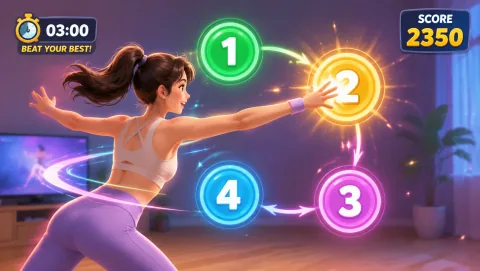
Reaction is included for Community Campaign Event Games because it uses whole-body movement toward visual targets in medium clear space with moderate movement.

Play fit: fast-reset score challenges and hosted rotations For community campaign event games, plan for medium clear space with moderate movement.

Later choices: LaserEyes. For Public engagement agencies in the community campaign event, offer LaserEyes first to anyone choosing a lower-movement or seated role: its head-position aiming uses seated or standing space with low movement. Also provide spectator, scorekeeper, and no-camera roles.

Protect the room and the right to opt out

Space and light

Use a documented show-floor footprint clear of load-in, cable, queue, and egress paths. For this exact community campaign event, protect the show file, client cues, load-in, staffing handoffs, and guest flow; AwkwardPoseStudio is first because its profile uses medium standing space with light-to-moderate movement. Test camera framing and backlight from that exact zone before the first AwkwardPoseStudio turn.

Access and privacy

For Public engagement agencies in the community campaign event, offer LaserEyes first to anyone choosing a lower-movement or seated role: its head-position aiming uses seated or standing space with low movement. Also provide spectator, scorekeeper, and no-camera roles. Keep camera control separate from event capture and obtain consent for any recording. Before the first AwkwardPoseStudio turn in the community campaign event, state that choice and keep opt-out participation available for public engagement agencies. Everyone has the right to opt out, choose an observer role, or stop the activity without having to explain or justify that choice.

Fallback

At the community campaign event, if visitors have varied reasons for attending and may avoid formal consultations, use the rehearsed show-file fallback when the stage manager closes the station; otherwise move from AwkwardPoseStudio to PaddleGuard without expanding the marked footprint.
Use active play responsibly

The useful evidence in a community campaign event is operational: can people see the cue, understand the turn, and stop without disruption? Treat the activity as active play, not as a substitute for clinical or educational judgment.

For this a community campaign event session, keep the evidence claim modest: use the WHO Guidelines for general context and follow the local rules for privacy, accessibility, and safeguarding. WHO Guidelines on physical activity and sedentary behaviour.

What to observe here: The format can offer an approachable activity beside information stands without interfering with the main purpose of a community campaign event.

Answers to settle before the session

What is the opening move for Community Campaign Event Games?

At the community campaign event, the event operations lead starts with AwkwardPoseStudio because visitors have varied reasons for attending and may avoid formal consultations. The host demonstrates full-body pose matching, runs one bounded turn, and hands the station to the next participant so the program can offer an approachable activity beside information stands.

How should the space and camera be prepared?

Use a documented show-floor footprint clear of load-in, cable, queue, and egress paths. For this exact community campaign event, protect the show file, client cues, load-in, staffing handoffs, and guest flow; AwkwardPoseStudio is first because its profile uses medium standing space with light-to-moderate movement. Test camera framing and backlight from that exact zone before the first AwkwardPoseStudio turn.

What if the planned round no longer fits the room?

At the community campaign event, if visitors have varied reasons for attending and may avoid formal consultations, use the rehearsed show-file fallback when the stage manager closes the station; otherwise move from AwkwardPoseStudio to PaddleGuard without expanding the marked footprint.