Printable session plan · Adult Active Routines

Couples Active Game-Night Games: run of show

A practical, time-bounded plan for couples sharing a game night in a living-room evening. Use it to rehearse one clear activity without improvising the room, camera, or participation rules.

Make the activity fit the day you are planning

The practical question is how to alternate short active challenges together when many two-person entertainment options keep both people seated.

This is a run-of-show companion to the broader Couples Active Game-Night Games use-case guide. Its purpose is narrower: help the operator or host run one thoughtful session with a defined start, a clear option to pause, and a prepared fallback.

MovePlay runs through a webcam and offers different control styles, from hand and upper-body input to running, dodging, and squatting. Players can select a format appropriate to the space and time available.

Rehearse the handoff before people arrive

01

Set the footprint

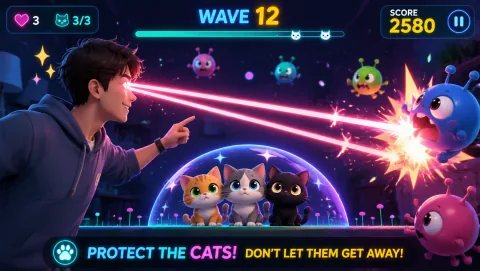
Mark and test the operating footprint. Before a living-room evening, clear one fixed camera zone and check doors, furniture edges, cables, pets, and anyone sharing the room. LaserEyes needs seated or standing space with low movement; if that footprint is unavailable, choose a smaller-movement option instead of rearranging the whole space.

02

Open the round

Rehearse the exact opening moment. Open LaserEyes during a living-room evening and treat the first head-position aiming round as a complete session, not a warm-up that must continue. That boundary helps couples sharing a game night alternate short active challenges together even when many two-person entertainment options keep both people seated.

03

Guide the rotation

Choose and rehearse the personal sequence. The player starts a living-room evening by confirming the marked floor area and camera view, then runs one LaserEyes round using head-position aiming. Reaction is the next option for whole-body movement toward visual targets, but continuing is always a fresh choice.

04

Close or change course

Set the privacy and stop choices before starting. Treat the webcam view during a living-room evening as private household space. Avoid recording, screenshots, and casual sharing; let housemates know when the camera is active and exclude anyone who has not chosen to appear. When many two-person entertainment options keep both people seated, make the fallback immediate: switch to LaserEyes, reduce the session to one contained turn, or close the game. Do not widen the footprint or chase intensity simply to complete a plan.
Decision standard: The format can alternate short active challenges together without interfering with the main purpose of a living-room evening.

Choose a first round that fits this room

Choose the opening round for the actual energy of a living-room evening, not for an abstract idea of intensity. If the first option feels wrong, keep the goal and change the control style.

Reaction webcam motion game

whole-body movement toward visual targets

Reaction

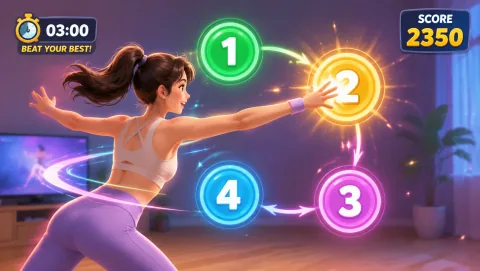
Reaction is included for Couples Active Game-Night Games because it uses whole-body movement toward visual targets in medium clear space with moderate movement.

Play fit: fast-reset score challenges and hosted rotations For couples active game-night games, plan for medium clear space with moderate movement.

GenkiRun webcam motion game

in-place running arm rhythm

GenkiRun

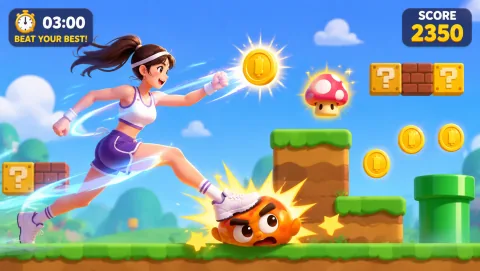
GenkiRun is included for Couples Active Game-Night Games because it uses in-place running arm rhythm in compact standing space with moderate movement.

Play fit: active breaks that avoid wide travel across the floor For couples active game-night games, plan for compact standing space with moderate movement.

Later choices: FruitSlash. a living-room evening does not need a fixed intensity target. Move to LaserEyes for head-position aiming in seated or standing space with low movement, take a watching role, or end after one round when any of those choices fits better.

Protect the room and the right to opt out

Space and light

Before a living-room evening, clear one fixed camera zone and check doors, furniture edges, cables, pets, and anyone sharing the room. LaserEyes needs seated or standing space with low movement; if that footprint is unavailable, choose a smaller-movement option instead of rearranging the whole space. Test camera framing and backlight from that exact zone before the first LaserEyes turn.

Access and privacy

a living-room evening does not need a fixed intensity target. Move to LaserEyes for head-position aiming in seated or standing space with low movement, take a watching role, or end after one round when any of those choices fits better. Treat the webcam view during a living-room evening as private household space. Avoid recording, screenshots, and casual sharing; let housemates know when the camera is active and exclude anyone who has not chosen to appear. Everyone has the right to opt out, choose an observer role, or stop the activity without having to explain or justify that choice.

Fallback

When many two-person entertainment options keep both people seated, make the fallback immediate: switch to LaserEyes, reduce the session to one contained turn, or close the game. Do not widen the footprint or chase intensity simply to complete a plan.
Use active play responsibly

The useful evidence in a living-room evening is operational: can people see the cue, understand the turn, and stop without disruption? Treat the activity as active play, not as a substitute for clinical or educational judgment.

Use the WHO Guidelines as general movement context for a living-room evening, while letting local safeguarding and accessibility practice set the boundary for this session. WHO Guidelines on physical activity and sedentary behaviour.

What to observe here: The format can alternate short active challenges together without interfering with the main purpose of a living-room evening.

Answers to settle before the session

What is the opening move for Couples Active Game-Night Games?

Open LaserEyes during a living-room evening and treat the first head-position aiming round as a complete session, not a warm-up that must continue. That boundary helps couples sharing a game night alternate short active challenges together even when many two-person entertainment options keep both people seated.

How should the space and camera be prepared?

Before a living-room evening, clear one fixed camera zone and check doors, furniture edges, cables, pets, and anyone sharing the room. LaserEyes needs seated or standing space with low movement; if that footprint is unavailable, choose a smaller-movement option instead of rearranging the whole space. Test camera framing and backlight from that exact zone before the first LaserEyes turn.

What if the planned round no longer fits the room?

When many two-person entertainment options keep both people seated, make the fallback immediate: switch to LaserEyes, reduce the session to one contained turn, or close the game. Do not widen the footprint or chase intensity simply to complete a plan.