01
Set the footprint
Mark and test the operating footprint. Before a short start-of-day window, clear one fixed camera zone and check doors, furniture edges, cables, pets, and anyone sharing the room. FruitSlash needs compact-to-medium standing space with moderate upper-body movement; if that footprint is unavailable, choose a smaller-movement option instead of rearranging the whole space.
02
Open the round
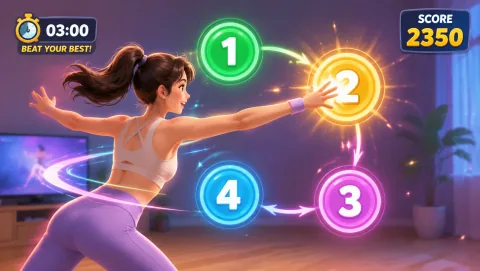
Rehearse the exact opening moment. Open FruitSlash during a short start-of-day window and treat the first alternating arm swipes round as a complete session, not a warm-up that must continue. That boundary helps adults building a morning routine begin the day with an activity that has a clear finish even when complex plans are easy to skip when the schedule changes.
03
Guide the rotation
Choose and rehearse the personal sequence. The player starts a short start-of-day window by confirming the marked floor area and camera view, then runs one FruitSlash round using alternating arm swipes. Reaction is the next option for whole-body movement toward visual targets, but continuing is always a fresh choice.
04
Close or change course
Set the privacy and stop choices before starting. Treat the webcam view during a short start-of-day window as private household space. Avoid recording, screenshots, and casual sharing; let housemates know when the camera is active and exclude anyone who has not chosen to appear. When complex plans are easy to skip when the schedule changes, make the fallback immediate: switch to LaserEyes, reduce the session to one contained turn, or close the game. Do not widen the footprint or chase intensity simply to complete a plan.