Some activities raise your heart rate or challenge muscles without using the familiar format of sets, reps, and a gym timer. If traditional workouts bore you, these alternatives can make movement easier to start.
For adults, the hardest part is often starting rather than knowing what movement is available. Short walks, a few active game rounds, music, mobility work, or a simple skill can all fit without turning the day into a training plan. A routine that survives ordinary days is the one with the best chance of lasting.
Low-friction ways to move
Dance
A class, video, rhythm game, or three-song session can range from light to vigorous depending on style and effort.
Attach it to a natural break in the day so you do not need a second decision about when to begin.
Active gaming
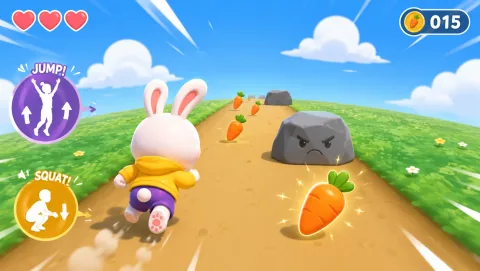
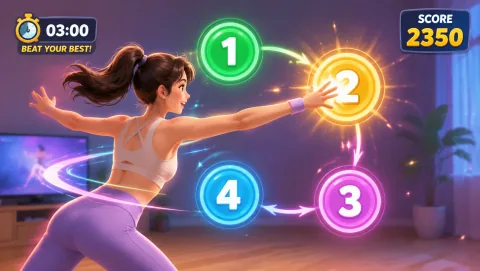
Exergames use movement as part of play. VR rhythm games, boxing games, console sports, and webcam motion games can all create activity while attention stays on the game.
With MovePlay, for example, body or hand movement controls browser games built around reactions, squats, swipes, or dodging.
If the format is enjoyable, resist the urge to optimize it immediately into a complicated program.
Hiking and walking with a destination
A route with scenery, a coffee destination, photography, or a friend can feel less like exercise than pacing on a machine.
Use effort that feels appropriate today; tomorrow's repeat matters more than today's heroic session.
Recreational sport
Badminton, pickleball, casual basketball, table tennis, climbing, skating, or swimming can provide substantial activity without a “workout” mindset.
A score or streak can be motivating, but it should not make you ignore discomfort or poor movement quality.
Skill practice
Learn juggling, jump rope tricks, dance steps, ball handling, or martial-arts patterns. Progress is measured by skill rather than only effort.
A sustainable active routine usually has a very low-friction version. Short walks, a few active game rounds, music, mobility work, or a simple skill can all fit without turning the day into a training plan. A routine that survives ordinary days is the one with the best chance of lasting.
Active chores and projects
Gardening, cleaning, moving boxes, painting, and home projects create movement, though they do not replace every element of a balanced fitness routine.
Play with children or pets
Walking, chasing, throwing, and active games can add movement in a social context.
Short challenge circuits
If you do want some structure, make it game-like: three minutes of reaction, three minutes of squats or steps, three minutes of balance, one minute to cool down.
The useful principle is simple: exercise does not have to look like “exercise culture.” Find an activity where the reason to continue is built into the experience.
How to make it repeatable
It helps to judge movement by repeatability before ambition. Short walks, a few active game rounds, music, mobility work, or a simple skill can all fit without turning the day into a training plan. A routine that survives ordinary days is the one with the best chance of lasting.
One thing I would not ignore
The useful question is what you would still do on a busy or low-energy day. Short walks, a few active game rounds, music, mobility work, or a simple skill can all fit without turning the day into a training plan. A routine that survives ordinary days is the one with the best chance of lasting.
Make movement easier to repeat
Many adults need a smaller commitment, not a more sophisticated workout. Short walks, a few active game rounds, music, mobility work, or a simple skill can all fit without turning the day into a training plan. A routine that survives ordinary days is the one with the best chance of lasting.
Choose it for the group in front of you
Best fit: this works when the ages and confidence levels can share one simple goal, with an adult able to explain the first round and step in if the room loses focus.
Limit: it is a weaker choice when children are tired, the ages are far apart, or one person is expected to perform in front of everyone. A quieter role or a shorter round may be the better answer.
If you are choosing: start with the smallest version that can succeed in the available space. Add speed, scoring, or competition only after the group understands the basic action.