Working from home removes the commute, meeting-room walks, and many small reasons to leave a chair. A movement routine needs to replace some of that incidental activity without turning the workday into a fitness schedule.
A break between meetings only works if it respects the context around it. Managers should model participation casually rather than tracking who joins or turning wellbeing into another performance metric. If people come back more awake and not embarrassed, the activity did enough.
Use meetings as triggers
After every video call, stand for two to five minutes. Walk, refill water, or do a short movement sequence.
In professional settings, low pressure usually beats high enthusiasm. Managers should model participation casually rather than tracking who joins or turning wellbeing into another performance metric. If people come back more awake and not embarrassed, the activity did enough.
Take walking calls
If a meeting does not require a screen or notes, use headphones and walk around the home or outside.
Workplace movement should fit inside work rather than pretending the office has become a gym. The finish should be as clear as the start so the group can return to work without losing another five minutes. If people come back more awake and not embarrassed, the activity did enough.
Create a “one song” rule
Once or twice a day, play one song and move until it ends. This is easier to start than planning a full workout.
For teams, a good energizer is deliberately modest. The finish should be as clear as the start so the group can return to work without losing another five minutes. If people come back more awake and not embarrassed, the activity did enough.
Use the stairs or hallway
A few minutes of ordinary walking is enough to break the seated pattern.
The social design matters as much as the movement itself. The finish should be as clear as the start so the group can return to work without losing another five minutes. If people come back more awake and not embarrassed, the activity did enough.
Add a game break
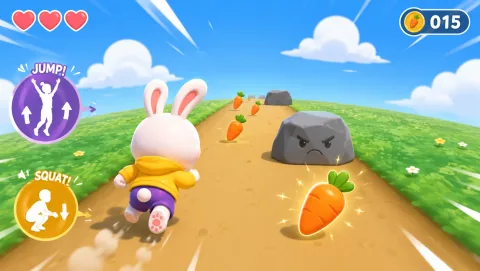
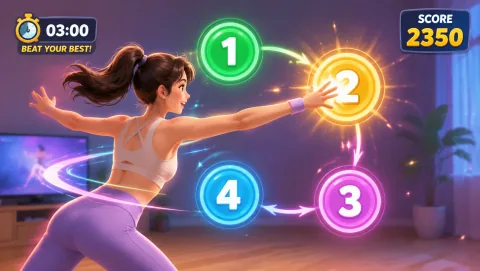
For people who need a stronger cue, a short active game can make standing up more appealing. MovePlay runs in a browser and can turn a webcam into a motion controller for reaction, squat, swipe, or other movement games.
Keep it short enough that it remains a work break rather than a new procrastination tool.
Move while waiting:
Use small delays—software builds, file exports, kettle boiling, microwave time—for calf raises, side steps, reaches, or a quick walk.
Protect lunch:
Try not to eat every lunch at the same desk. Even moving to another room creates a useful break; a ten-minute walk afterward can add more.
Build one longer activity outside work
Short breaks are valuable, but they do not have to replace walking, sport, strength work, or other longer activity you enjoy.
WFH movement works best when it is woven into the day rather than treated as another task that only happens if the calendar becomes empty.
A break between meetings only works if it respects the context around it. The finish should be as clear as the start so the group can return to work without losing another five minutes. If people come back more awake and not embarrassed, the activity did enough.
Keep the social pressure lower than the benefit
Best fit: this is useful when people can join for a short reset, understand the invitation immediately, and leave without having to explain why they are sitting out.
Limit: it is a poor choice when participation is treated as a performance, the activity competes with a serious meeting, or colleagues have very different comfort levels with cameras and movement.
If you are choosing: If you are choosing between ideas, prefer a short optional round with a personal target over a public leaderboard. The goal is an easier break, not another workplace metric.