Exercise plans are often discussed as if adherence were mainly a discipline problem. In practice, people repeat activities for many reasons: convenience, social connection, identity, routine, progress—and enjoyment.
Enjoyment matters because a behavior that feels rewarding now has an advantage over one whose benefits are months away.
For adults, the hardest part is often starting rather than knowing what movement is available. The format should reduce the friction around movement instead of adding new equipment, guilt, or preparation. The aim is to make movement easier to return to.
Long-term benefits are slow feedback
Improved fitness, health markers, or body composition take time. A single session rarely produces a visible long-term outcome.
Immediate experiences—music, social time, skill improvement, stress relief, a game score—help fill that feedback gap.
A sustainable active routine usually has a very low-friction version. The format should reduce the friction around movement instead of adding new equipment, guilt, or preparation. The aim is to make movement easier to return to.
It helps to judge movement by repeatability before ambition. The format should reduce the friction around movement instead of adding new equipment, guilt, or preparation. The aim is to make movement easier to return to.
Enjoyment can change perceived effort
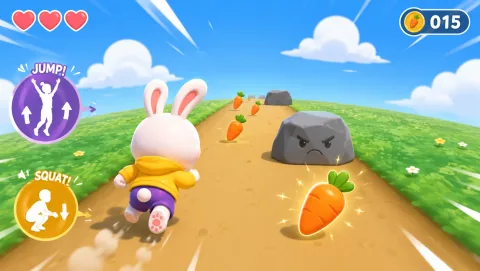
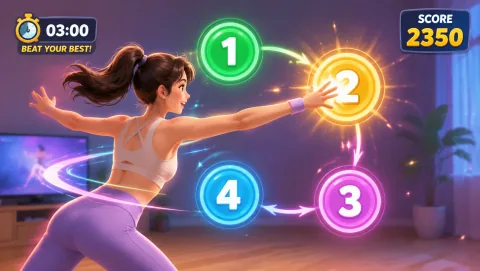
Exergaming research has found that game-based activity can sometimes lower perceived exertion while increasing enjoyment. That does not mean the body is doing less work; attention may simply be distributed differently.
This is one reason some people prefer dance, sport, or active games to repetitive cardio.
The useful question is what you would still do on a busy or low-energy day. The format should reduce the friction around movement instead of adding new equipment, guilt, or preparation. The aim is to make movement easier to return to.
Many adults need a smaller commitment, not a more sophisticated workout. The format should reduce the friction around movement instead of adding new equipment, guilt, or preparation. The aim is to make movement easier to return to.
Enjoyment is individual:
One person likes competition; another hates it. One wants a quiet walk; another wants loud music and a leaderboard.
Do not choose an activity because it is supposed to be fun. Test whether it is fun for you.
Build around multiple rewards
An activity is more resilient when it offers more than one reason to return:
- enjoyment;
- social connection;
- skill;
- convenience;
- progress;
- outdoor time;
- mood or energy after the session.
Do not confuse enjoyment with zero effort
An enjoyable activity can still be challenging. The point is not to remove exertion but to make the experience worth repeating.
For people who dislike traditional workouts, active games, sports, dance, and skill-based movement are reasonable tools precisely because they add another source of reward.
The habit question is simple: what makes you willing to start again when nobody is forcing you?
For adults, the hardest part is often starting rather than knowing what movement is available. Short walks, a few active game rounds, music, mobility work, or a simple skill can all fit without turning the day into a training plan. A routine that survives ordinary days is the one with the best chance of lasting.
Let the room decide the intensity
Best fit: use this when the available area is clear enough for the main movement and everyone can see the boundary without guessing where furniture or another player begins.
Limit: it is not the right answer when the room has fragile objects, a slippery floor, a low ceiling, or too little space to stop comfortably. More intensity is not an improvement if control disappears.
If you are choosing: If you are choosing between activities, pick the one that can be made smaller without losing its point. Reaching, reacting, or stepping in place may be a better choice than jumping or travelling across the room.