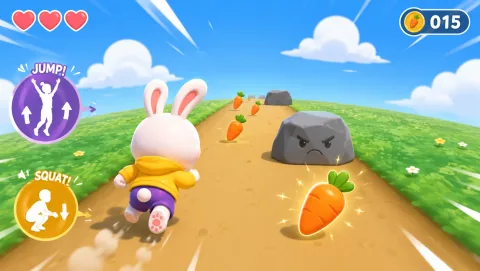
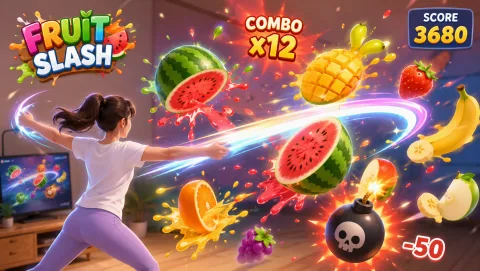
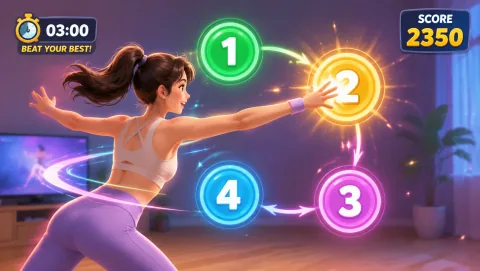
Webcam motion games can turn a stream from “watch me play” into “watch what the game makes me do.” The best challenges are visually clear, short enough to repeat, and understandable even if viewers join mid-stream.
Good facilitation content should make the next session easier. That means explaining not only the idea, but how to start it, how to scale it, how to end it, and what to do when the original plan stops fitting the room.
Personal-best challenge
Play the same reaction or accuracy game several times and try to beat the score. Viewers can predict whether the next run will improve.
Add a duration range instead of one exact time. Real groups arrive late, finish early, and vary in energy.
Changing groups make flexible formats more useful than elaborate one-off plans. A strong plan can scale from seated or low-key participation to more active rounds without being rebuilt from scratch. That is how a collection of ideas becomes a dependable program.
Chat-chooses-the-game
Let viewers vote between movement styles: squat, reaction, swipe, pose, or dodge. Use platform-safe polling tools and do not hand over unsafe difficulty choices.
Record the fallback next to the main plan, not in a separate document nobody opens when the room changes.
The best activity notes anticipate the day when the original planner is not in the room. A strong plan can scale from seated or low-key participation to more active rounds without being rebuilt from scratch. That is how a collection of ideas becomes a dependable program.
Handicap rounds
Use one hand, slower movement, a smaller play zone, or another safe constraint. Avoid blindfolds, unstable surfaces, or anything that increases injury risk for entertainment.
Facilitators need activities that another person can run tomorrow. If someone needs a long briefing to understand how to start, stop, and recover the activity, too much knowledge is still trapped in the original facilitator. That is how a collection of ideas becomes a dependable program.
Creator-versus-guest
Use short rounds so another person can rotate in without long setup.
An activity library becomes valuable when it stores operational knowledge, not only ideas. If someone needs a long briefing to understand how to start, stop, and recover the activity, too much knowledge is still trapped in the original facilitator. That is how a collection of ideas becomes a dependable program.
Streak challenge:
Track how many rounds you can complete without missing a target or dropping below a score threshold.
Make the camera setup part of production:
The gameplay camera needs to see movement, while the stream layout needs to show enough of the action for viewers. Test framing before going live.
Respect privacy
If other people appear in the camera, get consent. Do not expose private room details or accidentally stream account information while changing settings.
A strong streamer challenge has a simple visual premise viewers can understand in five seconds.
Repeatability is a feature for coordinators, not a sign that the program lacks creativity. If someone needs a long briefing to understand how to start, stop, and recover the activity, too much knowledge is still trapped in the original facilitator. That is how a collection of ideas becomes a dependable program.
Judge the format by the device and the room
Best fit: start here when the device is already available, the camera view is understandable, and the activity can be completed without moving furniture or sharing more video than necessary.
Limit: it is a weaker choice when the connection is unstable, the frame is crowded, the light makes tracking unreliable, or the player needs a movement the camera cannot read consistently.
If you are choosing: If you are choosing between a digital and an offline version, test the first cue before choosing the game. Use the offline option when it gives clearer feedback or a more comfortable way to participate.