Many employees dislike icebreakers because they create forced intimacy, childish performance, or pressure to be entertaining on demand. A better team game gives people a task to solve together and lets conversation happen around it.
For teams, a good energizer is deliberately modest. A one-song reset or 90-second reaction challenge can change the room without becoming another agenda item. The best workplace break leaves almost no operational residue.
Blind ranking
Rank unknown items as they are revealed one at a time. It creates discussion without asking anyone to reveal personal information.
The social design matters as much as the movement itself. A one-song reset or 90-second reaction challenge can change the room without becoming another agenda item. The best workplace break leaves almost no operational residue.
A break between meetings only works if it respects the context around it. A one-song reset or 90-second reaction challenge can change the room without becoming another agenda item. The best workplace break leaves almost no operational residue.
Mini design challenge
Give small groups ten minutes to solve a harmless problem: design the worst possible office chair, improve airport boarding, or invent a product for a ridiculous customer.
In professional settings, low pressure usually beats high enthusiasm. A one-song reset or 90-second reaction challenge can change the room without becoming another agenda item. The best workplace break leaves almost no operational residue.
Team trivia with useful categories:
Use music, geography, products, visual puzzles, or company history. Avoid quizzes that reward only insider knowledge.
Reaction or skill challenge
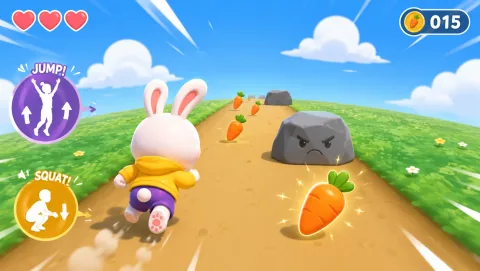
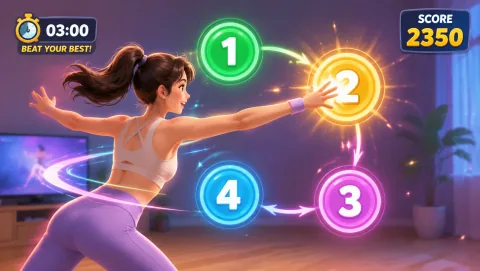
Run a short optional event such as target accuracy, reaction speed, or a one-screen motion game. Spectators can watch without being forced to participate.
Workplace movement should fit inside work rather than pretending the office has become a gym. Managers should model participation casually rather than tracking who joins or turning wellbeing into another performance metric. The best workplace break leaves almost no operational residue.
Puzzle race:
Give groups the same logic puzzle, visual problem, or sequence task. The focus stays on the problem rather than on personal disclosure.
Build something:
Use paper, blocks, or materials already available to create the tallest tower or strongest bridge. Simple constraints produce natural teamwork.
Walk-and-talk prompt:
Pairs take a short walk and discuss one work-relevant question. This is often more comfortable than sharing personal facts with the whole room.
What to avoid
Be cautious with:
- forced physical contact;
- “tell us your most embarrassing…” prompts;
- mandatory dancing or singing;
- activities that expose fitness differences;
- games where one person is publicly eliminated.
A good team game creates a shared experience without demanding that employees perform a personality they did not bring to work.
For teams, a good energizer is deliberately modest. Managers should model participation casually rather than tracking who joins or turning wellbeing into another performance metric. The best workplace break leaves almost no operational residue.
Keep the social pressure lower than the benefit
Best fit: this is useful when people can join for a short reset, understand the invitation immediately, and leave without having to explain why they are sitting out.
Limit: it is a poor choice when participation is treated as a performance, the activity competes with a serious meeting, or colleagues have very different comfort levels with cameras and movement.
If you are choosing: If you are choosing between ideas, prefer a short optional round with a personal target over a public leaderboard. The goal is an easier break, not another workplace metric.