A standing desk changes posture, but standing still all day is not the same as moving. If you already alternate sitting and standing, add small movement breaks rather than assuming the desk has solved the activity problem.
The social design matters as much as the movement itself. Managers should model participation casually rather than tracking who joins or turning wellbeing into another performance metric. Participation is a better success measure here than intensity.
Weight shifts
Shift gently from one side to the other. Keep it comfortable and avoid locking into one stance for long periods.
A break between meetings only works if it respects the context around it. Managers should model participation casually rather than tracking who joins or turning wellbeing into another performance metric. Participation is a better success measure here than intensity.
In professional settings, low pressure usually beats high enthusiasm. Managers should model participation casually rather than tracking who joins or turning wellbeing into another performance metric. Participation is a better success measure here than intensity.
Calf raises
Rise and lower slowly. Use the desk lightly for support if needed.
Workplace movement should fit inside work rather than pretending the office has become a gym. The finish should be as clear as the start so the group can return to work without losing another five minutes. Participation is a better success measure here than intensity.
For teams, a good energizer is deliberately modest. The finish should be as clear as the start so the group can return to work without losing another five minutes. Participation is a better success measure here than intensity.
Side steps:
Step left and right within a small area. Add arm movement if the space allows.
Walking breaks
Leave the desk entirely. A short walk changes more than standing in the same place.
The social design matters as much as the movement itself. The finish should be as clear as the start so the group can return to work without losing another five minutes. Participation is a better success measure here than intensity.
Balance challenge:
Try a brief heel-to-toe stance or single-leg balance near support. Stop if you feel unstable.
One-song movement:
Use music as a five-minute cue. Walk, step, or move around the room.
Short reaction game:
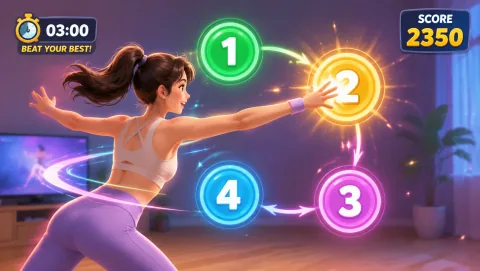
If the standing desk gives you camera-friendly space, a webcam game can turn part of the break into a quick challenge. Keep the computer far enough away for tracking and protect the work area from sudden arm movement.
Alternate postures instead of searching for one perfect posture
Sitting, standing, and walking all have roles. The useful habit is changing position regularly rather than holding any one position for hours.
A standing desk is a tool, not an exercise program. Use it to make movement easier, then actually leave the desk sometimes.
A break between meetings only works if it respects the context around it. The finish should be as clear as the start so the group can return to work without losing another five minutes. Participation is a better success measure here than intensity.
Keep the social pressure lower than the benefit
Best fit: this is useful when people can join for a short reset, understand the invitation immediately, and leave without having to explain why they are sitting out.
Limit: it is a poor choice when participation is treated as a performance, the activity competes with a serious meeting, or colleagues have very different comfort levels with cameras and movement.
If you are choosing: If you are choosing between ideas, prefer a short optional round with a personal target over a public leaderboard. The goal is an easier break, not another workplace metric.