Technology can add variety to a senior program, but novelty is not enough. The activity still needs to be understandable from across the room, easy to recover when something goes wrong, and worthwhile even for participants who are cautious about technology.
The useful design question is how much choice the participant has. Large cues, generous timing, short rounds, and seated or standing options reduce unnecessary barriers without removing humor or challenge. That flexibility is what makes a format usable across very different days and participants.
Digital photo quiz
Show large photos of landmarks, household objects, foods, or famous performers. Teams guess or discuss what they see.
Activities for older adults should begin with the person, not the age label. Music, accuracy, memory, teamwork, and prediction can create plenty of game value without relying on fast footwork. That flexibility is what makes a format usable across very different days and participants.
Simple rules do not require childish presentation. Music, accuracy, memory, teamwork, and prediction can create plenty of game value without relying on fast footwork. That flexibility is what makes a format usable across very different days and participants.
Music request screen
Let participants choose songs from a prepared playlist. A large display works better than passing around a small phone.
Short rounds make rest easier and reduce the social pressure to continue when someone is tired.
Mixed ability is normal in older-adult groups, not an edge case. Music, accuracy, memory, teamwork, and prediction can create plenty of game value without relying on fast footwork. That flexibility is what makes a format usable across very different days and participants.
Video-call guest session
Invite a family member, local historian, musician, or another center to join for a short structured activity.
A good activity can stay challenging while becoming easier to access physically. Music, accuracy, memory, teamwork, and prediction can create plenty of game value without relying on fast footwork. That flexibility is what makes a format usable across very different days and participants.
Large-screen drawing or word game:
Use simple collaborative prompts. Avoid interfaces with tiny buttons or long menus.
Webcam movement station:
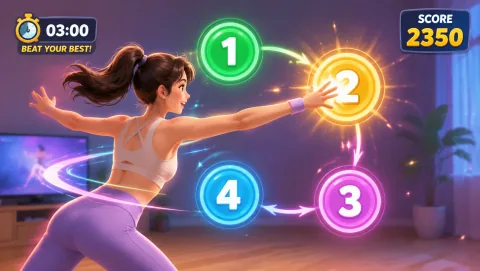
A simple browser motion game can add physical interaction without handheld controllers. Use large targets, slower rounds, and a staff member nearby for the first session.
Digital memory archive:
Scan photos, recipes, or local history materials and use them to build a group presentation over several weeks.
Keep setup staff-controlled
Participants should not have to troubleshoot Wi-Fi, camera permission, account creation, or pairing. If those steps are required, staff should complete them before the session begins.
Technology works best when it disappears behind the activity rather than becoming the activity itself.
The useful design question is how much choice the participant has. Music, accuracy, memory, teamwork, and prediction can create plenty of game value without relying on fast footwork. That flexibility is what makes a format usable across very different days and participants.
Keep the social pressure lower than the benefit
Best fit: this is useful when people can join for a short reset, understand the invitation immediately, and leave without having to explain why they are sitting out.
Limit: it is a poor choice when participation is treated as a performance, the activity competes with a serious meeting, or colleagues have very different comfort levels with cameras and movement.
If you are choosing: If you are choosing between ideas, prefer a short optional round with a personal target over a public leaderboard. The goal is an easier break, not another workplace metric.