Family games become difficult when one person can run, another prefers to stay seated, and someone else tires quickly. The solution is not to force one activity to be equally physical for everyone. It is to choose games that allow different ways to participate.
Mixed ability is normal in older-adult groups, not an edge case. Everyday engagement can be valuable on its own without making claims about treatment, cognition, or fall prevention. Respect and choice matter more than attaching a 'senior' label to the game.
Use turn-based formats
Trivia, charades, drawing, target games, and short digital challenges let players participate one at a time. Each person can choose a movement level that suits them.
Short rounds make rest easier and reduce the social pressure to continue when someone is tired.
A good activity can stay challenging while becoming easier to access physically. Everyday engagement can be valuable on its own without making claims about treatment, cognition, or fall prevention. Respect and choice matter more than attaching a 'senior' label to the game.
The useful design question is how much choice the participant has. Everyday engagement can be valuable on its own without making claims about treatment, cognition, or fall prevention. Respect and choice matter more than attaching a 'senior' label to the game.
Separate scoring from speed
If the fastest player always wins, mobility differences become the whole game. Use accuracy, prediction, teamwork, or cumulative family scores instead.
Activities for older adults should begin with the person, not the age label. Large cues, generous timing, short rounds, and seated or standing options reduce unnecessary barriers without removing humor or challenge. A good group format includes the room without ranking people's limitations.
Simple rules do not require childish presentation. Large cues, generous timing, short rounds, and seated or standing options reduce unnecessary barriers without removing humor or challenge. A good group format includes the room without ranking people's limitations.
Offer seated versions from the start
Do not present sitting as a fallback after someone struggles. Design the activity so seated reaching, hand movement, or scorekeeping are normal roles.
Mixed ability is normal in older-adult groups, not an edge case. Large cues, generous timing, short rounds, and seated or standing options reduce unnecessary barriers without removing humor or challenge. A good group format includes the room without ranking people's limitations.
Keep movement range adjustable:
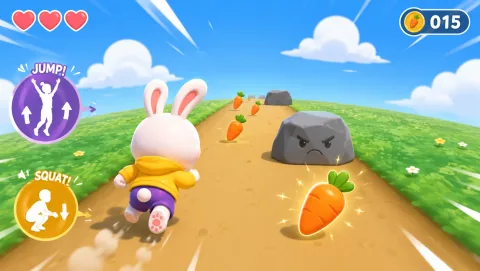
For motion games, large on-screen targets and generous timing work better than fast jumping or deep squats. If the game cannot be adapted safely, choose another game rather than asking someone to “just try.”
Include observer roles
People may enjoy choosing challenges, tracking points, taking photos, or cheering. Participation does not always mean performing the same movement.
Mixed-mobility family play works when the activity gives everyone a meaningful role without making anyone’s limitations the focus.
A good activity can stay challenging while becoming easier to access physically. Large cues, generous timing, short rounds, and seated or standing options reduce unnecessary barriers without removing humor or challenge. A good group format includes the room without ranking people's limitations.
Keep the social pressure lower than the benefit
Best fit: this is useful when people can join for a short reset, understand the invitation immediately, and leave without having to explain why they are sitting out.
Limit: it is a poor choice when participation is treated as a performance, the activity competes with a serious meeting, or colleagues have very different comfort levels with cameras and movement.
If you are choosing: If you are choosing between ideas, prefer a short optional round with a personal target over a public leaderboard. The goal is an easier break, not another workplace metric.