A good facilitator game should survive repetition. You should be able to run it with a new group, a different room, or a shorter time slot without rebuilding the activity from scratch.
Good facilitation content should make the next session easier. That means explaining not only the idea, but how to start it, how to scale it, how to end it, and what to do when the original plan stops fitting the room.
Reaction sequence
Assign responses to colors, numbers, or gestures and change the sequence. Works standing, seated, or beside chairs.
Add a duration range instead of one exact time. Real groups arrive late, finish early, and vary in energy.
Facilitators need activities that another person can run tomorrow. Keep the workflow stable and change prompts, themes, teams, or difficulty; that preserves freshness while allowing staff to improve the format over time. That is how a collection of ideas becomes a dependable program.
Category sprint
Teams list examples from a category in 60 seconds. Change the topic to fit the workshop, age group, or event.
An activity library becomes valuable when it stores operational knowledge, not only ideas. Keep the workflow stable and change prompts, themes, teams, or difficulty; that preserves freshness while allowing staff to improve the format over time. That is how a collection of ideas becomes a dependable program.
Silent line-up
Participants arrange themselves by birthday month, alphabetical name, or another non-sensitive category without speaking.
Record the fallback next to the main plan, not in a separate document nobody opens when the room changes.
Repeatability is a feature for coordinators, not a sign that the program lacks creativity. Keep the workflow stable and change prompts, themes, teams, or difficulty; that preserves freshness while allowing staff to improve the format over time. That is how a collection of ideas becomes a dependable program.
Team target challenge
Use physical or on-screen targets. Change distance, timing, or team rules to refresh the format.
Changing groups make flexible formats more useful than elaborate one-off plans. Keep the workflow stable and change prompts, themes, teams, or difficulty; that preserves freshness while allowing staff to improve the format over time. That is how a collection of ideas becomes a dependable program.
Collaborative story:
Each participant contributes one sentence. Add constraints such as a required word or genre.
One-screen score round:
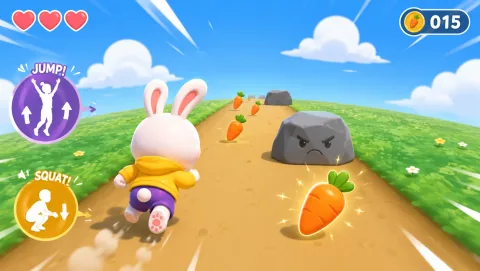
A short reaction or motion game works well when the audience can understand it while one person plays. Use team totals to reduce pressure on individual performance.
Reflection remix
Ask groups to summarize the previous session using a drawing, three words, one gesture, or a 30-second explanation.
Repeatable games are valuable because the facilitator already knows how they behave. Familiarity reduces explanation time and frees attention for the group itself.
A repeatable format is not boring if the theme, prompt, teams, and difficulty can change. Keep the workflow stable and vary the content; staff and participants both benefit.
Keep the social pressure lower than the benefit
Best fit: this is useful when people can join for a short reset, understand the invitation immediately, and leave without having to explain why they are sitting out.
Limit: it is a poor choice when participation is treated as a performance, the activity competes with a serious meeting, or colleagues have very different comfort levels with cameras and movement.
If you are choosing: If you are choosing between ideas, prefer a short optional round with a personal target over a public leaderboard. The goal is an easier break, not another workplace metric.