A rainy day at camp can move dozens of high-energy children indoors with very little warning. The backup plan needs to handle groups, limited rooms, and staff who may not have time to prepare elaborate activities.
A classroom game earns its place when it fits the room, the clock, and the lesson. A final freeze, countdown, seated cue, or retrieval question can make a two-minute break genuinely useful instead of creating five minutes of recovery. If another teacher can run it tomorrow from a short note, the format is probably strong.
Reliable formats to keep in rotation
Team charades tournament
Use camp themes, animals, sports, films, or counselor-written prompts. Run multiple groups at once if the room is large enough.
Decide in advance what happens when attendance is twice what you expected.
Human quiz
Give two to four answer zones. Campers move or point to their choice, then discuss the answer.
A quiet alternative is worth keeping beside every high-energy option.
Movement circuit
Use stations for:
- balance;
- reaction;
- rhythm;
- bodyweight movement;
- target accuracy.
Keep each station three to five minutes.
Reuse the format with a new theme before inventing an entirely new activity.
Camp story challenge
Teams have ten minutes to create the funniest story using five required camp-related words. Perform the stories afterward.
Bad-weather plans need capacity, not just ideas. A game that works for eight children may collapse when three cabin groups are suddenly sharing one hall.
Indoor scavenger puzzle
Instead of sending groups running, use clue stations in a controlled area. Each solved clue unlocks the next location.
Write the setup in a few lines so another adult can run it without needing a verbal handover.
One-screen motion station
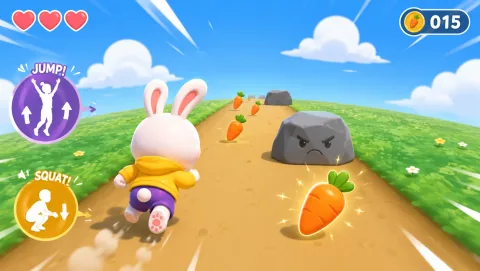
If the camp has a laptop/projector and usable internet or local access, a webcam motion game can be one rotation. Short scored rounds create easy turn-taking.
Test the setup before relying on it as the only rainy-day plan.
Counselor-versus-camper challenge
Use safe, short events such as reaction, trivia, balance, or drawing. Campers often enjoy watching staff participate.
Creative build
Use common supplies for a timed engineering challenge. The constraints are more important than elaborate materials.
What makes it repeatable
For school use, I would always think about the ending before starting the activity. A final freeze, countdown, seated cue, or retrieval question can make a two-minute break genuinely useful instead of creating five minutes of recovery. If another teacher can run it tomorrow from a short note, the format is probably strong.
Keep outdoor energy in mind
Campers expecting sports, swimming, or hiking may not be satisfied with a full day of worksheets and movies. Include genuine movement even if the indoor space is limited.
A strong rainy-day plan is modular: several activities that can expand, shrink, or rotate based on how many campers and rooms you actually have.
One thing I would not ignore
In a classroom, an activity has to work for the teacher as well as the students. If the projector, camera, or permissions need live troubleshooting, the activity is not low-prep that day. If another teacher can run it tomorrow from a short note, the format is probably strong.
Build a small activity library:
The strongest program idea is the one staff can run safely, repeatedly, and with less stress when the day changes.
Make the activity work in the real timetable
Best fit: use this when the teacher can explain one visible rule, keep the first turn brief, and give students a clear way to watch, lead, or pause without being singled out.
Limit: it is a poor fit when setup takes longer than the learning goal, the room cannot be reset safely, or the scoring rewards speed over control. A lower-tech version may teach the same idea better.
If you are choosing: If you are choosing between formats, begin with the option that needs the fewest materials and the least movement across the room. Test one round before committing the whole class.