A pre-meeting energizer should make the room more alert without turning a normal workday into mandatory performance. Keep it under five minutes, explain it in one sentence, and give people an easy way to opt out.
In professional settings, low pressure usually beats high enthusiasm. The finish should be as clear as the start so the group can return to work without losing another five minutes. Participation is a better success measure here than intensity.
One-word check-in with movement
Each person gives one word for their current state and changes posture—stand, stretch, or simply move away from the desk before the meeting begins.
Workplace movement should fit inside work rather than pretending the office has become a gym. Keep the instructions brief, the movement ordinary, and the option to sit out completely normal. The best workplace break leaves almost no operational residue.
For teams, a good energizer is deliberately modest. Keep the instructions brief, the movement ordinary, and the option to sit out completely normal. The best workplace break leaves almost no operational residue.
Fast category round:
Choose a neutral category such as cities, foods, films, or products. Go around quickly; no repeats.
Reaction challenge
Use hand signals, visual cues, or a short screen-based reaction game. In person, one or two volunteers can play while the group predicts or keeps score.
The social design matters as much as the movement itself. Keep the instructions brief, the movement ordinary, and the option to sit out completely normal. The best workplace break leaves almost no operational residue.
Two-minute walk-and-talk
Pairs walk for two minutes while answering one meeting-related question, then return and share one point.
A break between meetings only works if it respects the context around it. Keep the instructions brief, the movement ordinary, and the option to sit out completely normal. The best workplace break leaves almost no operational residue.
Silent line-up:
For in-person groups, line up by birthday month, commute length, or tenure without speaking. Avoid personal or sensitive categories.
Rhythm copy:
One person claps or taps a short pattern and the room repeats. Keep it fast and low-stakes.
Use technology only if it is ready:
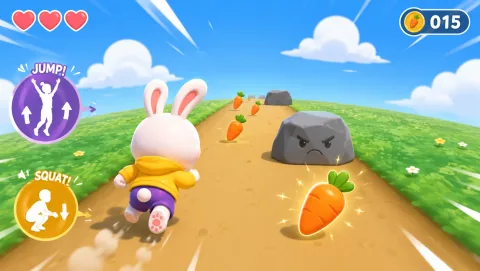
A browser motion game can work for a small team if the screen and camera are already set up. It is not an energizer if the first five minutes become troubleshooting.
Connect to the meeting
A good energizer ends with a clear transition: “Great—here’s the first decision we need to make.”
The activity should wake the team up, not become the thing everyone spends the next ten minutes discussing.
In professional settings, low pressure usually beats high enthusiasm. Keep the instructions brief, the movement ordinary, and the option to sit out completely normal. The best workplace break leaves almost no operational residue.
Keep the social pressure lower than the benefit
Best fit: this is useful when people can join for a short reset, understand the invitation immediately, and leave without having to explain why they are sitting out.
Limit: it is a poor choice when participation is treated as a performance, the activity competes with a serious meeting, or colleagues have very different comfort levels with cameras and movement.
If you are choosing: If you are choosing between ideas, prefer a short optional round with a personal target over a public leaderboard. The goal is an easier break, not another workplace metric.