The first lesson after lunch often starts with two conflicting problems: some students are sluggish, while others return loud and energized. A good reset needs to gather attention without pushing the room further in either direction.
For school use, I would always think about the ending before starting the activity. A final freeze, countdown, seated cue, or retrieval question can make a two-minute break genuinely useful instead of creating five minutes of recovery. The teacher should finish with more control of the room, not less.
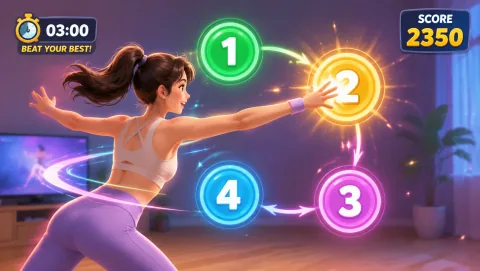
Run a visual reaction game
Show arrows, colors, or numbers on the board. Assign one movement to each and call a fast sequence.
This gives restless students something to do while requiring enough attention to bring the group back together.
In a classroom, an activity has to work for the teacher as well as the students. If the projector, camera, or permissions need live troubleshooting, the activity is not low-prep that day. The teacher should finish with more control of the room, not less.
Try rhythm copy
Clap or tap a pattern; students repeat. Gradually make the pattern quieter and slower. End in silence.
This works particularly well when the room returns from lunch noisy.
The most important classroom detail is often the transition nobody puts in the title. If the projector, camera, or permissions need live troubleshooting, the activity is not low-prep that day. The teacher should finish with more control of the room, not less.
What makes it usable for a teacher:
Teachers benefit more from reliable formats than from endless novelty. If the projector, camera, or permissions need live troubleshooting, the activity is not low-prep that day. The teacher should finish with more control of the room, not less.
Start with controlled movement
Use two minutes of simple actions:
- march in place;
- reach high and across the body;
- side step beside the desk;
- slow squat or sit-to-stand where appropriate;
- finish with a balance hold.
Avoid turning the reset into a race.
Use a one-minute retrieval question
After movement, give one prompt from the morning’s learning:
- “Write three things you remember.”
- “What was the most important idea?”
- “Explain one concept to a partner.”
The transition from body to content is deliberate.
Use a short camera or projector activity carefully
If your classroom already has a tested setup, a two-minute reaction or pose game can be a useful whole-class cue. One student can play while the class mirrors, or the teacher can use the screen only as a visual prompt.
Do not spend the post-lunch reset logging in or fixing camera permissions.
End with a clear academic start
The reset should flow directly into the next lesson. Put the first question, slide, or task on the board before the break begins.
A strong after-lunch activity is not just energizing. It reduces the distance between “we have returned to the room” and “we are learning again.”
One thing I would not ignore:
A classroom game earns its place when it fits the room, the clock, and the lesson. If the projector, camera, or permissions need live troubleshooting, the activity is not low-prep that day. The teacher should finish with more control of the room, not less.
Use what you can recover from:
For school use, I would always think about the ending before starting the activity. If the projector, camera, or permissions need live troubleshooting, the activity is not low-prep that day. The teacher should finish with more control of the room, not less.
Make the activity work in the real timetable
Best fit: use this when the teacher can explain one visible rule, keep the first turn brief, and give students a clear way to watch, lead, or pause without being singled out.
Limit: it is a poor fit when setup takes longer than the learning goal, the room cannot be reset safely, or the scoring rewards speed over control. A lower-tech version may teach the same idea better.
If you are choosing: If you are choosing between formats, begin with the option that needs the fewest materials and the least movement across the room. Test one round before committing the whole class.