The period after lunch is a good time to change posture before another long block of desk work. You do not need a gym session; ten minutes is enough for a practical reset.
In professional settings, low pressure usually beats high enthusiasm. The finish should be as clear as the start so the group can return to work without losing another five minutes. If people come back more awake and not embarrassed, the activity did enough.
Walk outside
A short walk is the simplest option. Use a loop you can complete reliably rather than deciding on a route every day.
Workplace movement should fit inside work rather than pretending the office has become a gym. Keep the instructions brief, the movement ordinary, and the option to sit out completely normal. Participation is a better success measure here than intensity.
For teams, a good energizer is deliberately modest. Keep the instructions brief, the movement ordinary, and the option to sit out completely normal. Participation is a better success measure here than intensity.
Take the stairs
If stairs are accessible and appropriate for you, use a few flights at a comfortable pace.
The social design matters as much as the movement itself. Keep the instructions brief, the movement ordinary, and the option to sit out completely normal. Participation is a better success measure here than intensity.
March and reach:
For home or a private office, march in place while alternating overhead and cross-body reaches.
Use a short active game
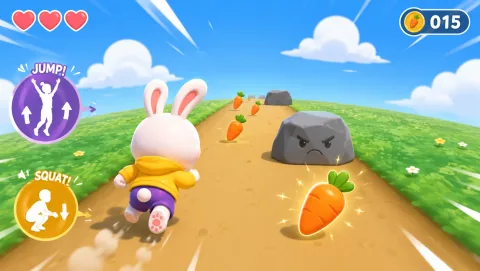
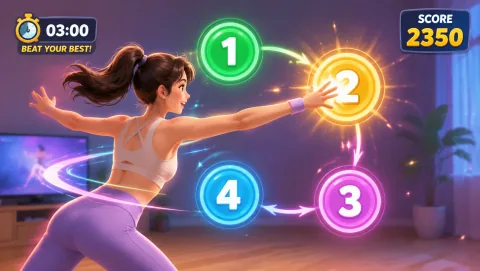
A reaction or movement game can create enough novelty to get you away from the desk. MovePlay’s browser games can run from the same laptop you work on; make sure there is a safe clear area before starting.
A break between meetings only works if it respects the context around it. Keep the instructions brief, the movement ordinary, and the option to sit out completely normal. Participation is a better success measure here than intensity.
Do a mobility reset:
Slow shoulder, hip, ankle, and torso movement may be a better choice on a low-energy day.
Walk during a call:
Schedule an audio-only discussion after lunch when possible and take it on foot.
Use a strict end point:
Ten minutes is easier to protect when the break has a defined boundary: one loop, one song, three game rounds, or a timer.
Do not expect movement to fix every afternoon crash
If you are consistently exhausted after lunch, look at sleep, meal patterns, workload, and health rather than treating movement as a universal fix.
For ordinary desk fatigue, however, a brief walk or active break is a low-cost way to separate lunch from the next four hours of sitting.
In professional settings, low pressure usually beats high enthusiasm. Keep the instructions brief, the movement ordinary, and the option to sit out completely normal. Participation is a better success measure here than intensity.
Keep the social pressure lower than the benefit
Best fit: this is useful when people can join for a short reset, understand the invitation immediately, and leave without having to explain why they are sitting out.
Limit: it is a poor choice when participation is treated as a performance, the activity competes with a serious meeting, or colleagues have very different comfort levels with cameras and movement.
If you are choosing: If you are choosing between ideas, prefer a short optional round with a personal target over a public leaderboard. The goal is an easier break, not another workplace metric.