The post-lunch slot is one of the hardest parts of an offsite. People have been eating, talking, and sitting; the next presentation can lose them before it begins.
Use a short energizer that changes posture and gives the group a reason to interact.
For teams, a good energizer is deliberately modest. A one-song reset or 90-second reaction challenge can change the room without becoming another agenda item. That is what keeps a small intervention from becoming another obligation.
Three-minute walk prompt
Pairs walk and answer one question related to the afternoon: “What decision would make today successful?” Return and share one sentence.
The social design matters as much as the movement itself. A one-song reset or 90-second reaction challenge can change the room without becoming another agenda item. That is what keeps a small intervention from becoming another obligation.
A break between meetings only works if it respects the context around it. A one-song reset or 90-second reaction challenge can change the room without becoming another agenda item. That is what keeps a small intervention from becoming another obligation.
Team reaction challenge
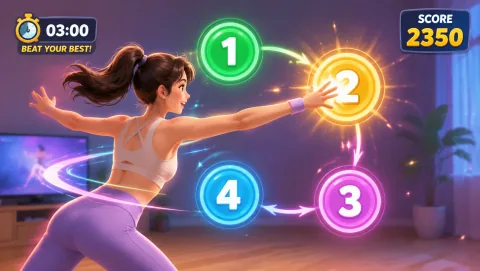
Run a fast visual or physical cue game. People can stand, point, or move without needing athletic ability.
In professional settings, low pressure usually beats high enthusiasm. A one-song reset or 90-second reaction challenge can change the room without becoming another agenda item. That is what keeps a small intervention from becoming another obligation.
Silent line-up:
Ask the group to order itself by birthday month, travel distance to the offsite, or company tenure without speaking.
One-minute skill contest
Try paper airplane accuracy, target toss, visual reaction, or a browser motion game. Use volunteers and short rounds.
Workplace movement should fit inside work rather than pretending the office has become a gym. Managers should model participation casually rather than tracking who joins or turning wellbeing into another performance metric. That is what keeps a small intervention from becoming another obligation.
Fast prioritization wall:
Put several ideas on the wall and give everyone three dots or digital votes. Movement plus decision-making gets the afternoon work started.
Rhythm copy:
A facilitator creates a short clap/tap pattern; the group repeats. Build three rounds and stop.
Outside reset:
If the venue allows it, go outside for five minutes. Daylight and walking may be more useful than another indoor game.
Keep the tone adult
Avoid calling the activity a “fun little game” or demanding enthusiasm. State the purpose clearly: “We’ve been sitting; we’re taking three minutes to reset before the next block.”
The best offsite energizer feels like a sensible transition, not a test of who can perform corporate cheerfulness after lunch.
For teams, a good energizer is deliberately modest. Managers should model participation casually rather than tracking who joins or turning wellbeing into another performance metric. That is what keeps a small intervention from becoming another obligation.
Keep the social pressure lower than the benefit
Best fit: this is useful when people can join for a short reset, understand the invitation immediately, and leave without having to explain why they are sitting out.
Limit: it is a poor choice when participation is treated as a performance, the activity competes with a serious meeting, or colleagues have very different comfort levels with cameras and movement.
If you are choosing: If you are choosing between ideas, prefer a short optional round with a personal target over a public leaderboard. The goal is an easier break, not another workplace metric.