Pose-matching games ask the player to copy a body position shown on screen. They can be calm, competitive, silly, or physically demanding depending on how the poses are designed.
Readable feedback is part of the control scheme, not decoration. Large targets and forgiving timing are useful for learning; complexity can be added after the basic control loop already feels fair. That is what makes the body feel like a usable controller rather than a calibration exercise.
Why pose games work
The goal is easy to understand visually. Players do not need to remember a button layout; they compare themselves with the displayed shape.
A strong motion mechanic makes the connection between body and screen obvious. Players need to know whether they missed the target or the system missed the movement, otherwise every failure feels like bad tracking. That is what makes the body feel like a usable controller rather than a calibration exercise.
The player should not have to think constantly about how the tracking system works. Players need to know whether they missed the target or the system missed the movement, otherwise every failure feels like bad tracking. That is what makes the body feel like a usable controller rather than a calibration exercise.
Good motion design filters out movement that does not matter to the game. Players need to know whether they missed the target or the system missed the movement, otherwise every failure feels like bad tracking. That is what makes the body feel like a usable controller rather than a calibration exercise.
Different ways to use poses
Quick-match rounds
A pose appears for a few seconds and the player copies it before time runs out.
Hold challenges
The player reaches a pose and maintains it for a short countdown.
Sequence games
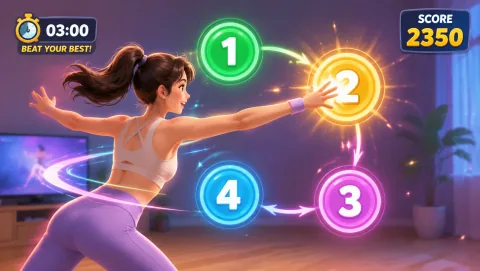
Several poses appear in order, adding memory and rhythm.
Team or party play
One person performs while others judge, imitate, or predict the next pose.
Physical difficulty and game difficulty do not have to be the same thing. Players need to know whether they missed the target or the system missed the movement, otherwise every failure feels like bad tracking. That is what makes the body feel like a usable controller rather than a calibration exercise.
Readable feedback is part of the control scheme, not decoration. Players need to know whether they missed the target or the system missed the movement, otherwise every failure feels like bad tracking. That is what makes the body feel like a usable controller rather than a calibration exercise.
What makes a pose fair?
The required movement should be visually clear and tolerant of differences in body proportions. A game should not expect every player to reproduce an exact joint angle.
A strong motion mechanic makes the connection between body and screen obvious. Re-centering moments and short rounds help people recover from drift, missed inputs, and awkward starting positions. That is what makes the body feel like a usable controller rather than a calibration exercise.
Space and camera setup
Full-body poses need enough distance for arms and legs to stay in frame. Upper-body pose games can work in tighter rooms.
Pose matching is strongest when the game rewards recognizable intent rather than photographic imitation. That keeps the challenge playful instead of turning it into a form test.
The player should not have to think constantly about how the tracking system works. Re-centering moments and short rounds help people recover from drift, missed inputs, and awkward starting positions. That is what makes the body feel like a usable controller rather than a calibration exercise.
Keep the social pressure lower than the benefit
Best fit: this is useful when people can join for a short reset, understand the invitation immediately, and leave without having to explain why they are sitting out.
Limit: it is a poor choice when participation is treated as a performance, the activity competes with a serious meeting, or colleagues have very different comfort levels with cameras and movement.
If you are choosing: If you are choosing between ideas, prefer a short optional round with a personal target over a public leaderboard. The goal is an easier break, not another workplace metric.