01
Name the job
For esl movement games online, the immediate job is to pair visible action with plain-language vocabulary. Say that out loud so players know what success means before score or speed enters the room.
Education Guides · Search-led guide
If esl movement games online is the question, begin with the room and the people in it. This guide helps esl teachers and multilingual groups test one workable format without turning a short activity into a performance.
picture cue, model first, and non-speaking roles. This page is designed for ESL teachers and multilingual groups who need a concrete starting point, not a generic list of games.
The useful decision is whether the camera view, movement range, social format, and stopping point fit a language-learning warm-up. If they do not, changing the format is a successful outcome.
Treat a language-learning warm-up as part of the design. A good first round leaves the room clearer, not busier.
01
For esl movement games online, the immediate job is to pair visible action with plain-language vocabulary. Say that out loud so players know what success means before score or speed enters the room.
02
For a language-learning warm-up, clear the camera zone, check light and framing, and keep furniture, cables, pets, doors, and passers-by outside the play boundary.
03
Offer one player, paired, cooperative, or observer route. language confidence and different movement norms. Use a short timer and let people change roles without explanation.
04
Keep a seated, hand-led, quieter, one-person, or no-camera alternative ready. Stop or switch when the original movement, room, privacy preference, or energy level no longer fits.
These education guides offer different control styles to try in a language-learning warm-up. Start with the option whose movement rule is easiest to explain, then switch if the room or people call for it.

camera-guided movement
Lily Leap fits this page because it uses camera-guided movement in a clear area where the player stays visible.
Play fit: a readable movement-to-screen loop
camera-guided movement
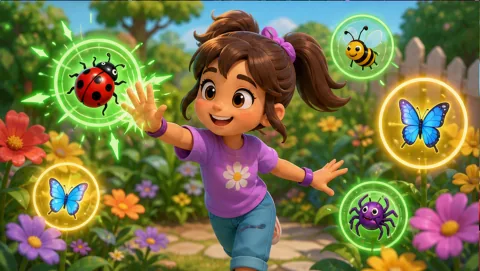
Garden Swat fits this page because it uses camera-guided movement in a clear area where the player stays visible.
Play fit: a readable movement-to-screen loop

camera-guided movement
Ball Drop fits this page because it uses camera-guided movement in a clear area where the player stays visible.
Play fit: a readable movement-to-screen loop
Start with Lily Leap. Check the camera view in a language-learning warm-up; if language confidence and different movement norms gets in the way, use the hub to switch control styles.
Open the game hubParticipation is voluntary. Offer player, caller, coach, scorekeeper, observer, or no-camera roles, and never make a camera turn a condition of belonging, attendance, care, or work.
Frame only the area needed for play, tell nearby people when the camera is active, avoid recording by default, and keep play separate from identity, health, purchase, or attendance data.
picture cue, model first, and non-speaking roles Adjust range, pace, posture, audio, or turn length to the person and room. If a participant has a health or mobility concern, follow qualified professional advice.
This page describes an active-play format, not medical treatment, diagnosis, therapy, or a promised health result. For general movement context across ages and abilities, review the WHO Guidelines on physical activity and sedentary behaviour.
What to observe: pair visible action with plain-language vocabulary in a language-learning warm-up while respecting language confidence and different movement norms.
Start with one short, voluntary round. picture cue, model first, and non-speaking roles. Explain the cue, check the camera view, and let people choose player, caller, coach, scorekeeper, observer, or no-camera participation.
Before inviting esl teachers and multilingual groups, test the camera view from the place a player will stand. Remove immediate trip hazards and decide how someone can watch, pause, or leave the turn.
Yes. Keep camera use optional and offer a meaningful observer, caller, coach, scorekeeper, or discussion role. People can switch roles or stop whenever the room, privacy preference, or energy level changes.