Employees are more likely to join a wellness activity when it is brief, optional, socially safe, and not framed as a public fitness test. “Fun” alone is not enough if participation feels awkward.
In professional settings, low pressure usually beats high enthusiasm. Keep the instructions brief, the movement ordinary, and the option to sit out completely normal. If people come back more awake and not embarrassed, the activity did enough.
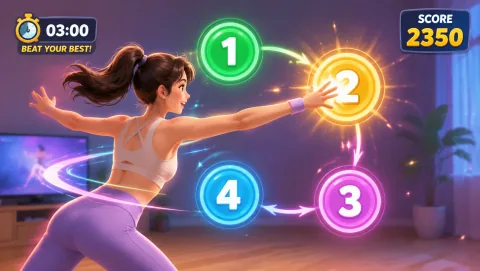
Reaction challenge
A one-minute visual or motion challenge is easy to understand and can run as a voluntary station during lunch or an event.
Workplace movement should fit inside work rather than pretending the office has become a gym. Hybrid colleagues may have only chair-sized space, weak cameras, or no interest in performing in front of a group. If people come back more awake and not embarrassed, the activity did enough.
For teams, a good energizer is deliberately modest. Hybrid colleagues may have only chair-sized space, weak cameras, or no interest in performing in front of a group. If people come back more awake and not embarrassed, the activity did enough.
Team walking bingo
Create a card with prompts such as walk outside, take stairs, hold a walking one-to-one, or visit a different floor.
The social design matters as much as the movement itself. Hybrid colleagues may have only chair-sized space, weak cameras, or no interest in performing in front of a group. If people come back more awake and not embarrassed, the activity did enough.
Office mini tournament:
Mix non-fitness skills: trivia, paper airplane accuracy, reaction, drawing, and balance. This prevents the activity from rewarding only athletic people.
Active game station
Set up a browser or console motion game during a team event. Short rounds and spectator value matter more than high exercise intensity.
MovePlay can fit as a low-hardware option where a webcam is acceptable. Offer another role for anyone who does not want to appear on camera.
A break between meetings only works if it respects the context around it. Hybrid colleagues may have only chair-sized space, weak cameras, or no interest in performing in front of a group. If people come back more awake and not embarrassed, the activity did enough.
Step-free movement challenge:
For accessibility, include seated reaches, upper-body rhythm, mobility, and other options that do not depend on walking distance.
Meeting-break bingo:
Teams mark off habits such as standing for part of a meeting, taking a two-minute movement break, or leaving the desk at lunch.
Skill-of-the-week:
Choose a playful skill such as juggling, balance, dance step, or reaction test. Participation can be private or social.
Avoid the usual mistakes
Do not rank weight loss, calories, body measurements, or health conditions. Avoid compulsory cameras and public fitness comparisons.
Office wellness games work when they lower the social cost of joining. People should be able to participate lightly, fully, or not at all without explanation.
In professional settings, low pressure usually beats high enthusiasm. Hybrid colleagues may have only chair-sized space, weak cameras, or no interest in performing in front of a group. If people come back more awake and not embarrassed, the activity did enough.
Keep the social pressure lower than the benefit
Best fit: this is useful when people can join for a short reset, understand the invitation immediately, and leave without having to explain why they are sitting out.
Limit: it is a poor choice when participation is treated as a performance, the activity competes with a serious meeting, or colleagues have very different comfort levels with cameras and movement.
If you are choosing: If you are choosing between ideas, prefer a short optional round with a personal target over a public leaderboard. The goal is an easier break, not another workplace metric.