When a playdate is already happening, “prep” means anything that sends the adult looking for supplies for twenty minutes. The best no-prep activities use the room, a screen, or ordinary household objects.
Adults can improve the format without controlling every minute of it. Preschool groups need forgiving pacing and visible feedback; older children may care more about challenge and whether the activity feels too young. The best sign is when children can start the next round without an adult rebuilding the game.
The floor-is-lava route
Use cushions, tape lines, or safe furniture landmarks. Keep the route walking-speed if the room is small.
Children's activities change when the social setting changes. A stable format can be reused with different prompts or themes without forcing adults to invent a completely new activity each time. The best sign is when children can start the next round without an adult rebuilding the game.
The same game can behave very differently with siblings, friends, or a preschool group. A stable format can be reused with different prompts or themes without forcing adults to invent a completely new activity each time. The best sign is when children can start the next round without an adult rebuilding the game.
Sock target toss
Roll socks into soft balls and use a basket, box, or marked floor zone as the target.
Waiting time is one of the most common hidden problems in children's group activities. A stable format can be reused with different prompts or themes without forcing adults to invent a completely new activity each time. The best sign is when children can start the next round without an adult rebuilding the game.
Freeze challenge
Use music or simple spoken cues. Let each child take a turn controlling when everyone freezes.
Avoid over-explaining. Demonstrating one round is often faster than giving a long verbal set of rules.
For younger children, a quick first success matters more than a sophisticated rule set. A stable format can be reused with different prompts or themes without forcing adults to invent a completely new activity each time. The best sign is when children can start the next round without an adult rebuilding the game.
Webcam reaction round
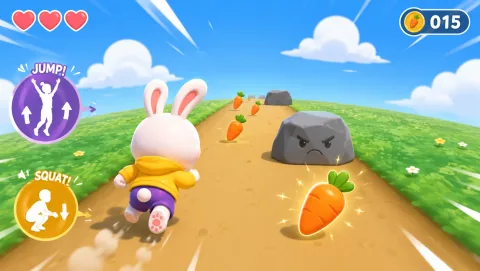
If the computer and camera are already set up, a browser motion game can be a quick shared-screen option. Use short turns and choose a game spectators can follow easily.
If camera permission or tracking needs troubleshooting, skip it. “No prep” should stay no prep.
Three-object invention game:
Pick three harmless objects and ask the children to invent a game, machine, creature, or story using all three.
Room scavenger hunt:
Call categories rather than specific possessions: something soft, something round, something with a number, something smaller than a hand.
One-minute drawing swaps
Each child draws for one minute, swaps pages, and adds to the next picture.
The point of a no-prep playdate activity is not novelty. It is having a few reliable ways to restart the room when “we don’t know what to do” appears.
Adults can improve the format without controlling every minute of it. A stable format can be reused with different prompts or themes without forcing adults to invent a completely new activity each time. The best sign is when children can start the next round without an adult rebuilding the game.
Make the activity work in the real timetable
Best fit: use this when the teacher can explain one visible rule, keep the first turn brief, and give students a clear way to watch, lead, or pause without being singled out.
Limit: it is a poor fit when setup takes longer than the learning goal, the room cannot be reset safely, or the scoring rewards speed over control. A lower-tech version may teach the same idea better.
If you are choosing: If you are choosing between formats, begin with the option that needs the fewest materials and the least movement across the room. Test one round before committing the whole class.